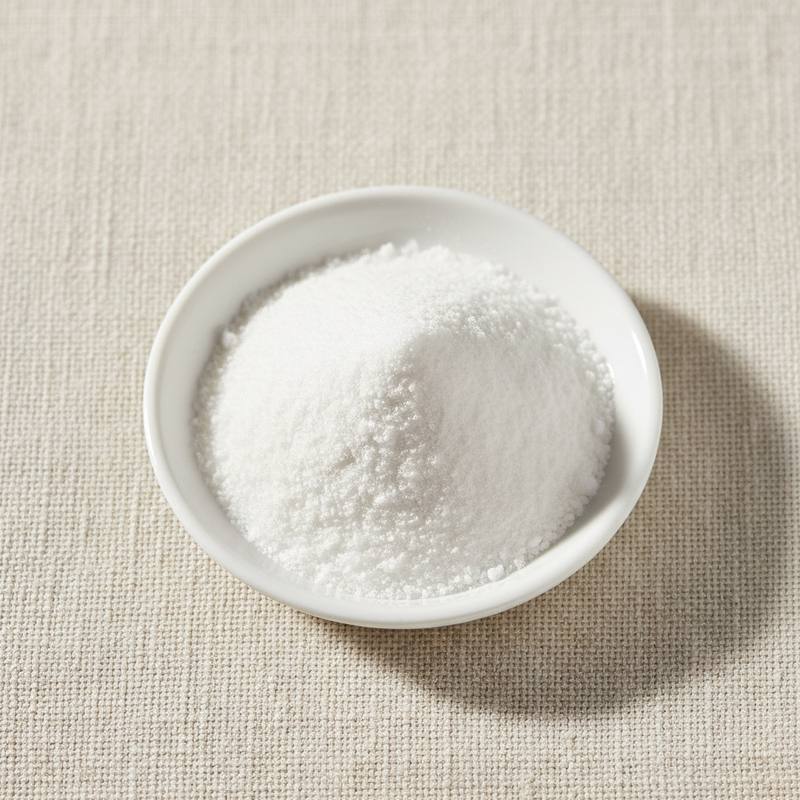
Description
The defining curing agent of modern processed meat manufacturing. Sodium Nitrite reacts with myoglobin to form the stable pink nitrosomyoglobin pigment of cured ham, bacon, hot dogs, and salami, while suppressing Clostridium botulinum spore outgrowth in low-oxygen meat matrices.
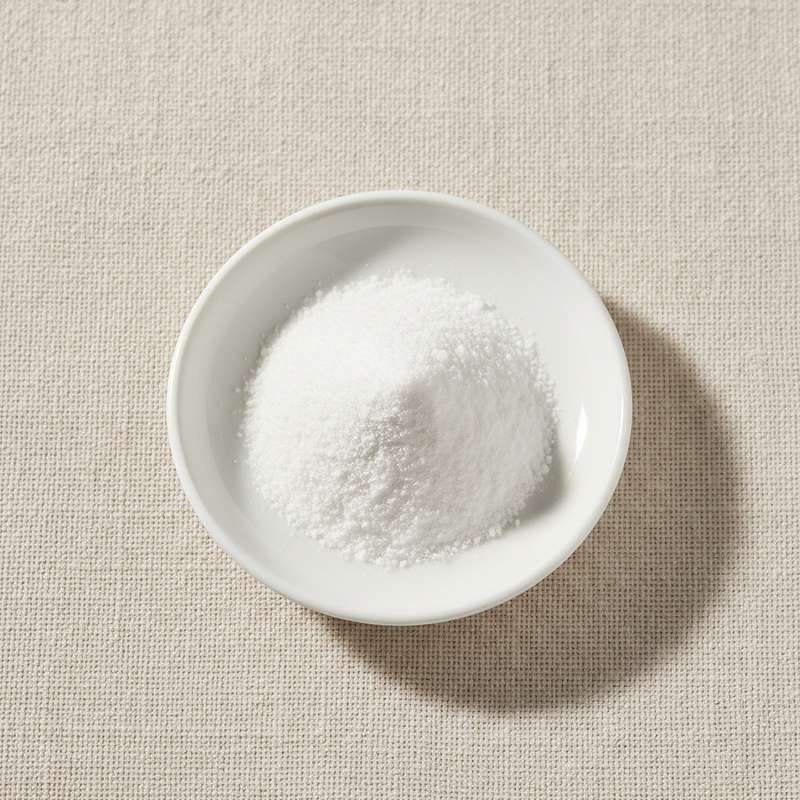
White to slightly yellowish crystalline powder or granules. Highly water-soluble and reactive. In commercial meat processing it is almost always supplied to the meat plant as a pre-blended curing salt, typically 0.6 percent Sodium Nitrite in sodium chloride (the 6.25 percent product is also common in Europe), rather than as the pure compound, to prevent dosing errors.
We supply food-grade Sodium Nitrite and pre-blended curing salts from manufacturers in China holding ISO, Halal, Kosher and other certifications relevant to the product and production.
Common market grades include 99 percent food-grade crystalline Sodium Nitrite for licensed blenders and large meat processors, plus pink curing salt blends (Prague Powder No. 1 style at 6.25 percent Sodium Nitrite, 93.75 percent NaCl) and pre-mixes with sodium erythorbate for ready-to-use cure systems.
Bulk and reduced-MOQ shipments. Batch-level COA covering Sodium Nitrite assay, Sodium Nitrate, chloride, moisture, heavy metals, and microbiology.
Introduction
Sodium Nitrite has been used in some form for meat curing since antiquity, originally as a contaminant in mined salt deposits. Industrial purification and standardized dosing began in Germany in the early 1900s, and the compound was formally approved for U.S. meat curing in 1925.
Regulated as E250 in the EU, permitted by USDA FSIS under 9 CFR for cured meat applications, and assigned an Acceptable Daily Intake of 0.07 mg per kg body weight by JECFA. Maximum ingoing nitrite levels in meat are tightly controlled and vary by product category and jurisdiction, typically 120 to 200 mg/kg ingoing on the meat block weight.
The curing reaction proceeds through nitric oxide, which binds the iron in myoglobin to form nitrosomyoglobin (uncooked cured color) and the heat-stable nitrosohemochrome (cooked cured color). The same chemistry inhibits the germination of Clostridium botulinum spores, which is the single most important food-safety function of nitrite in shelf-stable cured meats.
Sodium Erythorbate or Sodium Ascorbate is almost always added alongside Sodium Nitrite at 250 to 550 mg/kg to accelerate the cure, drive uniform color development, and lower residual nitrite at consumption. This combined cure system is standard in modern industrial meat processing.
Regulatory and consumer pressure on nitrite levels has driven both the rise of natural-cure products using celery juice powder as a nitrate source and continued reductions in permitted maximum residual nitrite in finished products in major markets.
Where it is used
- Cured cooked hams, picnic hams, and shoulder products; typical residual nitrite at finished product around 30 to 80 mg/kg
- Bacon and back bacon; injection brines plus dry rub formulations using 6.25 percent or 0.6 percent curing salt
- Frankfurters, wieners, hot dogs, and bologna; nitrite controls color, flavor, and botulinum risk in vacuum-packed RTE products
- Dry-fermented salami, pepperoni, chorizo, and saucisson; long-ripened products use combined Sodium Nitrite and Sodium Nitrate
- Cooked deli meats, mortadella, and luncheon meats; the foundation of the cured-meat color and flavor profile
- Cooked and smoked sausages including kielbasa, andouille, and bratwurst variants where cured color is required
- Corned beef and pastrami brines; long immersion curing of beef briskets and rounds
- Country hams, prosciutto-style, and dry-cured shoulder products in combination with sodium chloride and sugar
Technical data
| Item | Specification |
|---|---|
| Appearance | White to slightly yellowish crystalline powder or granules |
| Sodium Nitrite (NaNO2) | ≥ 99.0% |
| Sodium Nitrate (NaNO3) | ≤ 0.1% |
| Sodium Chloride | ≤ 0.3% |
| Loss on drying | ≤ 0.25% |
| Water-insoluble matter | ≤ 0.005% |
| Heavy metals (as Pb) | ≤ 10 mg/kg |
| Lead | ≤ 2 mg/kg |
| Arsenic | ≤ 3 mg/kg |
| Particle size | Per customer specification (powder, fine crystal, or pre-blended cure) |
Related ingredients
Ready to discuss business?
Send us your spec and requirement. We will respond with availability and pricing within 24 hours.