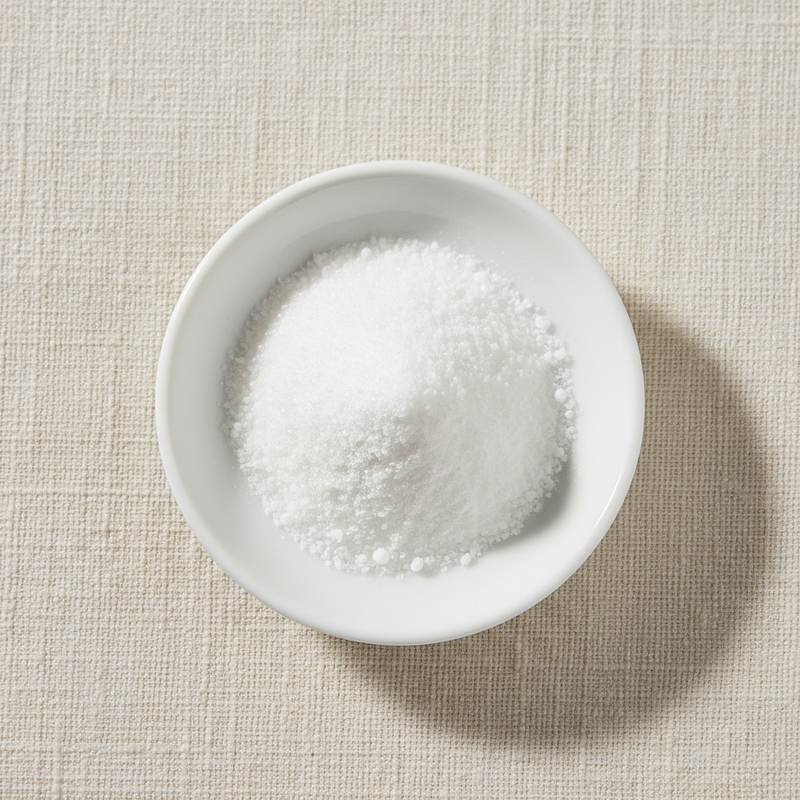
Description
A non-caloric high-intensity sweetener approximately 30 to 50 times sweeter than sucrose, with a clean sweetness profile and minimal bitter aftertaste. The most widely used cyclamate salt globally and the second-largest synthetic sweetener by volume in markets that permit its use.
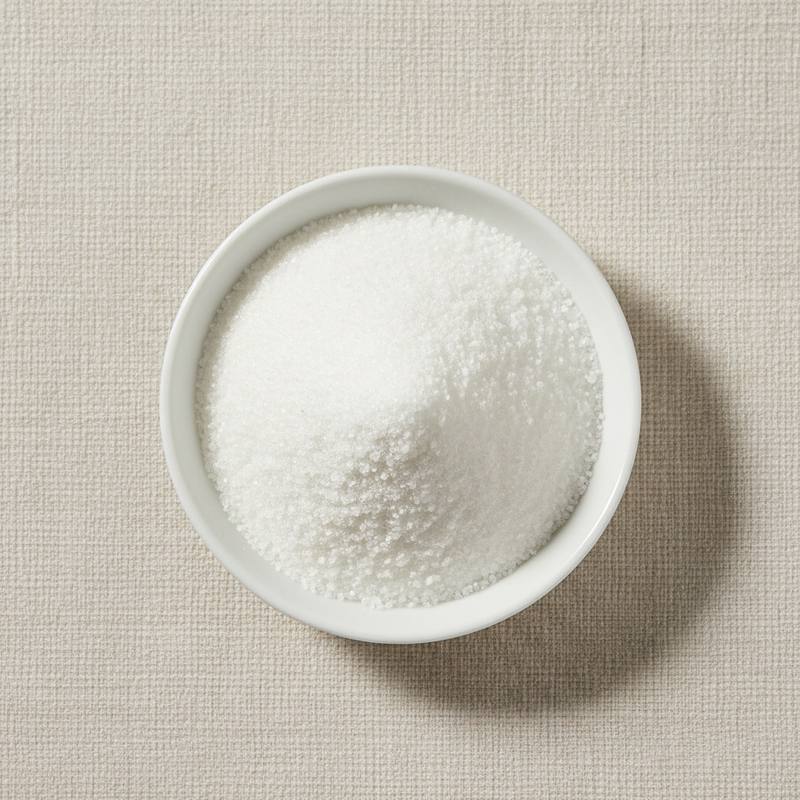
White crystalline powder or granules. Highly water-soluble, fully heat-stable through baking and retort, and stable across the full pH range of food and pharmaceutical processing.
We supply food-grade Sodium Cyclamate from manufacturers in China holding ISO, Halal, Kosher and other certifications relevant to the product and production. Note that Sodium Cyclamate is banned in the United States but permitted in over 50 countries including the EU, China, Brazil, and most of Asia.
Common market grades include CP95 (granular, the dominant grade for tabletop and beverage use), NF14 (needle crystal, fine powder for liquid applications), and food-grade powder for confectionery and dairy.
Bulk and reduced-MOQ shipments. Batch-level COA covering assay, cyclohexylamine residue, heavy metals, and microbiology.
Introduction
Sodium Cyclamate was discovered in 1937 by University of Illinois graduate student Michael Sveda, who noticed a sweet taste on a cigarette he had set on his lab bench while working with cyclohexylsulfamic acid derivatives. It was commercialized by Abbott Laboratories in the 1950s.
Industrial production is by sulfonation of cyclohexylamine with sulfamic acid or sulfur trioxide, followed by neutralization with sodium hydroxide, crystallization, and drying. The result is a chemically pure crystalline salt.
The regulatory history is unusual. The U.S. FDA banned cyclamate in 1970 following a study suggesting bladder tumor formation in rats receiving a cyclamate-saccharin blend at extreme doses. Subsequent re-evaluations by JECFA, the EU, and dozens of national authorities concluded that cyclamate is not carcinogenic at human exposure levels, and the substance was restored to approved status almost everywhere except the United States. JECFA assigns an Acceptable Daily Intake of 11 mg per kg body weight, expressed as cyclamic acid.
Cyclamate's commercial appeal is the combination of low cost, clean sweetness without the metallic note of saccharin, and full stability through every common food process. It is almost always blended with saccharin at approximately a 10:1 cyclamate-to-saccharin ratio, which produces synergistic sweetness and masks both the metallic note of saccharin and any residual chemical character of cyclamate alone.
Where it is used
- Sugar-free carbonated beverages, juice drinks, and flavored waters in price-sensitive markets including Latin America, Southeast Asia, and the Middle East
- Tabletop sweetener formats: sachets, tablets, and liquid drops, typically in 10:1 cyclamate-to-saccharin blends
- Sugar-free confectionery, chewing gum, and lozenges
- Sugar-free dairy products including yogurt, ice cream, and flavored milk
- Pharmaceutical syrups, chewable tablets, and oral solutions
- Sugar-free jams, fruit preserves, and dessert toppings
- Pickles, condiments, and sweet-and-sour sauces in East and Southeast Asian cuisines
- Sugar-free baked goods where heat stability is required
Technical data
| Item | Specification |
|---|---|
| Appearance | White crystalline powder or granules |
| Assay (dry basis) | 98.0% to 101.0% |
| Loss on drying | ≤ 1.0% |
| pH (10% solution) | 5.5 to 7.5 |
| Cyclohexylamine | ≤ 10 mg/kg |
| Dicyclohexylamine | ≤ 1 mg/kg |
| Aniline | ≤ 1 mg/kg |
| Heavy metals (as Pb) | ≤ 10 mg/kg |
| Arsenic | ≤ 3 mg/kg |
| Selenium | ≤ 30 mg/kg |
| Particle size | CP95 granular, NF14 needle, or per customer specification |
Related ingredients
Ready to discuss business?
Send us your spec and requirement. We will respond with availability and pricing within 24 hours.