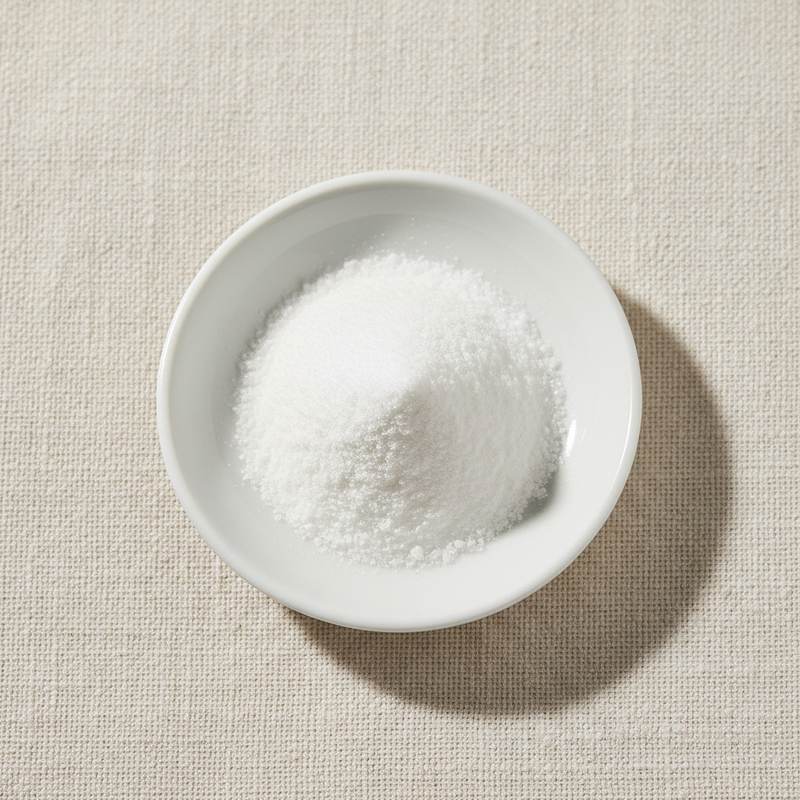
Description
The hydrated crystalline form of sodium acetate, carrying three molecules of water per formula unit (approximately 39.7 percent water by mass). The lower-cost commodity grade for liquid and aqueous applications where the bound water is not a concern.
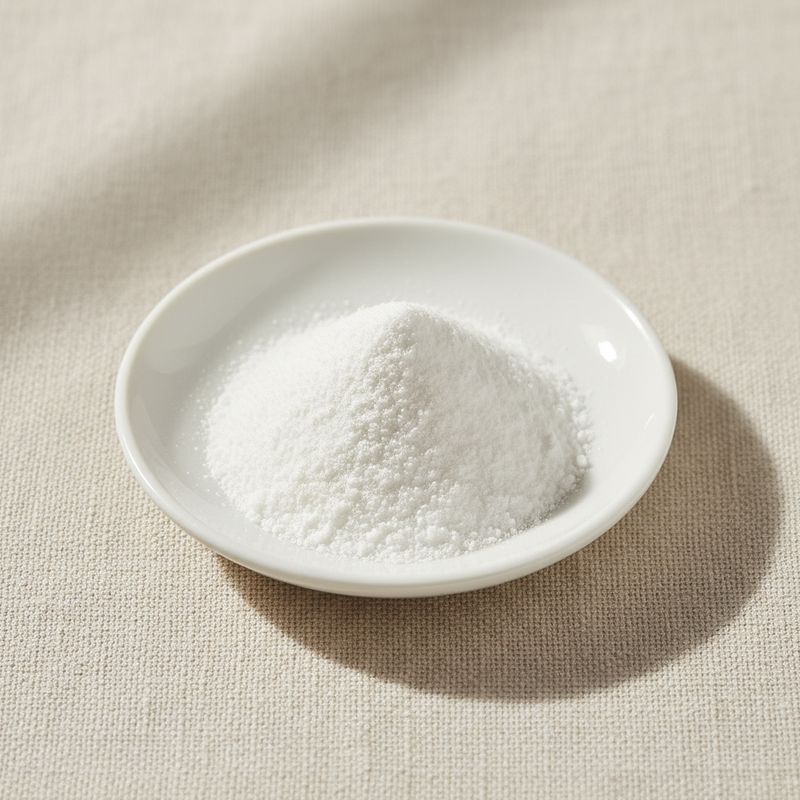
Colorless transparent crystals or white granular powder, with a slight acetic odor. Very soluble in water. Functionally equivalent to the anhydrous form once dissolved.
We supply food-grade Sodium Acetate Trihydrate from manufacturers in China holding ISO, Halal, Kosher and other certifications relevant to the product and production.
Common market grades include Standard Food Grade (FCC compliant), Pharmaceutical Grade meeting USP/EP specifications, and Industrial Grade for heating-pad, textile, and chemical-synthesis applications.
Bulk and reduced-MOQ shipments. Batch-level COA covering assay, water content, free acetic acid, heavy metals, chloride, sulphate, and microbiology.
Introduction
Sodium Acetate Trihydrate is the stable crystalline form below 58 °C and is the form that crystallizes from aqueous solution at room temperature. Above 58 °C the trihydrate dehydrates to the anhydrous form, releasing its bound water.
Industrial production is by the same acid-base reaction as the anhydrous form: acetic acid is neutralized with sodium carbonate or sodium hydroxide, then the solution is crystallized below 58 °C to yield the trihydrate.
Regulated as E262(i) in the EU, classified as Generally Recognized as Safe by the U.S. FDA, listed in USP and EP pharmacopoeias, and approved by JECFA without a numerical Acceptable Daily Intake limit.
The choice between trihydrate and anhydrous in finished-product formulation is driven by application type: aqueous and wet-processing applications use the trihydrate because the bound water dissolves harmlessly into the matrix; dry-blend and powder applications use the anhydrous form to avoid moisture migration and agglomeration.
The trihydrate has a notable secondary application as a phase-change material in reusable heating pads. The salt melts at 58 °C and can be supercooled in liquid form to room temperature; mechanical or seeded nucleation triggers crystallization with rapid release of heat of fusion, warming the pad to 54 °C for several hours.
Where it is used
- Pickled vegetables, condiments, and sauce manufacturing where the bound water dissolves into the aqueous matrix
- Cured meat brines and injection solutions
- Processed cheese manufacturing for pH adjustment
- Beverage applications including soft drinks where acetate buffering is required
- Pharmaceutical injectable buffers and dialysis solutions
- Reusable heating pads where the supercooled liquid releases heat upon crystallization
- Photographic film and textile dye fixing
- Laboratory buffer preparation in the 3.7 to 5.6 range
- Leather tanning and dyeing applications
Technical data
| Item | Specification |
|---|---|
| Appearance | Colorless transparent crystals or white granular powder |
| Assay (anhydrous basis) | 99.0% to 101.0% |
| Water content | 39.0% to 40.5% |
| pH (5% solution) | 7.5 to 9.0 |
| Free acetic acid | ≤ 0.3% |
| Chloride | ≤ 200 mg/kg |
| Sulphate | ≤ 200 mg/kg |
| Heavy metals (as Pb) | ≤ 5 mg/kg |
| Arsenic | ≤ 3 mg/kg |
Related ingredients
Ready to discuss business?
Send us your spec and requirement. We will respond with availability and pricing within 24 hours.