Description
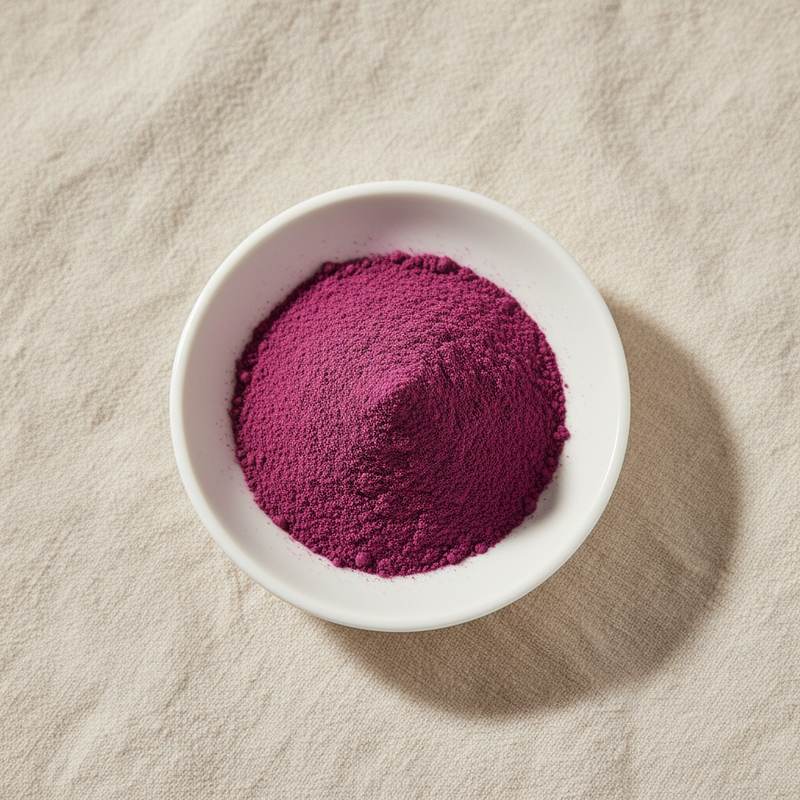
A natural red to purple anthocyanin colorant extracted from purple sweet potato (Ipomoea batatas). The active pigments are acylated anthocyanins, predominantly cyanidin and peonidin glycosides, with superior stability compared to non-acylated anthocyanins from other plant sources.
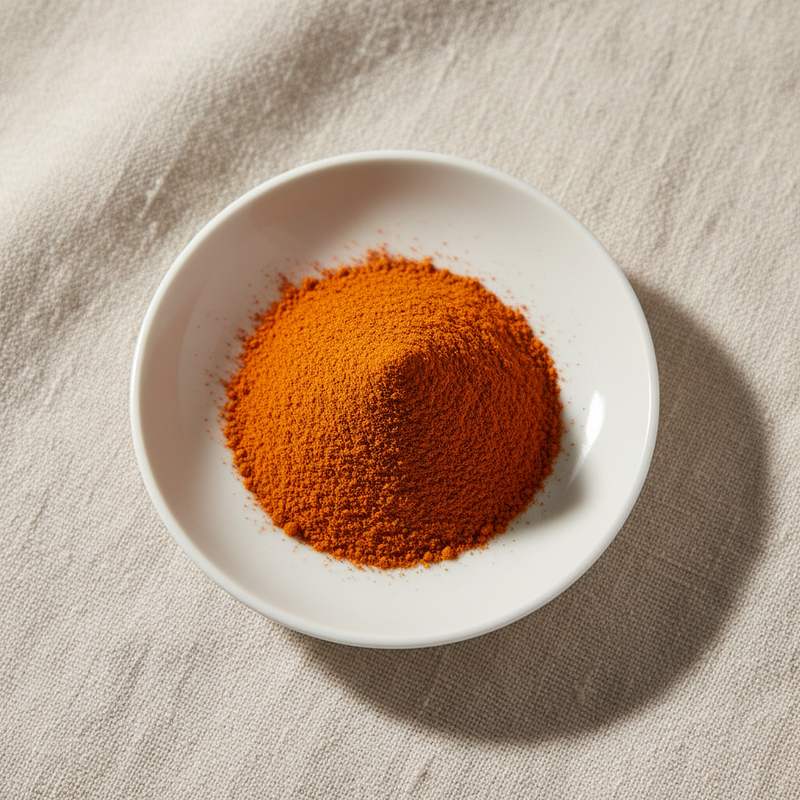
Dark red to purplish-red free-flowing powder, or red-violet liquid concentrate. Highly water-soluble. Produces strawberry-pink to deep magenta and violet shades at acidic pH, shifting toward blue and gray at neutral and alkaline pH.
We supply food-grade Purple Sweet Potato Red from manufacturers in China holding ISO, Halal, Kosher and other certifications relevant to the product and production.
Common market grades are sold by color value (E1% at 530 nm): 50, 100, 150, 200, and 300, with liquid concentrates at 1 to 3 percent active anthocyanin. Higher grades reflect more concentrated pigment per unit mass.
Bulk and reduced-MOQ shipments. Batch-level COA covering total anthocyanin content, color value, pH, heavy metals, residual solvent, and microbiology.
Introduction
Purple sweet potato has been cultivated in East Asia for centuries, and the standardized color extract emerged from Japanese food-science research in the 1980s as part of a broader effort to develop heat-stable and light-stable natural anthocyanin colorants.
Production begins with selected purple sweet potato cultivars. The roots are washed, sliced, and extracted with acidified ethanol or water. The extract is purified by ion-exchange or membrane filtration, concentrated under vacuum, and either packed as liquid or spray-dried to defined color strength.
Purple Sweet Potato Red is permitted in the EU under the broader fruit and vegetable concentrate framework (regulated as a natural coloring food rather than an E-numbered additive), and is listed by the U.S. FDA as a permitted color additive exempt from certification when derived from vegetable juice. Approved in major global markets.
The principal value proposition is stability: acylation of the anthocyanin molecules confers significantly better heat, light, and pH tolerance than the simpler anthocyanins from grape, elderberry, or red cabbage. This makes Purple Sweet Potato Red the preferred anthocyanin colorant for thermally processed and shelf-stable applications.
Strategically, Purple Sweet Potato Red is positioned as the natural pink-to-magenta workhorse of acidic beverage and confectionery applications, and as a clean-label replacement for synthetic Allura Red (E129) and Carmoisine (E122). It also serves the growing premium pet food and clean-label dessert segments.
Where it is used
- Acidic beverages including soft drinks, sports drinks, and flavored waters where pH 3 to 4 holds the bright pink shade
- Fruit preparations, jams, and dessert fillings where acidic environment supports color expression
- Sugar confectionery, gummies, and hard candies
- Frozen yogurt, ice cream, and sorbet
- Wine and alcoholic beverage applications where color stability through bottling is required
- Bakery fillings, frosting, and decorative work
- Pharmaceutical syrups and chewable tablets
- Pet treats and premium pet food positioned for clean label
Technical data
| Item | Specification |
|---|---|
| Appearance | Dark red to purplish-red powder or liquid |
| Source | Ipomoea batatas (purple sweet potato) |
| Color value (E1%, 1cm, 530 nm) | 50, 100, 150, 200, or 300 (per grade) |
| Total anthocyanins | Per declared color value |
| pH (10% solution) | 3.0 to 4.0 |
| Solubility | Freely soluble in water |
| Light stability | Good; better than non-acylated anthocyanins |
| Heat stability | Good; superior to grape and red cabbage anthocyanins |
| pH stability range | Best at pH 3 to 5; shifts to blue-gray above pH 7 |
| Loss on drying | ≤ 6.0% |
| Lead | ≤ 2 mg/kg |
| Arsenic | ≤ 1 mg/kg |
| Total plate count | ≤ 1000 CFU/g |
Related ingredients
Ready to discuss business?
Send us your spec and requirement. We will respond with availability and pricing within 24 hours.