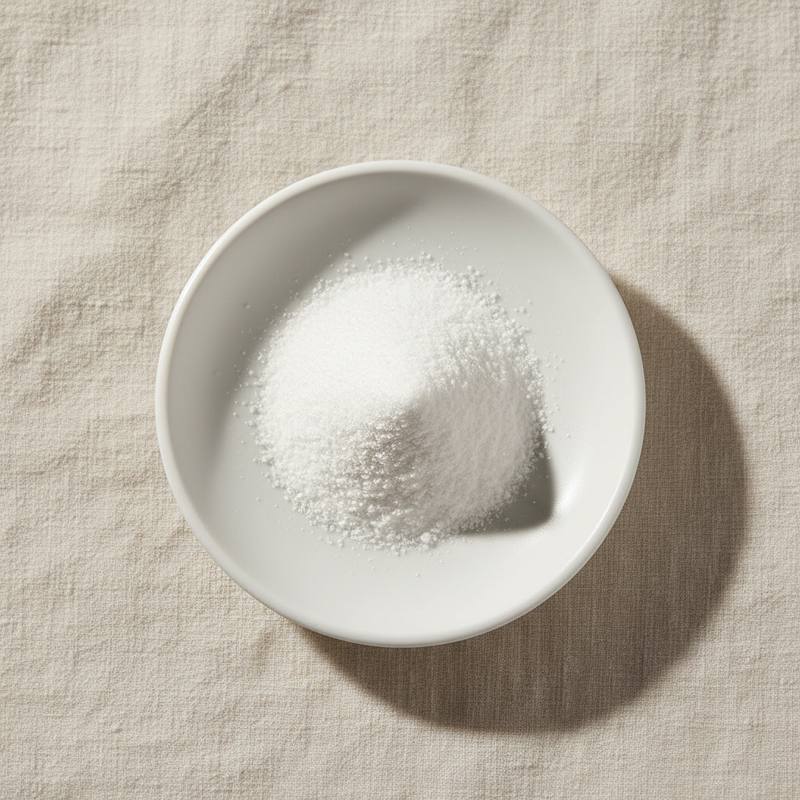
Description
Vitamin B3 in its nicotinic acid form, essential for energy metabolism through the NAD and NADP coenzymes. Used in human nutrition for fortification and supplements, in animal feed for fortification, and in pharmaceutical applications for cholesterol management at high doses.
White crystalline powder. Highly water-soluble. Distinct from Nicotinamide (the amide form, catalog separately) by chemistry and physiological action: at high doses Nicotinic Acid produces characteristic flushing while Nicotinamide does not.
We supply food-grade, feed-grade, and pharmaceutical-grade Nicotinic Acid from manufacturers in China holding ISO, Halal, Kosher and other certifications relevant to the product and production.
Common market grades include Standard Food Grade (FCC compliant), Feed Grade, Pharmaceutical Grade meeting BP/USP/EP/JP specifications, and Sustained-Release Nicotinic Acid for cholesterol-management pharmaceutical applications.
Bulk and reduced-MOQ shipments. Batch-level COA covering assay, melting point, loss on drying, heavy metals, and microbiology.
Introduction
Nicotinic acid was characterized as Vitamin B3 in 1937 through pellagra research, the disease that historically killed and disabled millions in corn-dependent diets in the southern United States and parts of Europe. The vitamin functions as the precursor to NAD and NADP, the central cellular electron-transfer coenzymes.
Industrial production proceeds by oxidation of 3-methylpyridine (beta-picoline) using ammonia and air under catalysis, yielding nicotinic acid at high purity. The amide form (Nicotinamide) is produced from the acid through ammonia addition.
Recognized as a permitted food ingredient by the U.S. FDA, the European Food Safety Authority, and equivalent regulators worldwide. Listed in BP, USP, EP, and JP pharmacopoeias. Recommended Dietary Allowance is 14 to 16 mg per day for adults.
The distinctive 'niacin flush' produced by high doses (typically above 50 mg) is a characteristic prostaglandin-mediated skin reaction unique to Nicotinic Acid (Nicotinamide does not produce flushing). This pharmacological effect has been used clinically since the 1950s for cholesterol-lowering therapy, where doses of 1 to 3 grams per day deliver meaningful triglyceride reduction at the cost of significant flushing side effects.
Strategic positioning combines mandatory food fortification (the volume baseline), animal feed (the largest volume application), human supplements, and pharmaceutical clinical applications including cholesterol management and pellagra prevention.
Where it is used
- Fortified flour, breakfast cereals, bread, and pasta; mandatory fortification in many countries
- Animal feed: poultry, swine, aquaculture, and dairy fortification (the largest volume application)
- Dietary supplements: B-complex and energy-positioned formulations
- Pharmaceutical applications: cholesterol-lowering therapy at high doses, tablets, and extended-release formulations
- Infant formula and clinical nutrition
- Cosmetic and personal-care: niacinamide skincare (the amide form rather than acid)
- Sports nutrition and pre-workout formulations
- Public health programs to prevent pellagra in corn-dependent diets
Technical data
| Item | Specification |
|---|---|
| Appearance | White crystalline powder |
| Assay (dry basis) | 99.5% to 101.0% |
| Melting point | 234 °C to 238 °C |
| Loss on drying | ≤ 0.5% |
| Residue on ignition | ≤ 0.1% |
| Heavy metals (as Pb) | ≤ 10 mg/kg |
| Arsenic | ≤ 3 mg/kg |
| Chloride | ≤ 200 mg/kg |
| Particle size | Per customer specification |
Related ingredients

Ready to discuss business?
Send us your spec and requirement. We will respond with availability and pricing within 24 hours.