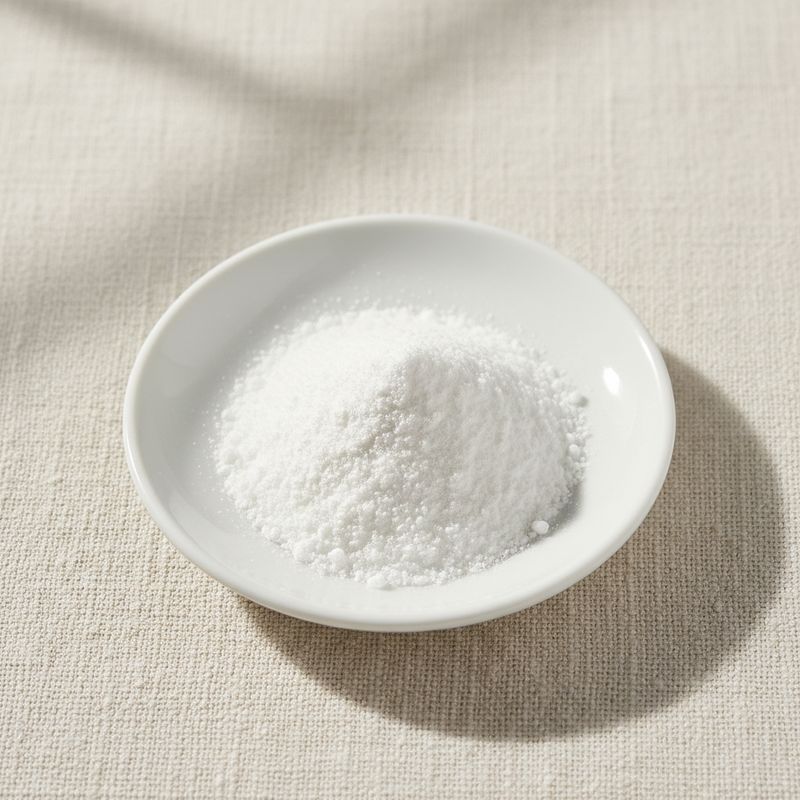
Description
The most widely used synthetic emulsifier in food manufacturing, produced by glycerolysis of edible fats and oils. Used across bakery, dairy, margarine, confectionery, and beverage applications as a general-purpose oil-in-water and water-in-oil emulsifier.
White to pale yellow waxy solid, supplied as beads, pellets, powder, or flakes depending on grade. Hydrophilic-lipophilic balance ranges between 3 and 4 for standard grades, suitable for water-in-oil emulsions and crumb softening in bread.
We supply food-grade Mono- and Diglycerides from manufacturers in China holding ISO, Halal, Kosher and other certifications relevant to the product and production.
Common market grades include 40 percent monoester content standard, 90 percent and 95 percent distilled monoglyceride for premium applications, soft beadlets for direct dough dosing, and hydrated alpha-crystalline plastic forms for cake-batter applications.
Bulk and reduced-MOQ shipments. Batch-level COA covering free glycerol, total monoester content, iodine value, acid value, and microbiology.
Introduction
Mono- and diglycerides were commercialized in the 1930s and 1940s as the first generation of synthetic food emulsifiers, replacing more variable natural lecithin in industrial bakery and margarine manufacturing.
Industrial production proceeds by glycerolysis: edible fats or oils react with glycerol in the presence of an alkaline catalyst at elevated temperature, producing a statistical mixture of mono-, di-, and triglycerides along with free glycerol. Standard grades contain 40 to 60 percent monoester; distilled grades are concentrated by molecular distillation to 90 percent or higher.
Regulated as E471 in the EU, classified as Generally Recognized as Safe by the U.S. FDA, and approved by JECFA without a numerical Acceptable Daily Intake limit. Accepted globally without restriction in food applications.
The functional mechanism combines surface activity at the oil-water interface with starch complexation in baked goods, where the monoester forms helical inclusion complexes with amylose, slowing staling and preserving crumb softness over shelf life.
Mono- and diglycerides are the volume baseline of the synthetic emulsifier market and the starting material for downstream derivatives including DATEM, lactic and citric esters, succinylated and acetylated grades, each engineered for narrower functional ranges.
Where it is used
- Bread, buns, and yeast-raised baked goods; primary crumb softener and shelf-life extender through starch complexation
- Cakes, sponges, and cake mixes; aerates batter and supports volume in lean formulations
- Margarine, spreads, and shortenings; structures water-in-oil emulsion and controls fat crystallization
- Ice cream and frozen desserts; promotes fat destabilization and improves dryness and overrun
- Coffee whiteners, cream liqueurs, and dairy beverages; oil-in-water emulsifier
- Chewing gum base and confectionery; modifies texture and processing
- Peanut butter, nut butters, and chocolate spreads; prevents oil separation
- Whipped toppings and aerosol cream; aeration and overrun support
- Pasta and noodle production; reduces stickiness and improves cooking quality
Technical data
| Item | Specification |
|---|---|
| Appearance | White to pale yellow beads, flakes, or powder |
| Total monoester content | ≥ 40.0% (standard) / ≥ 90.0% (distilled) |
| Free glycerol | ≤ 7.0% (standard) / ≤ 1.0% (distilled) |
| Iodine value | Report |
| Acid value | ≤ 3.0 mg KOH/g |
| Melting point | 55 °C to 70 °C |
| Heavy metals (as Pb) | ≤ 5 mg/kg |
| Arsenic | ≤ 2 mg/kg |
| Total plate count | ≤ 1,000 CFU/g |
| Form | Beads, flakes, powder, or plastic per customer specification |
Related ingredients
Ready to discuss business?
Send us your spec and requirement. We will respond with availability and pricing within 24 hours.