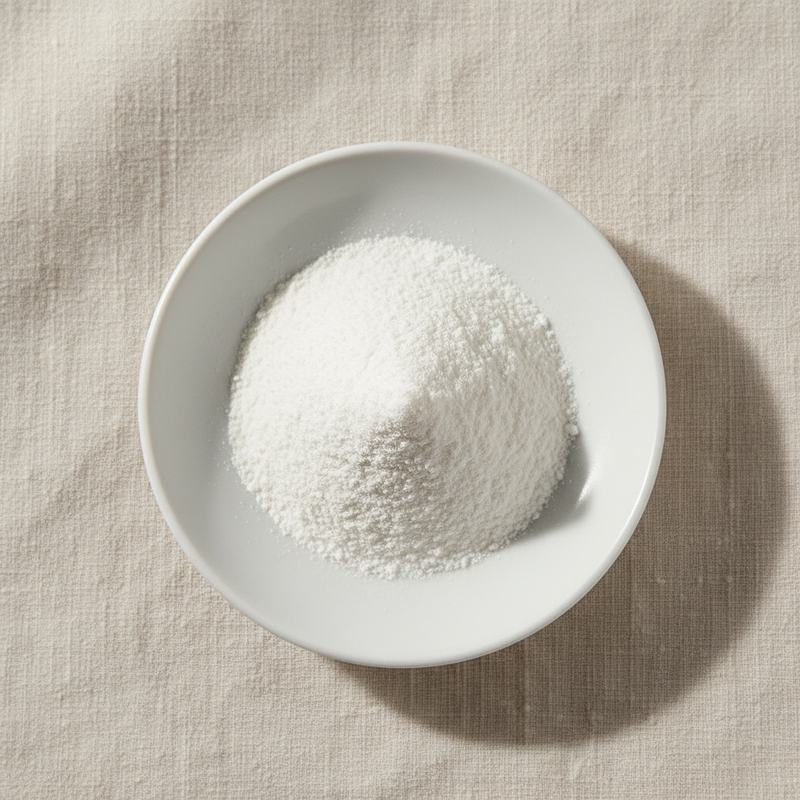
Description
Microbial Rennet is a milk-clotting aspartic protease that hydrolyses the Phe105-Met106 peptide bond of kappa-casein, destabilising the casein micelle and causing milk to coagulate. It is the principal vegetarian and Halal alternative to animal rennet in industrial cheesemaking.
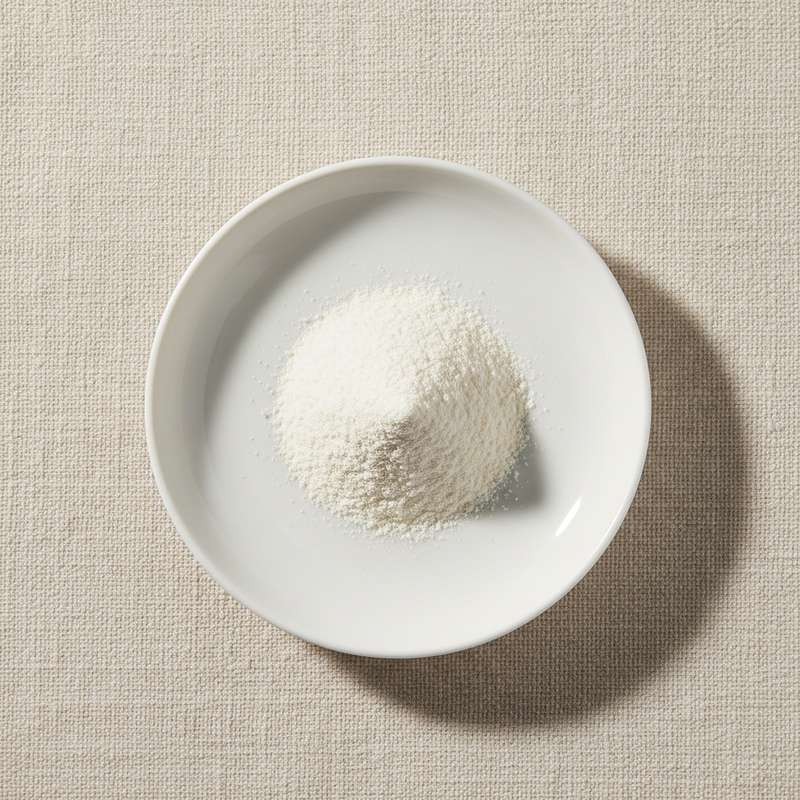
Off-white to light tan free-flowing powder, or amber liquid. Activity is standardised in International Milk Clotting Units (IMCU) per ISO 11815, the global reference assay against bovine reference standard.
We supply food-grade Microbial Rennet from manufacturers in China holding ISO 22000, FSSC 22000, Halal, Kosher and other certifications relevant to the product and production. Rhizomucor miehei and Rhizomucor pusillus are the principal source organisms, with fermentation-produced chymosin (FPC) from engineered Aspergillus niger and Kluyveromyces lactis available for premium-cheese applications.
Common market grades include 1,000 IMCU/g standard cheesemaking liquid, 2,200 IMCU/g concentrated, 5,000 to 10,000 IMCU/g powder for dry blending, 20,000 IMCU/g high-activity grade, and FPC grades for closed-curd cheese applications where proteolytic specificity matters.
Bulk and reduced-MOQ shipments. Batch-level COA covering activity, pH optimum, temperature optimum, proteolytic side activity, heavy metals and microbiology.
Introduction
Microbial Rennet from Rhizomucor miehei was developed commercially in the 1960s by Danish researchers seeking a microbial alternative to declining calf-rennet supply. The enzyme rapidly captured significant share of the global cheesemaking market, with fermentation-produced chymosin (FPC) reaching commercial scale in the 1990s as the first food enzyme produced by recombinant DNA technology to gain regulatory approval.
Industrial production is by submerged fermentation of Rhizomucor strains and, for FPC, by fermentation of engineered Aspergillus niger var. awamori, Kluyveromyces lactis and Escherichia coli K-12 strains expressing the bovine prochymosin gene. FPC now accounts for the majority of cheese produced in industrialised markets.
The enzyme is Generally Recognized as Safe by the U.S. FDA from approved source organisms, listed in the JECFA enzyme compendium, approved as a processing aid in the EU, and supported by extensive vegetarian-society and Halal-authority certifications.
Mechanistically, microbial rennet cleaves the Phe-Met bond of kappa-casein with high specificity, releasing the hydrophilic caseinomacropeptide and leaving the destabilised para-kappa-casein in the micelle. The destabilised micelles aggregate in the presence of calcium ions, forming the curd that becomes cheese.
Strategic positioning is dominant: microbial rennet plus FPC together account for the majority of global cheese production today, and the share of fermentation-produced chymosin continues to grow at the expense of animal rennet on vegetarian, Halal, supply-stability and cost grounds.
Where it is used
- Industrial cheesemaking of cheddar, mozzarella, gouda, edam and brick cheeses; the dominant vegetarian-rennet route
- Halal and Kosher cheese production; vegetarian alternative to calf rennet
- Fermentation-produced chymosin (FPC) for premium and aged cheese applications
- Cottage cheese, paneer and fresh-cheese manufacture
- Yogurt cheese and labneh production
- Cream cheese manufacture in selected formulations
- Casein and casein-derivative manufacture; controlled coagulation of skim milk
- Vegetable protein analogue-cheese coagulation in selected plant-based dairy alternatives
Technical data
| Item | Specification |
|---|---|
| Appearance | Off-white to light tan powder or amber liquid |
| Activity | 1,000 to 20,000 IMCU/g or per customer specification |
| pH optimum | 5.5 to 6.5 |
| Temperature optimum | 30 °C to 40 °C |
| Moisture (powder) | ≤ 8.0% |
| Heavy metals (as Pb) | ≤ 10 mg/kg |
| Arsenic | ≤ 3 mg/kg |
| Total plate count | ≤ 50,000 CFU/g |
| Coliforms | ≤ 30 CFU/g |
| Salmonella | Absent in 25 g |
| E. coli | Absent in 25 g |
| Source organism | Rhizomucor miehei, Rhizomucor pusillus, Aspergillus niger or Kluyveromyces lactis |
Related ingredients
Ready to discuss business?
Send us your spec and requirement. We will respond with availability and pricing within 24 hours.