Description
An aromatic alpha hydroxy acid originally derived from bitter almonds, distinguished by its larger molecular size and slower skin penetration. Delivers AHA-style resurfacing with the gentlest irritation profile in the AHA family, making it the preferred choice for sensitive, deeper-pigmented, and rosacea-prone skin.
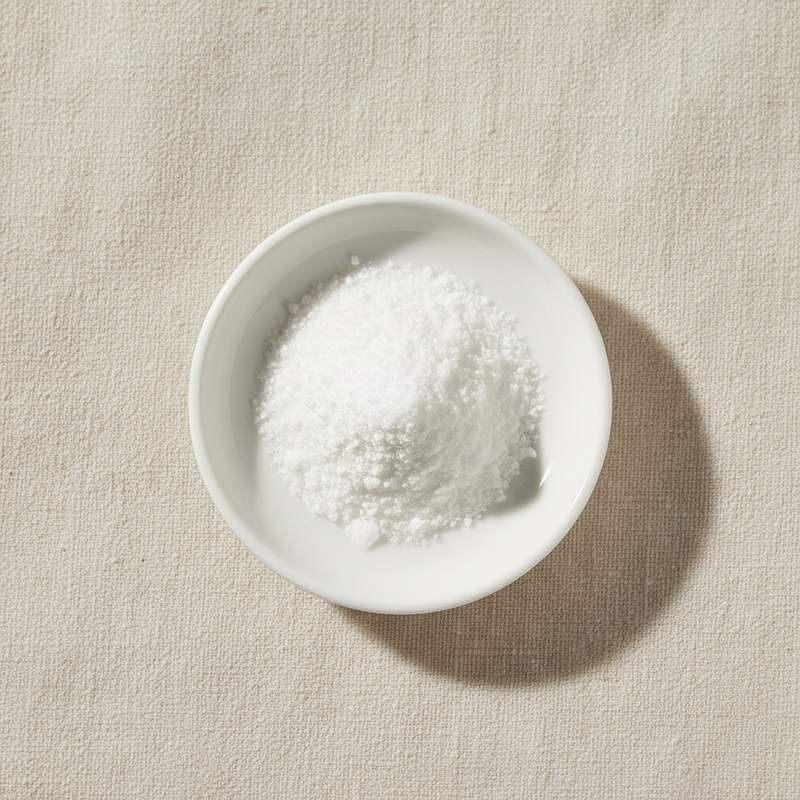
White to off-white crystalline powder. Soluble in water at moderate temperatures, fully soluble in ethanol and propylene glycol. Stable across the cosmetic pH range, with peak exfoliant activity at pH 3 to 4.
We supply cosmetic-grade Mandelic Acid from manufacturers in China holding ISO 22716, ISO 9001, Halal and Kosher certifications relevant to the product and production.
Common market grades include racemic DL-Mandelic Acid 99% min (the dominant cosmetic grade) and the L-isomer for premium positioning. Both forms are commercial; the racemate carries no efficacy penalty in topical use.
Bulk and reduced-MOQ shipments. Batch-level COA covering HPLC purity, melting point, related substances, heavy metals, and microbiology.
Introduction
Mandelic acid was first isolated in 1831 from bitter almond extracts by Ferdinand Ludwig Winckler. The compound's German name, Mandelsaure (almond acid), gives the modern English name. Cosmetic adoption as a gentle AHA emerged in the 1990s in U.S. dermatology practice and accelerated through the 2010s with indie brands targeting sensitive skin and deeper Fitzpatrick types.
Industrial production is by hydrolysis of mandelonitrile (the cyanohydrin of benzaldehyde) under acidic conditions, followed by recrystallization. The racemic DL form is the commercial standard; chiral resolution to L-mandelic acid is available at modest cost premium.
Regulatory status is that of a listed cosmetic ingredient in CosIng, the PCPC INCI dictionary, and China IECIC. No fixed concentration limit at cosmetic level. Professional peel formulations may fall under medical device or medicated cosmetic frameworks depending on jurisdiction and concentration.
Clinical evidence shows mandelic acid at 5 to 10 percent over 8 to 12 weeks delivers measurable improvement in skin texture, melasma severity, and acne lesion counts, with substantially lower irritation rates than glycolic acid at equivalent active concentration. The molecule's antibacterial activity adds value in acne formulations.
Strategically, mandelic acid is the fastest-growing gentle AHA in the global cosmetic market, displacing share from glycolic acid in dermocosmetic positioning targeting sensitive and deeper skin. The Inkey List, The Ordinary, and Naturium have anchored mass-market awareness.
Where it is used
- Gentle AHA toners and serums at 5 to 10 percent
- Sensitive-skin chemical peel formulations at 10 to 40 percent
- Brightening lotions for melasma and post-inflammatory hyperpigmentation
- Anti-acne products combining mandelic with salicylic acid
- Resurfacing creams for rosacea-prone and reactive skin
- Pre-event peel-style at-home masks
- Combination AHA blends with glycolic and lactic acid
- Body lotions for back acne and keratosis pilaris
- Dermocosmetic brightening lines positioned for deeper skin tones
Technical data
| Item | Specification |
|---|---|
| Appearance | White to off-white crystalline powder |
| INCI Name | Mandelic Acid |
| Assay (HPLC, dry basis) | ≥ 99.0% |
| Melting point | 118 °C to 121 °C (DL form) |
| Loss on drying | ≤ 0.5% |
| Residue on ignition | ≤ 0.1% |
| pH (1% solution) | 2.0 to 3.0 |
| Related substances (each) | ≤ 0.1% |
| Heavy metals (as Pb) | ≤ 10 mg/kg |
| Arsenic | ≤ 2 mg/kg |
| Total plate count | ≤ 100 CFU/g |
| E. coli, Salmonella, S. aureus, P. aeruginosa | Negative |
| Source | Synthetic, hydrolysis of mandelonitrile |
Related ingredients
Ready to discuss business?
Send us your spec and requirement. We will respond with availability and pricing within 24 hours.