Description
Lipase (triacylglycerol acylhydrolase) catalyses the hydrolysis of ester bonds in triglycerides, releasing free fatty acids, mono- and diglycerides and glycerol. The enzyme is used for fat modification, flavour development in dairy and bakery dough conditioning.
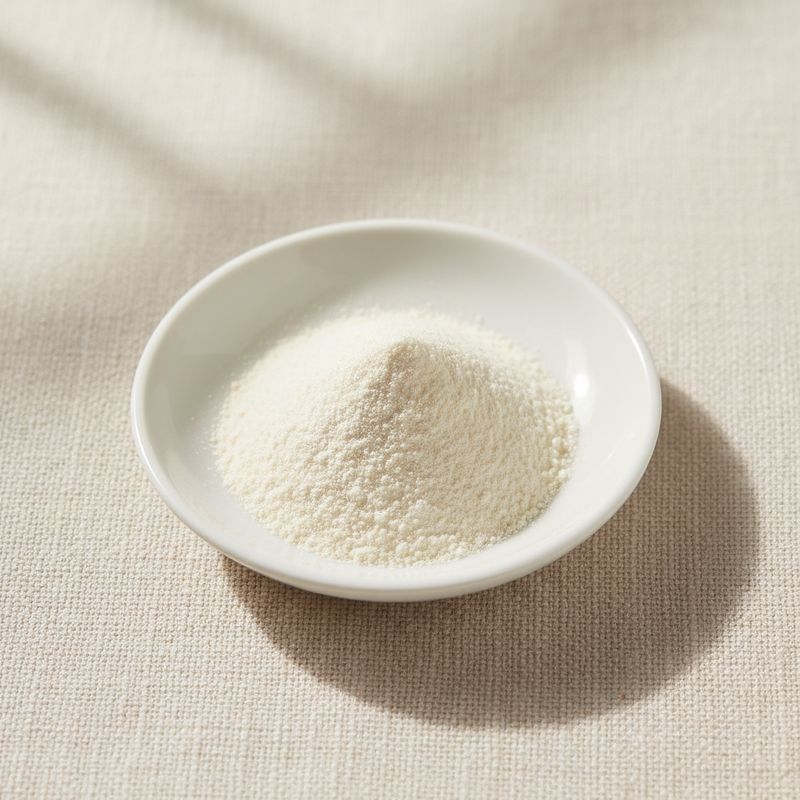
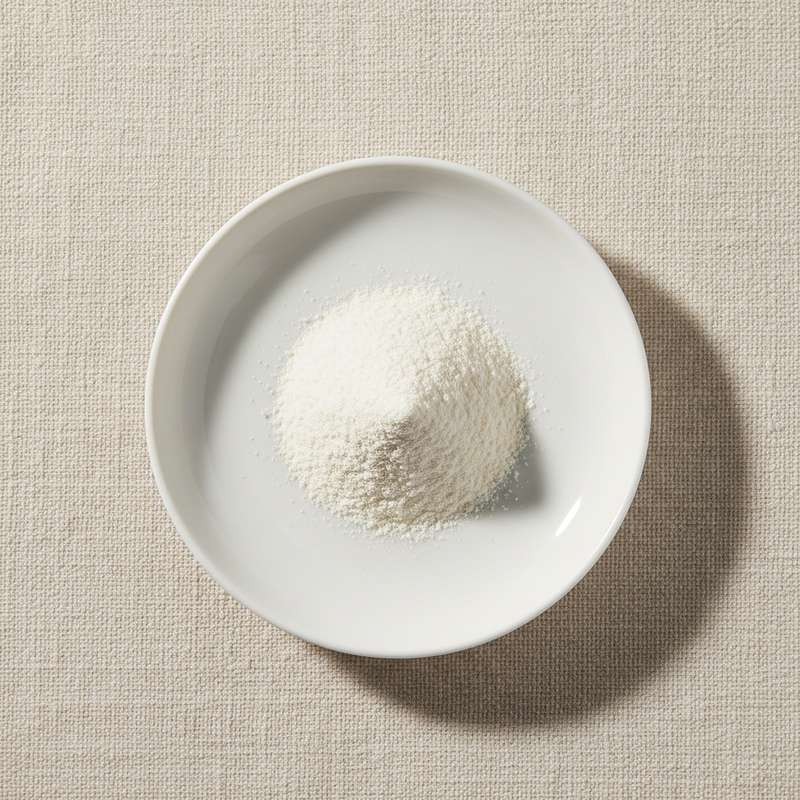
Off-white to light tan free-flowing powder, or amber liquid for in-line dosing. Activity is standardised in Lipase Units (LU or U) defined as the amount of enzyme releasing one micromole of fatty acid per minute from a defined triglyceride substrate.
We supply food-grade Lipase from manufacturers in China holding ISO 22000, Halal, Kosher and other certifications relevant to the product and production. Rhizomucor miehei, Aspergillus niger, Aspergillus oryzae, Candida rugosa and Thermomyces lanuginosus are the dominant source organisms, with selection driven by application requirements.
Common market grades include 10,000 U/g standard powder for dough conditioning, 50,000 U/g for fat modification and interesterification, 100,000 U/g concentrated for enzymatic synthesis of structured lipids, and 200,000 U/g high-purity grades for specialty oil manufacture.
Bulk and reduced-MOQ shipments. Batch-level COA covering activity, pH optimum, temperature optimum, regio-specificity, heavy metals and microbiology.
Introduction
Lipase was characterised in pancreatic secretions in the 19th century, but commercial-scale microbial production reached maturity only in the 1980s with the development of submerged fermentation processes for Rhizomucor miehei and the parallel scale-up of Candida and Aspergillus production strains.
Industrial production is by submerged fermentation of selected microbial strains, with downstream concentration, immobilisation (for specialty interesterification applications) and formulation into liquid or spray-dried powder forms. Immobilised lipase preparations on solid carriers have enabled continuous-flow processing in modern fat-modification plants.
The enzyme is Generally Recognized as Safe by the U.S. FDA from approved source organisms, listed in the JECFA enzyme compendium, and approved as a processing aid in the EU. No Acceptable Daily Intake is assigned.
Mechanistically, lipase hydrolyses ester bonds at the lipid-water interface, with different lipases exhibiting different regio-specificities: 1,3-specific lipases (Rhizomucor miehei, Thermomyces lanuginosus) hydrolyse only the outer sn-1 and sn-3 positions of triglycerides, while non-specific lipases (Candida rugosa, Pseudomonas) hydrolyse all three positions. This regio-specificity is the basis of structured-lipid manufacture.
Strategic positioning in industrial food processing has shifted from a niche specialty enzyme in the 1990s to a foundational enzyme in modern trans-fat-free fat manufacturing: enzymatic interesterification, enabled by 1,3-specific lipases, is the principal industrial route to zero-trans-fat shortenings and margarines following the global regulatory phase-out of partial hydrogenation.
Where it is used
- Bread and bakery dough conditioning; releases mono- and diglycerides in situ for improved crumb structure
- Cheese flavour development; cheddar, blue, Romano and Parmesan flavour profiles
- Enzymatic interesterification of fats and oils; trans-fat-free shortening and margarine production
- Structured triglyceride synthesis for clinical and infant nutrition (MLCT, EPA/DHA-enriched lipids)
- Cocoa butter equivalent and cocoa butter substitute manufacture
- Specialty lipid manufacture for human-milk fat substitutes (HMFS) used in premium infant formula
- Egg-yolk modification for mayonnaise stability and emulsification
- Fish-oil concentrate manufacture; selective hydrolysis for EPA/DHA enrichment
- Flavour ester synthesis for the flavour and fragrance industry
Technical data
| Item | Specification |
|---|---|
| Appearance | Off-white to light tan powder or amber liquid |
| Activity | 10,000 to 200,000 U/g or per customer specification |
| pH optimum | 6.0 to 8.0 (varies by source organism) |
| Temperature optimum | 40 °C to 65 °C |
| Moisture (powder) | ≤ 8.0% |
| Heavy metals (as Pb) | ≤ 10 mg/kg |
| Arsenic | ≤ 3 mg/kg |
| Total plate count | ≤ 50,000 CFU/g |
| Coliforms | ≤ 30 CFU/g |
| Salmonella | Absent in 25 g |
| E. coli | Absent in 25 g |
| Source organism | Rhizomucor miehei, Aspergillus niger, Aspergillus oryzae, Candida rugosa or Thermomyces lanuginosus |
Related ingredients
Ready to discuss business?
Send us your spec and requirement. We will respond with availability and pricing within 24 hours.