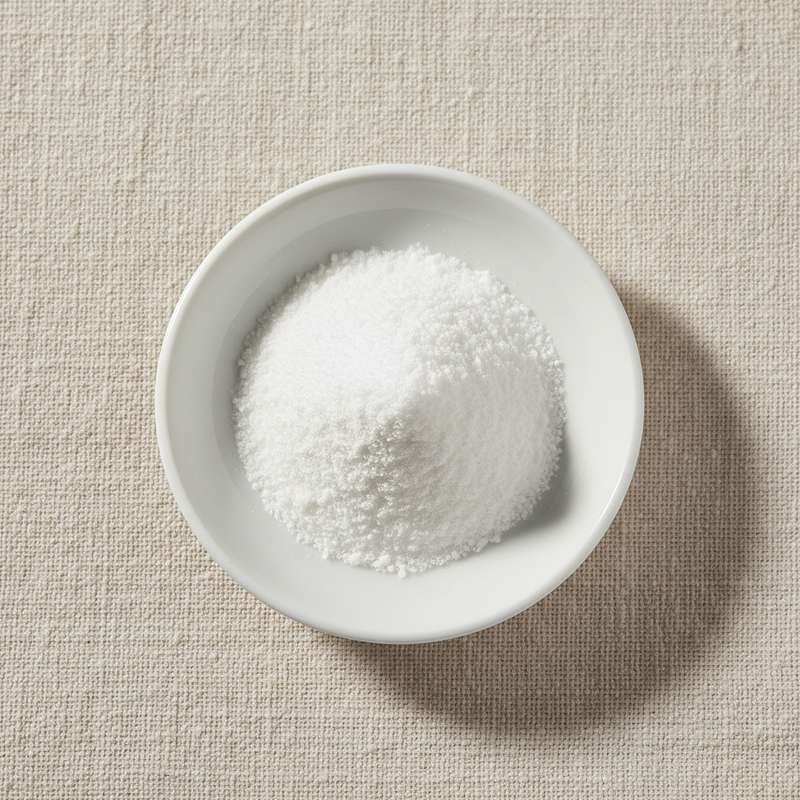
Description
The free-acid form of saccharin, the parent compound from which Sodium Saccharin and Calcium Saccharin salts are produced. Approximately 300 to 500 times sweeter than sucrose, with zero calories, and minimal water solubility (the source of the commercial name).
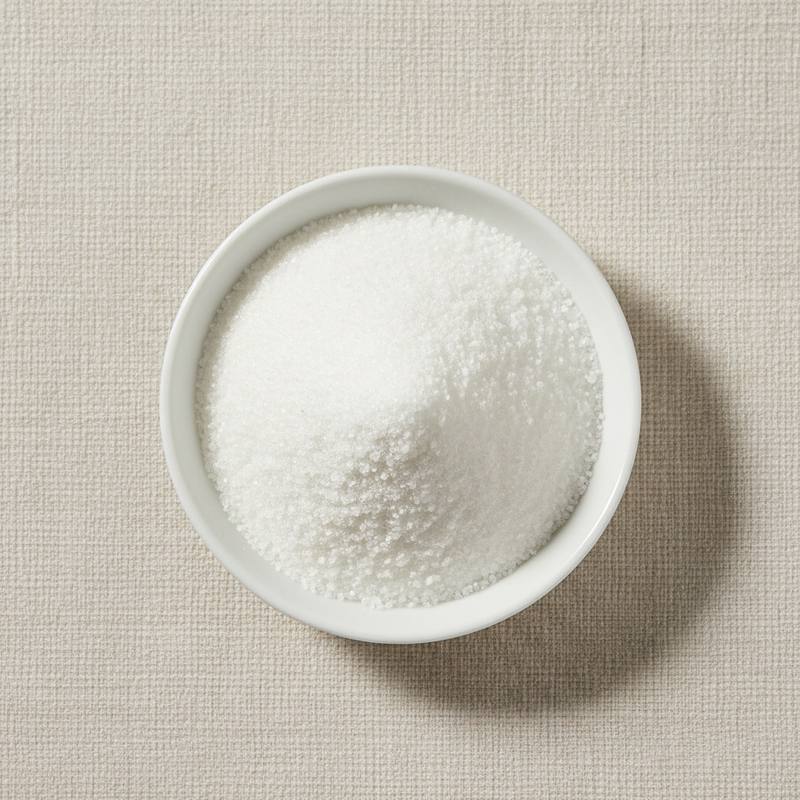
White crystalline powder with a distinct melting point of 226 to 230 °C. Used directly in applications where the sodium load of Sodium Saccharin would be undesirable, and as the starting material for in-house manufacturing of saccharin salts.
We supply food-grade and pharmaceutical-grade Insoluble Saccharin from manufacturers in China holding ISO, Halal, Kosher and other certifications relevant to the product and production.
Common market grades include Standard Food Grade (98 percent or higher purity), USP/EP/JP Pharmaceutical Grade (99 percent or higher), and Industrial Grade for use as the starting material in producing Sodium Saccharin and Calcium Saccharin.
Bulk and reduced-MOQ shipments. Batch-level COA covering assay, melting point, residue on ignition, heavy metals, and microbiology.
Introduction
Insoluble Saccharin is the chemical name for the free-acid form of 1,2-benzisothiazol-3(2H)-one 1,1-dioxide, the molecule discovered in 1879 by Constantin Fahlberg at Johns Hopkins University and patented as the first commercial artificial sweetener.
The acid form is produced by sulfonation of toluene followed by amidation and cyclization, then purified by recrystallization. Sodium Saccharin and Calcium Saccharin are produced by neutralization of the acid form with the corresponding hydroxide.
Regulated as E954 in the EU (covering both the acid and its salts), classified as safe by the U.S. FDA following the formal removal of warning-label requirements in 2000, listed in USP and EP pharmacopoeias, and approved by JECFA with an Acceptable Daily Intake of 5 mg per kg body weight expressed as saccharin.
The acid form's poor water solubility (approximately 1 part in 290 parts cold water) is what gives the product its commercial name and is the principal reason most food and beverage applications use the sodium salt. The acid form serves applications where slow dissolution, sodium reduction, or downstream chemistry require the unsalted molecule.
The molecule itself is identical in sweetness profile and metabolism to the saccharin delivered by the sodium and calcium salts. The salt counter-ions affect only solubility and the trace mineral content of the finished product.
Where it is used
- Manufacturing feedstock for the production of Sodium Saccharin and Calcium Saccharin salts
- Pharmaceutical applications requiring saccharin as an active ingredient or low-sodium sweetening agent
- Specialty diabetic products where reduced sodium content is required
- Effervescent tablet formulations where the acid form is preferred over the salt for solubility-on-dissolution behavior
- Toothpaste and oral-care products in low-sodium specialty grades
- Pharmaceutical syrup and lozenge manufacturing
- Chemical synthesis applications including specialty intermediates and laboratory reagents
- Industrial nickel electroplating as a brightener additive
Technical data
| Item | Specification |
|---|---|
| Appearance | White crystalline powder |
| Assay | ≥ 99.0% |
| Melting point | 226 °C to 230 °C |
| Loss on drying | ≤ 1.0% |
| Residue on ignition | ≤ 0.2% |
| Heavy metals (as Pb) | ≤ 10 mg/kg |
| Arsenic | ≤ 2 mg/kg |
| pH | 5.0 to 7.0 |
| Total plate count | ≤ 1000 cfu/g |
Related ingredients
Ready to discuss business?
Send us your spec and requirement. We will respond with availability and pricing within 24 hours.