Description
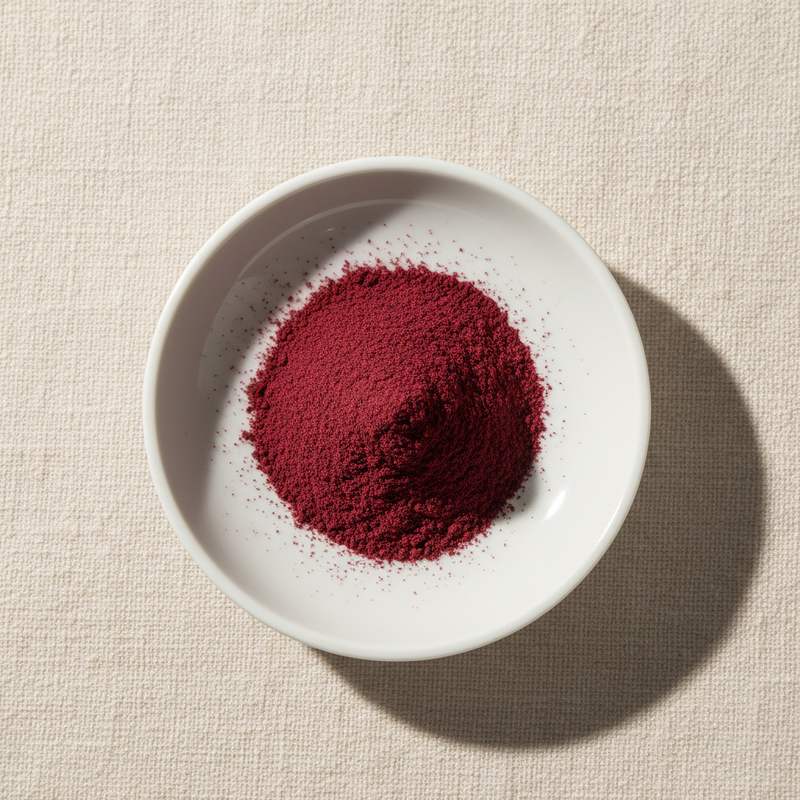
A synthetic bright cherry-pink to red water-soluble xanthene dye. Chemically the disodium salt of tetraiodofluorescein, listed in the United States as FD&C Red 3 and in the EU as E127. Delivers a distinctive bluish-red shade unique among approved red dyes.
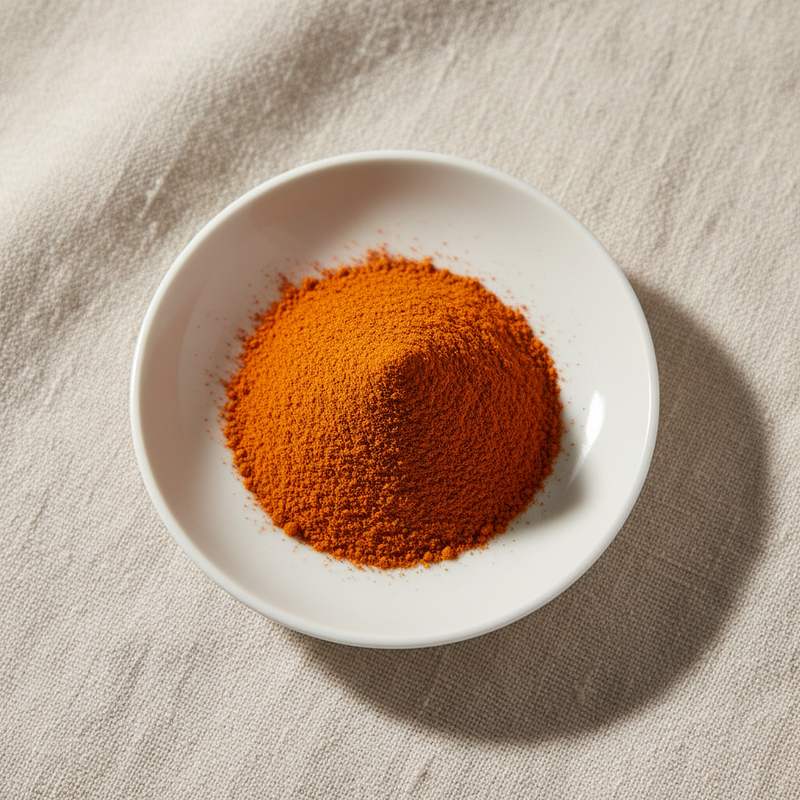
Bright red to brownish-red free-flowing fine powder. Water-soluble in the dye form, with the aluminum lake produced for tablet-coating, fondant, and confectionery work where bleed-resistance is required.
We supply food-grade Erythrosine from manufacturers in China holding ISO, Halal, Kosher and other certifications relevant to the product and production. Both the soluble dye and the aluminum lake are produced. Buyers should verify regulatory status in destination markets given recent U.S. FDA action.
Common market grades are sold by dye content: pure dye at minimum 87 percent total coloring matter and aluminum lake at 10 percent to 40 percent dye content.
Bulk and reduced-MOQ shipments. Batch-level COA covering total dye content, iodine content, fluorescein and subsidiary colors, heavy metals, and microbiology.
Introduction
Erythrosine was first synthesized in the late nineteenth century and approved for food use in major markets through the twentieth century. The dye occupies a small but distinctive niche in the red palette because of its unique bluish-red shade and bleed-resistance in oil-fat matrices.
Production proceeds by iodination of fluorescein with elemental iodine in alkaline solution, followed by isolation as the disodium salt and purification by recrystallization. The dye is then standardized to declared total coloring matter content.
The regulatory status of Erythrosine is shifting. In January 2025, the U.S. FDA announced the revocation of authorization for FD&C Red 3 in food and ingested drugs, with compliance dates extending into 2027 and 2028 for food and drug products respectively. The decision followed the Delaney Clause finding of carcinogenicity in rats. In the EU it remains permitted as E127 with restricted use limited to cocktail cherries and candied cherries.
Technical performance is excellent in confectionery and fondant applications, with strong stability through baking and short retort, broad pH compatibility from 4 to 9, and good light stability. The dye performs poorly below pH 4 where the free acid form precipitates.
Strategically, Erythrosine demand is declining as U.S. food and drug producers reformulate ahead of the 2027 and 2028 deadlines. Carmine, Beetroot Red, and combinations of Allura Red with Brilliant Blue are the principal reformulation targets depending on the application.
Where it is used
- Glace cherries and maraschino cherries; the traditional preferred dye for this application
- Sugar confectionery, gummies, and hard candies requiring distinctive cherry-pink shade
- Bakery decorations, fondant, and icings
- Dental hygiene products and disclosing tablets where staining is desirable
- Cocktail and dessert garnishes
- Pharmaceutical tablet coatings and capsules
- Cosmetics and personal-care preparations
- Veterinary and laboratory diagnostic applications
Technical data
| Item | Specification |
|---|---|
| Appearance | Bright red to brownish-red powder |
| Chemical class | Synthetic xanthene (tetraiodofluorescein) |
| Total coloring matter (dye) | ≥ 87.0% |
| Iodine content | 57% to 60% |
| Color value (E1%, 1cm, 526 nm) | ≥ 1100 |
| Solubility | Freely soluble in water above pH 4; insoluble (lake) |
| Light stability | Good |
| Heat stability | Good; stable through baking and short retort |
| pH stability range | 4.0 to 9.0 |
| Fluorescein and subsidiary colors | ≤ 4.0% |
| Lead | ≤ 2 mg/kg |
| Arsenic | ≤ 1 mg/kg |
Related ingredients
Ready to discuss business?
Send us your spec and requirement. We will respond with availability and pricing within 24 hours.