Description
A naturally occurring tripeptide complex of glycyl-L-histidyl-L-lysine bound to a copper ion, identified in human plasma in 1973 by Loren Pickart. Documented effects on dermal matrix synthesis, wound healing, and the appearance of fine lines and skin elasticity at ppm-level concentrations.
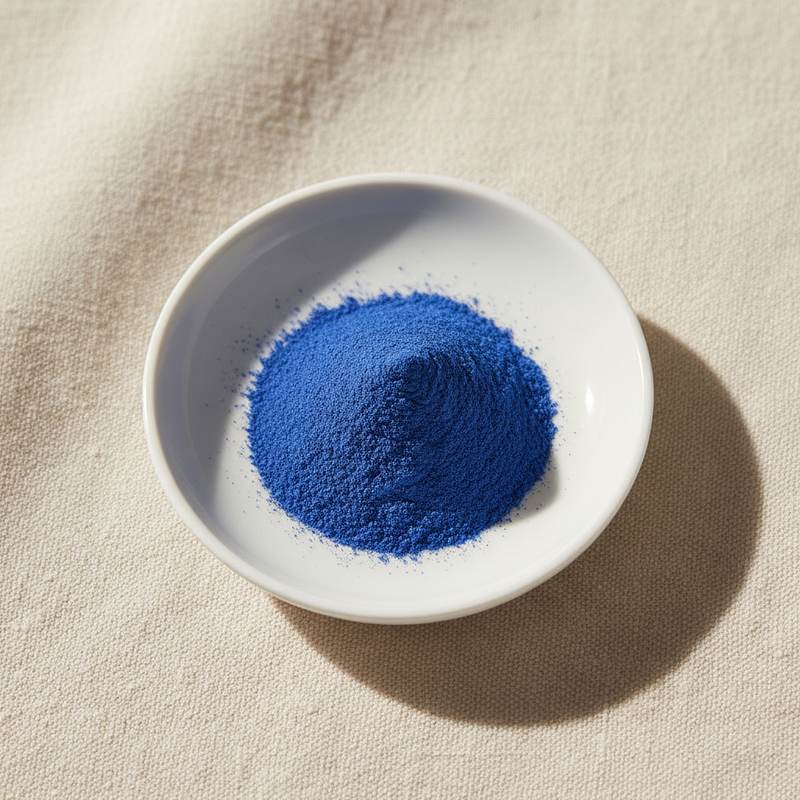
Blue to deep-blue crystalline powder with a characteristic copper coordination color. Highly water-soluble, with peak stability at slightly acidic pH (4.5 to 6.0). Sensitive to certain reducing actives such as vitamin C and to chelators such as EDTA, requiring careful formulation design.
We supply cosmetic-grade Copper Tripeptide-1 from manufacturers in China holding ISO 22716, ISO 9001, Halal and Kosher certifications relevant to the product and production.
Common market grades include GHK-Cu 95% min and 98% min HPLC purity, both supplied as crystalline powder. Pre-dissolved 1 percent and 5 percent aqueous solutions are also available for low-MOQ users and finished-product convenience.
Bulk and reduced-MOQ shipments. Batch-level COA covering HPLC purity, copper content, free GHK content, heavy metals, and microbiology.
Introduction
GHK-Cu was identified by Loren Pickart in 1973 during research on plasma factors that influence liver cell regeneration. The peptide was subsequently characterized as a small-molecule mediator of dermal repair, with a vast body of preclinical literature supporting roles in collagen synthesis, angiogenesis, and anti-inflammatory signaling. Cosmetic adoption began in the 1990s through Skin Biology and ProCyte (later Neutrogena), expanding through indie premium brands in the 2010s.
Industrial production is by solid-phase peptide synthesis of glycyl-L-histidyl-L-lysine (GHK), followed by complexation with copper(II) chloride or sulfate under controlled pH, then desalting, lyophilization, and recrystallization. The deep blue color is intrinsic to the Cu(II)-peptide chelate.
Regulatory status is that of a listed cosmetic ingredient in CosIng, the PCPC INCI dictionary, and China IECIC. EU CosIng lists Copper Tripeptide-1 with no fixed concentration limit but with finished-product safety assessment requirements that consider total copper exposure.
Clinical evidence is among the strongest for any cosmetic peptide. Peer-reviewed double-blind studies show GHK-Cu at 0.1 to 1 percent over 12 weeks improves the appearance of fine lines, skin firmness, hyperpigmentation, and post-procedure recovery time. Mechanism includes collagen and elastin synthesis upregulation, decorin and metalloproteinase modulation, and anti-inflammatory signaling.
Strategically, GHK-Cu is one of the highest-credibility actives in the global anti-aging category, with strong adoption among physician-channel and indie premium brands. The Ordinary's Buffet + Copper Peptides and NIOD's Copper Amino Isolate Serum have anchored mass and prestige consumer awareness.
Where it is used
- Premium anti-aging serums and concentrates at 0.05 to 1 percent
- Hair growth serums and scalp treatments (extensive clinical literature)
- Eye contour treatments for fine line appearance
- Post-procedure recovery products after micro-needling, laser, and peels
- Scar care and stretch-mark creams
- Wound-healing cosmetic adjuncts
- Single-active premium ampoules (indie brand format)
- Combination products with peptides and growth factors (avoiding vitamin C co-formulation)
Technical data
| Item | Specification |
|---|---|
| Appearance | Blue to deep-blue crystalline powder |
| INCI Name | Copper Tripeptide-1 |
| Assay (HPLC) | ≥ 95.0% |
| Copper content | 12.0% to 14.0% |
| Free GHK content | ≤ 2.0% |
| Loss on drying | ≤ 5.0% |
| pH (1% solution) | 4.5 to 6.0 |
| Heavy metals (as Pb) | ≤ 10 mg/kg |
| Arsenic | ≤ 2 mg/kg |
| Total plate count | ≤ 100 CFU/g |
| E. coli, Salmonella, S. aureus, P. aeruginosa | Negative |
| Storage | Cool, dry, protected from light |
| Source | Solid-phase peptide synthesis with copper complexation |
Related ingredients
Ready to discuss business?
Send us your spec and requirement. We will respond with availability and pricing within 24 hours.