Description
Catalase is an oxidoreductase that catalyses the decomposition of hydrogen peroxide into water and molecular oxygen. In food processing it is the enzyme that neutralises residual hydrogen peroxide after cold-pasteurisation of milk and after antimicrobial peroxide treatments in egg, dairy and beverage lines.
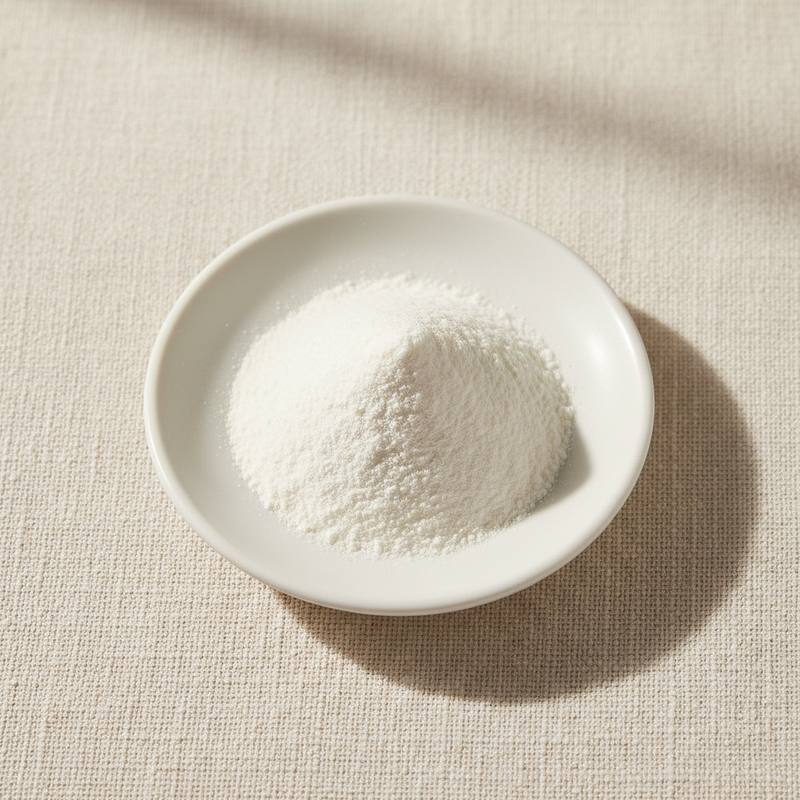
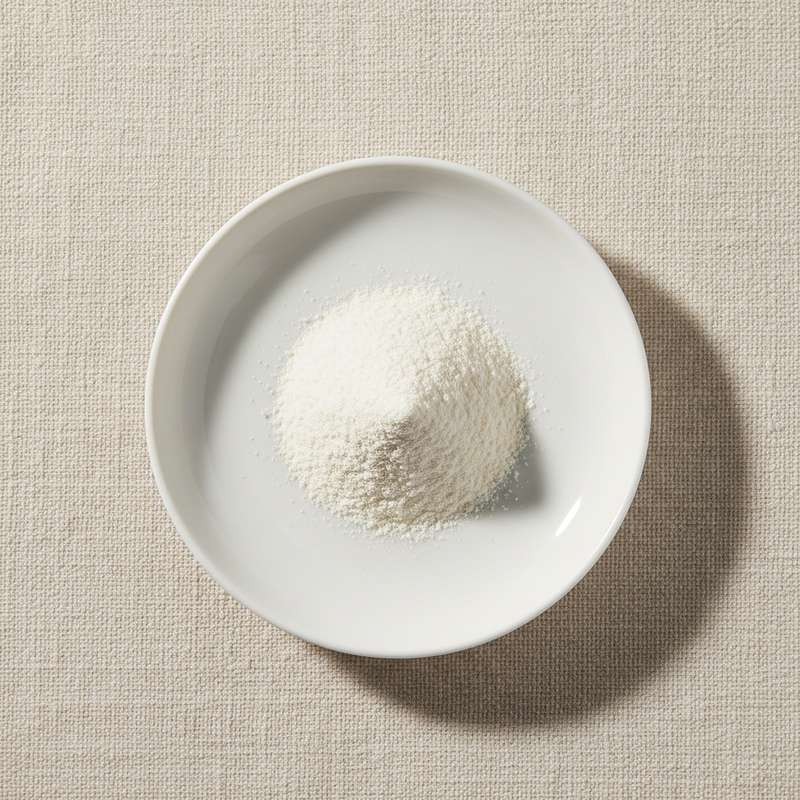
Amber to dark brown liquid for in-line dosing, or off-white powder for blended dry products. Activity is standardised in Catalase Units (CU or Baker Units) defined as the amount of enzyme decomposing one micromole of hydrogen peroxide per minute at pH 7.0 and 25 degrees Celsius.
We supply food-grade Catalase from manufacturers in China holding ISO 22000, Halal, Kosher and other certifications relevant to the product and production. Aspergillus niger and Micrococcus luteus are the dominant microbial sources, with bovine-liver catalase available for specialty applications.
Common market grades include 25,000 CU/mL standard liquid for dairy hydrogen peroxide removal, 100,000 CU/mL concentrated, 500,000 CU/g powder for blended bakery and beverage systems, and combined glucose oxidase plus catalase preparations for single-step oxygen scavenging plus peroxide neutralisation.
Bulk and reduced-MOQ shipments. Batch-level COA covering activity, pH optimum, temperature optimum, moisture (for powders), heavy metals and microbiology.
Introduction
Catalase was discovered by Louis Jacques Thenard in 1818 and characterised enzymatically by Oscar Loew in 1900. It is one of the fastest enzymes known, with a turnover number of approximately 40 million substrate molecules per second per active site, approaching the theoretical limit imposed by substrate diffusion.
Industrial production has historically been by extraction from bovine liver, but modern global supply is dominated by submerged fermentation of Aspergillus niger and Micrococcus luteus, with downstream concentration and stabilisation in liquid or spray-dried powder form. Microbial sourcing supports Halal, Kosher and clean-label positioning that animal-derived catalase cannot match.
The enzyme is Generally Recognized as Safe by the U.S. FDA from approved source organisms, listed in the JECFA enzyme compendium, and approved as a processing aid in the EU. No Acceptable Daily Intake is assigned.
Mechanistically, catalase is a heme-containing oxidoreductase that decomposes hydrogen peroxide through a two-step ping-pong mechanism: one molecule of hydrogen peroxide oxidises the heme iron to a Compound I intermediate, and a second molecule of hydrogen peroxide reduces it back, releasing water and molecular oxygen. The reaction is exceptionally fast and proceeds without external cofactors.
Strategic positioning in industrial food processing is anchored in the dairy industry as the canonical complement to hydrogen peroxide cold-pasteurisation, but the most rapid growth segment is the combined glucose oxidase plus catalase oxygen-scavenging system used in modern beverage and dressing manufacture, where the two enzymes work in concert to remove oxygen without leaving peroxide residue.
Where it is used
- Milk cold-pasteurisation residual hydrogen peroxide removal; the original and largest single application in dairy processing
- Cheese-milk hydrogen peroxide treatment neutralisation prior to starter inoculation
- Egg-product hydrogen peroxide antimicrobial treatment neutralisation
- Combined glucose oxidase plus catalase oxygen scavenging in beverages, mayonnaise and salad dressings
- Textile bleach removal in the textile industry (the largest single application of catalase by volume globally)
- Contact lens cleaning solution residual peroxide neutralisation
- Bakery dough applications where hydrogen peroxide is used as a process aid
- Aseptic packaging hydrogen peroxide residue management in food contact
Technical data
| Item | Specification |
|---|---|
| Appearance | Amber to dark brown liquid or off-white powder |
| Activity (liquid) | 25,000 to 100,000 CU/mL or per customer specification |
| Activity (powder) | 100,000 to 500,000 CU/g |
| pH optimum | 6.0 to 8.0 |
| Temperature optimum | 20 °C to 35 °C |
| Moisture (powder) | ≤ 8.0% |
| Heavy metals (as Pb) | ≤ 10 mg/kg |
| Arsenic | ≤ 3 mg/kg |
| Total plate count | ≤ 50,000 CFU/g |
| Coliforms | ≤ 30 CFU/g |
| Salmonella | Absent in 25 g |
| E. coli | Absent in 25 g |
| Source organism | Aspergillus niger or Micrococcus luteus |
Related ingredients
Ready to discuss business?
Send us your spec and requirement. We will respond with availability and pricing within 24 hours.