Description
Asparaginase catalyses the hydrolysis of the amino acid L-asparagine into L-aspartate and ammonia. In food processing it is dosed into raw dough and slurries to remove asparagine before high-temperature processing, blocking the principal pathway of acrylamide formation in baked, fried and roasted starch-rich foods.
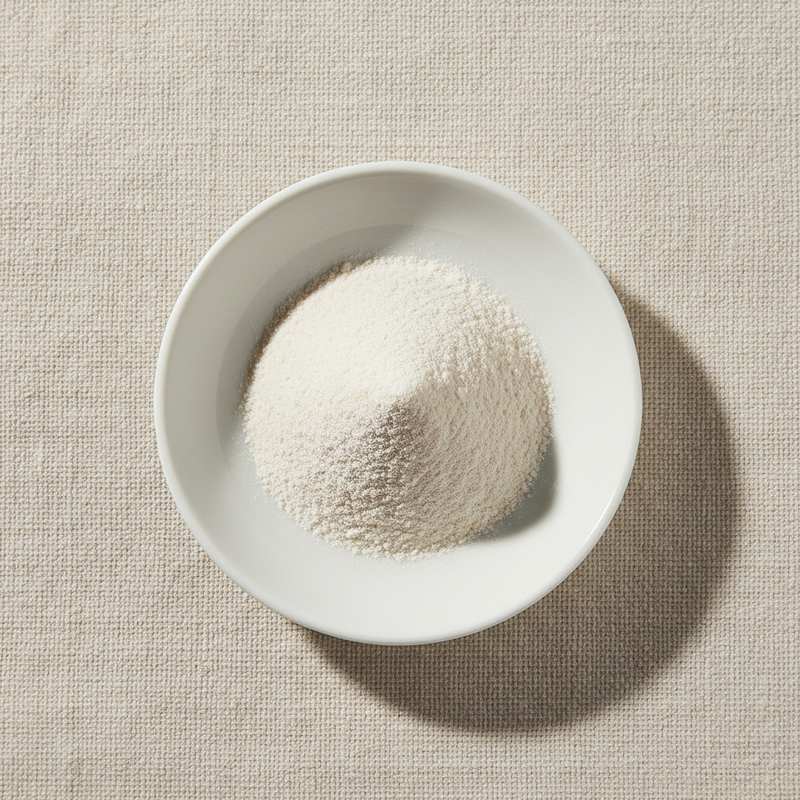
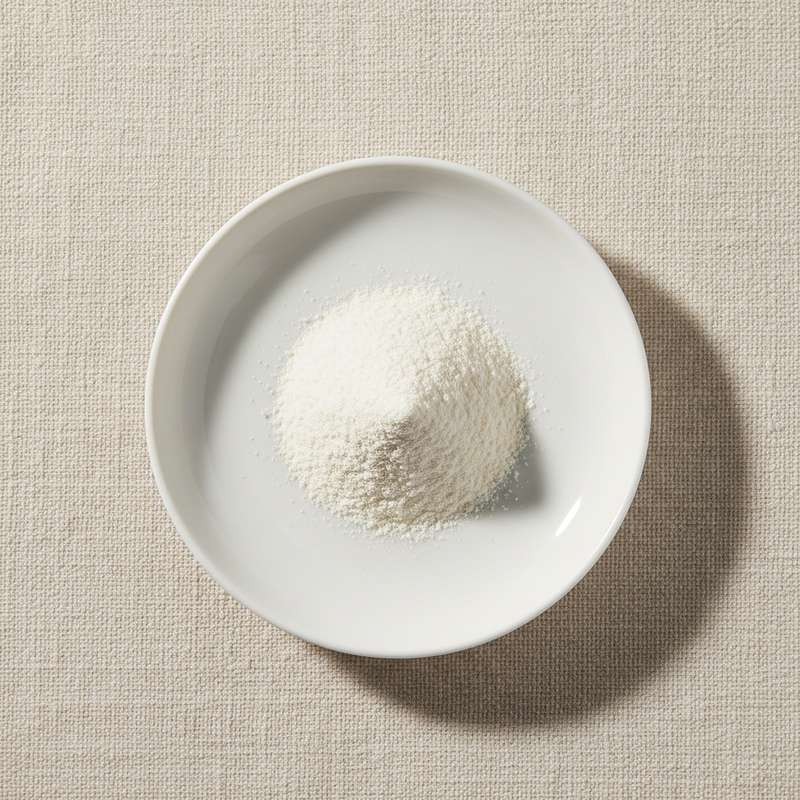
Off-white to light tan free-flowing powder, or amber liquid for in-line dosing. Activity is standardised in Asparaginase Units (ASNU) defined as the amount of enzyme releasing one micromole of ammonia per minute from L-asparagine.
We supply food-grade Asparaginase from manufacturers in China holding ISO 22000, FSSC 22000, Halal, Kosher and other certifications relevant to the product and production. Aspergillus oryzae and Aspergillus niger are the dominant source organisms.
Common market grades include 500 ASNU/g standard bakery grade, 2,000 to 5,000 ASNU/g concentrated for fried-snack and biscuit lines, 10,000 ASNU/g high-activity grade for roasted-coffee and breakfast-cereal applications, and specialty grades formulated for fast hydration and rapid action in short-process lines.
Bulk and reduced-MOQ shipments. Batch-level COA covering activity, pH optimum, temperature optimum, moisture, heavy metals, microbiology and source organism declaration.
Introduction
Asparaginase entered industrial food production in 2007 following the seminal 2002 discovery by Swedish researchers that acrylamide forms in high-temperature processing of starch-rich foods via the Maillard reaction between asparagine and reducing sugars. The enzyme is the only direct biological route to acrylamide reduction without changing product identity.
Industrial production is by submerged fermentation of Aspergillus oryzae and Aspergillus niger strains. The enzyme is supplied in liquid and powder forms, with thermal stability and rapid hydration matched to the kinetics of short-process biscuit and fried-snack lines, where dwell time before high-temperature processing is limited to minutes.
The enzyme is approved by the U.S. FDA as Generally Recognized as Safe from approved source organisms, listed in the JECFA enzyme compendium, and approved as a processing aid in the EU. The EU Regulation 2017/2158 sets benchmark levels for acrylamide that have made asparaginase a de facto standard processing aid for compliant manufacturing.
Mechanistically, asparaginase hydrolyses the side-chain amide of L-asparagine, releasing ammonia and leaving L-aspartate behind. L-aspartate does not generate acrylamide under Maillard conditions, so the precursor is effectively eliminated. Reducing sugars remain in the product, preserving browning and flavour generation while suppressing acrylamide specifically.
Strategic positioning is regulatory-driven and global: asparaginase is the only enzyme designed specifically to address a food-safety concern (acrylamide) rather than a process or quality objective, which positions it as a compliance technology rather than a discretionary processing aid in markets with acrylamide benchmark levels.
Where it is used
- Potato crisp and french-fry manufacture; reduces acrylamide content by 60 to 90 percent in finished products
- Biscuit, cracker and cookie production; meets EU benchmark levels under Regulation 2017/2158
- Bread, crispbread and toast manufacture; addresses acrylamide formation in crust-heavy products
- Breakfast cereal production; reduces acrylamide in roasted flake and puffed products
- Coffee processing; reduces acrylamide formation during roasting
- Fried snack production from corn, wheat and potato bases
- Pretzel and other browned bakery products with high-temperature surface treatment
- Infant cereal and toddler-food production where acrylamide limits are tightest
Technical data
| Item | Specification |
|---|---|
| Appearance | Off-white to light tan powder or amber liquid |
| Activity | 500 to 10,000 ASNU/g or per customer specification |
| pH optimum | 6.0 to 8.0 |
| Temperature optimum | 30 °C to 50 °C |
| Moisture | ≤ 8.0% |
| Heavy metals (as Pb) | ≤ 10 mg/kg |
| Arsenic | ≤ 3 mg/kg |
| Total plate count | ≤ 50,000 CFU/g |
| Coliforms | ≤ 30 CFU/g |
| Salmonella | Absent in 25 g |
| E. coli | Absent in 25 g |
| Source organism | Aspergillus oryzae or Aspergillus niger |
Related ingredients
Ready to discuss business?
Send us your spec and requirement. We will respond with availability and pricing within 24 hours.