Description
A non-ionic emulsifier produced by acetylation of monoglycerides with acetic anhydride. Behavior depends strongly on the degree of acetylation: partially acetylated grades function as emulsifiers, while fully acetylated grades act as flexible film-forming coatings.
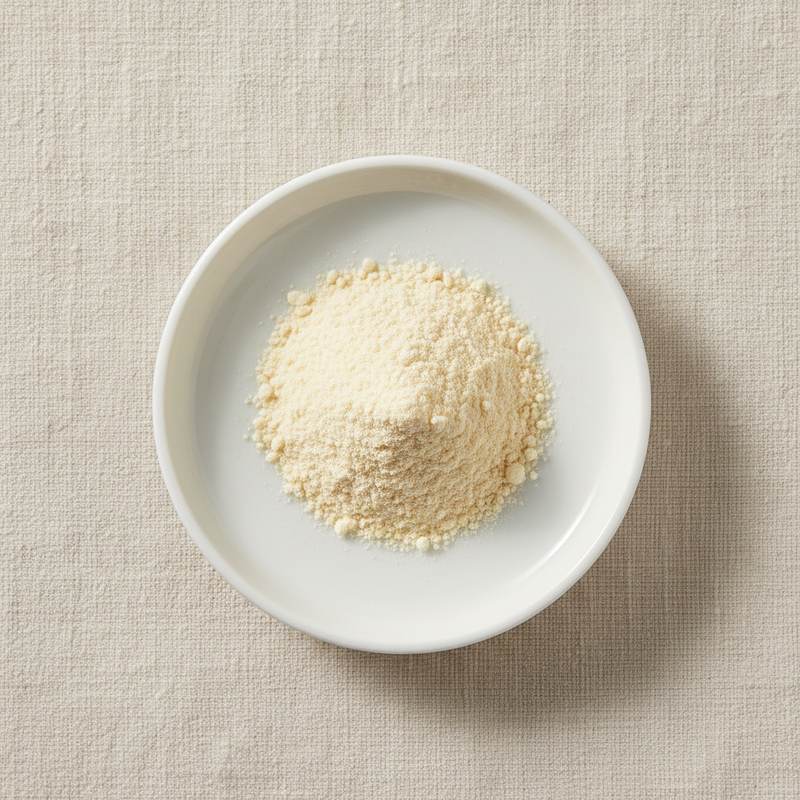
White to yellowish waxy solid, flake, or pastille. Soluble in oils, dispersible in hot water. Lower melting point and greater flexibility than the parent monoglycerides.
We supply food-grade Acetylated Monoglycerides from manufacturers in China holding ISO, Halal, Kosher and other certifications relevant to the product and production.
Common market grades include partially acetylated for shortening and cake emulsifier use, fully acetylated for protective food coatings on nuts and dried fruits, and distilled high-purity grades for premium bakery and confectionery applications.
Bulk and reduced-MOQ shipments. Batch-level COA covering acetyl value, hydroxyl value, free acetic acid, monoester content, and microbiology.
Introduction
Acetylated monoglycerides were developed in the United States during the 1940s and 1950s as a designer modification of conventional monoglycerides, with the goal of improving flexibility, lowering melting point, and creating film-forming behavior absent in the parent compound.
Production is by acetylation of distilled or technical monoglycerides with acetic anhydride under acid catalysis, followed by neutralization and removal of residual acetic acid. The degree of acetylation is controlled to deliver either emulsifier-grade or coating-grade product.
Regulated as E472a in the EU, classified as Generally Recognized as Safe by the U.S. FDA, and approved by JECFA without a numerical Acceptable Daily Intake limit.
The two functional regimes correspond to two distinct food roles: at low acetylation the molecule retains hydroxyl groups for emulsification, while at high acetylation the molecule behaves as a flexible wax-like film that coats and protects sensitive food surfaces.
Where it is used
- Bakery shortenings and cake emulsifiers; provides flexibility and aeration in laminated and creamed shortening systems
- Food-grade protective coatings for nuts, raisins, dried fruits, and confectionery centers; oxygen and moisture barrier
- Whipped toppings and aerated dessert preparations
- Margarine and table spreads; controls texture and improves spreadability
- Confectionery glazing for panned candies and chocolate centers
- Cheese and processed-meat surface coatings; flexible film prevents drying and oxidation
- Bakery release agents and pan oils
- Snack food seasoning carriers; binds spice mixes to chip and cracker surfaces
Technical data
| Item | Specification |
|---|---|
| Appearance | White to yellowish waxy solid, flake, or pastille |
| Acetyl value | Per grade specification |
| Acid value (mg KOH/g) | ≤ 6.0 |
| Hydroxyl value (mg KOH/g) | Per grade specification |
| Saponification value (mg KOH/g) | Per grade specification |
| Free glycerol | ≤ 2.0% |
| Free acetic acid | ≤ 0.1% |
| Heavy metals (as Pb) | ≤ 5 mg/kg |
| Arsenic | ≤ 3 mg/kg |
Related ingredients


Ready to discuss business?
Send us your spec and requirement. We will respond with availability and pricing within 24 hours.