Description
A sphingan-family exopolysaccharide produced by aerobic fermentation of Sphingomonas sp. (formerly Alcaligenes sp.). Closely related to gellan and rhamsan gums but with a single rhamnose or mannose side chain on every repeat unit that prevents ordered aggregation, yielding non-gelling solutions with exceptional viscosity, salt tolerance, and thermal stability.
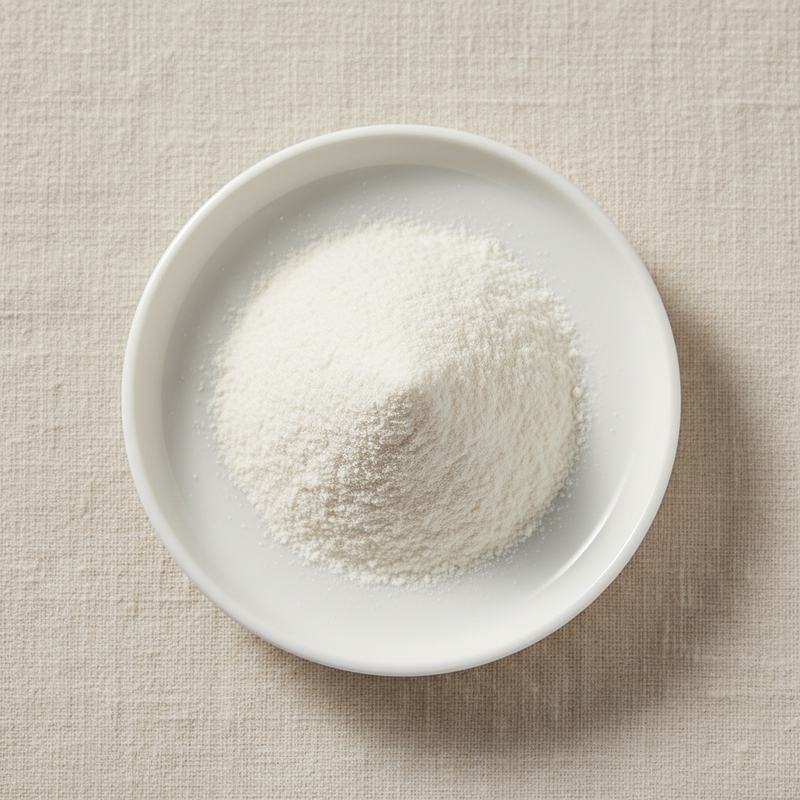
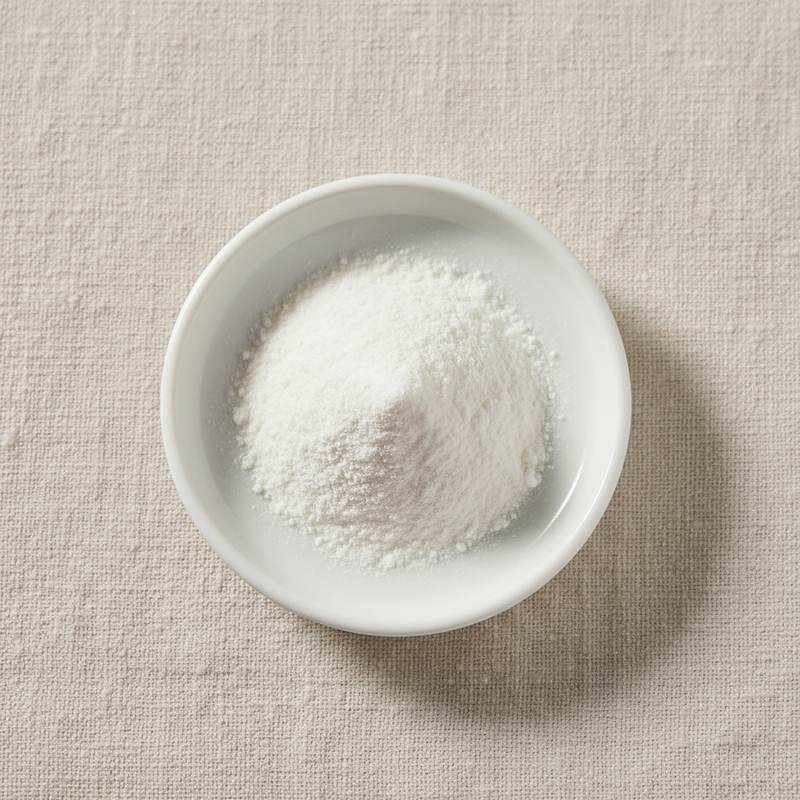
Off-white to pale yellow free-flowing powder. Hydrates in cold water to produce highly pseudoplastic solutions stable in saturated brine, at extremes of pH, and at temperatures up to 150 °C; performance unmatched by competing food-grade hydrocolloids in these harsh systems.
We supply food-grade Welan Gum from manufacturers in China holding ISO, Halal, Kosher and other certifications relevant to the product and production.
Common market grades include Food-Grade Welan (the standard for retort sauces, high-salt dressings, and stable beverage suspensions), Industrial Welan for oilfield drilling fluids and cementitious self-leveling compounds, and Premium Filtration Grade for clear-beverage applications.
Bulk and reduced-MOQ shipments. Batch-level COA covering viscosity, particle size, residual protein, heavy metals, and microbiology.
Introduction
Welan Gum was developed by Kelco in the 1980s as a sister polysaccharide to Gellan, sharing the sphingan backbone but with structural modifications that change rheology profoundly. It was commercialized for industrial uses first and gained food-additive approval in China and several Asian markets subsequently.
Industrial production proceeds by aerobic submerged fermentation of Sphingomonas sp. on glucose or sucrose substrates, followed by cell lysis, filtration, alcohol precipitation, drying, and milling. The product is a tetrasaccharide repeat-unit polymer of glucose, glucuronic acid, and rhamnose, with a pendant L-rhamnose or L-mannose on every repeat.
Approved as a food additive in China (GB 2760) and several other Asian markets; global regulatory acceptance is expanding. JECFA evaluation in progress.
The molecule's defining property is the pendant side chain that disrupts the helical aggregation that drives gel formation in gellan. The result is a non-gelling polysaccharide with exceptionally high low-shear viscosity, very strong pseudoplastic flow, and almost no viscosity loss in saturated salt or at 100 °C heat treatment.
Strategic positioning targets two distinct markets: difficult food systems where salt content, pH extremes, or retort processing defeat conventional hydrocolloids; and industrial cementitious and oilfield applications where the high-temperature and high-salinity stability are uniquely valuable. Use levels are very low (0.02 to 0.1 percent) which partly offsets the premium per-kg cost relative to xanthan.
Where it is used
- High-salt salad dressings and brined sauces; the leading viscosifier where salt tolerance is required
- Retort-processed and pressure-cooked sauces requiring viscosity retention after extended heat treatment
- Beverage suspension systems in difficult brine or acidic matrices
- Plant-based meat sauces and seasoning gels with broad pH range
- Self-leveling cementitious compounds and architectural concrete
- Oilfield drilling fluids and high-temperature well stimulation
- Industrial coatings and ceramic glazing slips
- Specialty pharmaceutical suspensions requiring extended viscosity stability
Technical data
| Item | Specification |
|---|---|
| Appearance | Off-white to pale yellow free-flowing powder |
| Viscosity (0.1% in 4% KCl) | ≥ 1000 cP |
| pH (1% solution) | 6.0 to 8.0 |
| Loss on drying | ≤ 12.0% |
| Ash | ≤ 10.0% |
| Nitrogen content | ≤ 3.0% |
| Heavy metals (as Pb) | ≤ 5 mg/kg |
| Arsenic | ≤ 3 mg/kg |
| Particle size | ≥ 95% through 60 mesh |
| Total plate count | ≤ 5000 cfu/g |
Related ingredients
Ready to discuss business?
Send us your spec and requirement. We will respond with availability and pricing within 24 hours.