Description
The world's most widely used flavor compound and the dominant vanilla-flavor ingredient globally. Approximately 99 percent of commercial vanilla flavor in food and beverage manufacturing comes from synthetic Vanillin rather than natural vanilla bean extract.
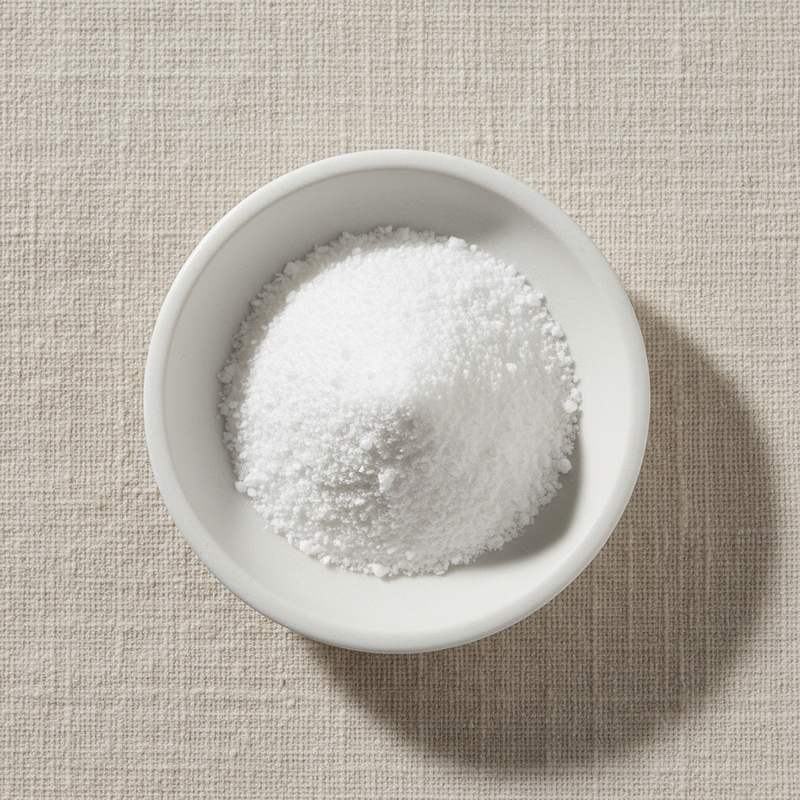
White to off-white crystalline needles or powder with characteristic strong vanilla aroma. Slightly soluble in water; freely soluble in alcohol, propylene glycol, and oils.
We supply food-grade and pharmaceutical-grade Vanillin from manufacturers in China holding ISO, Halal, Kosher and other certifications relevant to the product and production.
Common market grades include Standard Food Grade (FCC compliant 99 percent purity), Pharmaceutical Grade meeting BP/USP/EP specifications, and Tobacco Grade for cigarette flavoring applications.
Bulk and reduced-MOQ shipments. Batch-level COA covering assay, melting point, residue on ignition, heavy metals, and microbiology.
Introduction
Vanillin is the principal aroma compound in vanilla beans (Vanilla planifolia) and was first isolated from vanilla pods by Nicolas-Theodore Gobley in 1858. Synthetic production was commercialized in the 1870s by Wilhelm Haarmann and Ferdinand Tiemann, who synthesized Vanillin from coniferin extracted from pine bark.
Modern industrial production proceeds primarily by oxidation of guaiacol with glyoxylic acid, yielding Vanillin at high purity at a fraction of the cost of natural extraction. Lignin-based production from paper-pulp byproducts also operates, providing 'natural-positioned' Vanillin that is chemically identical to the synthetic form.
Recognized as a permitted food ingredient by the U.S. FDA, the European Food Safety Authority, and equivalent regulators worldwide. JECFA approval is established without a numerical Acceptable Daily Intake.
The molecule's flavor profile is the defining sensory feature of vanilla, regardless of whether the source is natural extract, lignin-derived, or fully synthetic. Natural vanilla extract differs from pure Vanillin in containing approximately 200 minor flavor compounds at trace concentrations, contributing to a more complex flavor profile that justifies the substantial price premium of natural vanilla.
Strategic role in food manufacturing combines flavor function with cost optimization: typical use levels of 50 to 1000 mg per kg of finished product deliver intense vanilla character at less than 1 percent of the equivalent natural-extract cost, which is why synthetic Vanillin dominates global vanilla flavor supply.
Where it is used
- Bakery products: cakes, cookies, biscuits, pastries, and bread; the dominant flavor compound in vanilla-positioned baked goods globally
- Confectionery: chocolate, ice cream, candies, and gummies; vanilla as both standalone flavor and flavor enhancer
- Dairy: vanilla yogurt, flavored milk, ice cream, and frozen desserts
- Beverages: cola formulations, vanilla-flavored sodas, and dairy beverages
- Pharmaceutical syrups and chewable tablets; vanilla flavoring masks bitter actives
- Cosmetic and personal-care fragrances: lotions, lipsticks, and perfumes
- Tobacco flavoring in cigarettes and pipe tobacco
- Animal feed and pet food palatant in vanilla-positioned products
Technical data
| Item | Specification |
|---|---|
| Appearance | White to off-white crystalline needles or powder |
| Assay (HPLC) | ≥ 99.0% |
| Melting point | 81 °C to 83 °C |
| Loss on drying | ≤ 0.5% |
| Residue on ignition | ≤ 0.05% |
| Heavy metals (as Pb) | ≤ 10 mg/kg |
| Arsenic | ≤ 3 mg/kg |
| Particle size | Per customer specification |
Related ingredients
Ready to discuss business?
Send us your spec and requirement. We will respond with availability and pricing within 24 hours.