Description
A naturally occurring disaccharide of two glucose units linked α,α-1,1. Approximately 45 percent the sweetness of sucrose with a clean, mild taste profile. Found in mushrooms, baker's yeast, honey, certain plants, and many invertebrates, where it serves as a stress-protection molecule against desiccation, freezing, and oxidative damage.
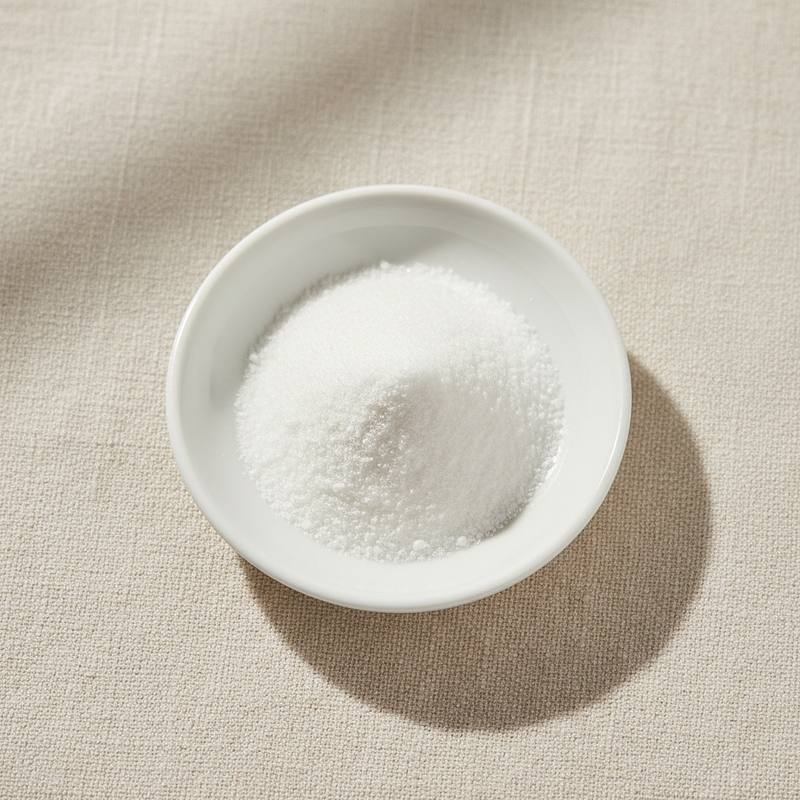
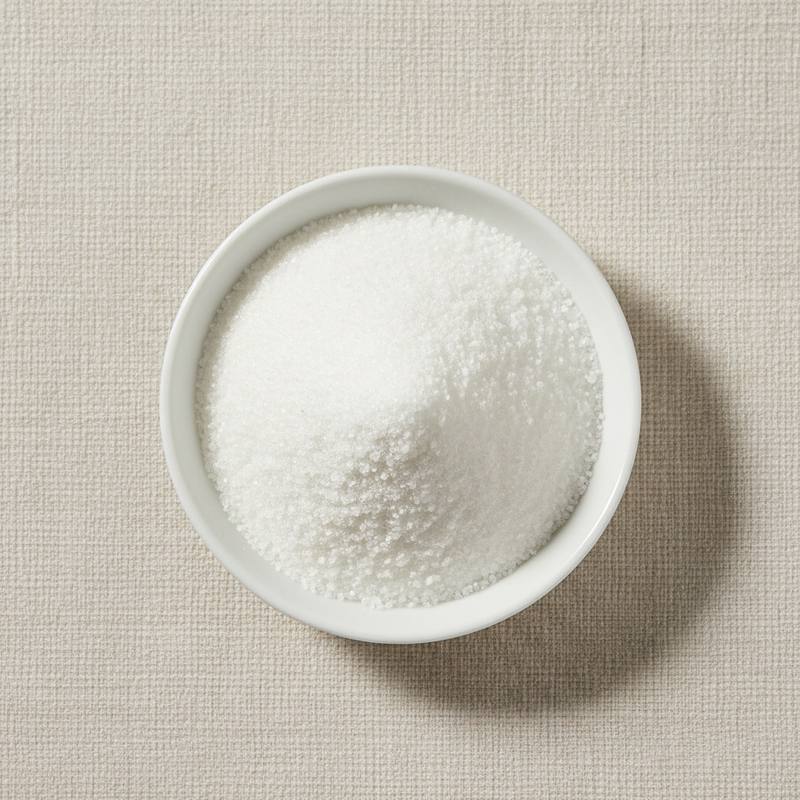
White crystalline powder, dihydrate form. Heat-stable, acid-stable, non-reducing, and resistant to Maillard browning, which makes it valuable in applications where sucrose darkening is undesirable.
We supply food-grade and pharmaceutical-grade Trehalose from manufacturers in China holding ISO, Halal, Kosher and other certifications relevant to the product and production.
Common market grades include Trehalose Dihydrate food grade (the dominant commercial format), Trehalose Anhydrous for moisture-sensitive applications, and pharmaceutical USP/EP/JP grade for biologics stabilization and parenteral formulations.
Bulk and reduced-MOQ shipments. Batch-level COA covering assay, reducing sugars, heavy metals, endotoxin (pharma grade), and microbiology.
Introduction
Trehalose was first isolated in 1832 from ergot of rye by Henri Auguste Wiggers. Until the late 1990s, it was prohibitively expensive due to extraction from yeast.
The Japanese company Hayashibara revolutionized the market in 1995 with an enzymatic process that converts starch directly to Trehalose using maltooligosyl trehalose synthase and maltooligosyl trehalose trehalohydrolase. Production cost dropped by two orders of magnitude, transforming Trehalose from a laboratory reagent into a bulk food ingredient.
Regulated as a Novel Food in the EU since 2001, classified as Generally Recognized as Safe by the U.S. FDA since 2000, and approved by JECFA without a numerical Acceptable Daily Intake limit.
The molecule's distinguishing property is its capacity to stabilize biological structures against desiccation, freezing, and high temperature. The α,α-1,1 glycosidic bond is highly stable and non-reducing, meaning Trehalose neither hydrolyzes under normal food conditions nor participates in Maillard reactions. The compound also forms a glassy matrix on dehydration that physically immobilizes proteins, membranes, and starch granules.
Commercial value spans three distinct application domains. In food, Trehalose is the preferred sugar for frozen and dried products where texture and color preservation matter. In pharmaceuticals, it is the dominant lyoprotectant for biologic drugs. In cosmetics, its humectant and antioxidant properties support a premium positioning in skincare and oral-care formulations.
Where it is used
- Frozen and chilled bakery products; protects starch and protein structure through freeze-thaw cycles
- Dried and freeze-dried foods including instant noodles, dried fruits, and dehydrated soups; preserves texture and color
- Confectionery and chocolate; suppresses moisture migration and crystallization
- Sushi rice, sashimi, and seafood applications in Japan; preserves color and texture in chilled and frozen distribution
- Pharmaceutical biologics including monoclonal antibodies, vaccines, and insulin formulations as a lyo-protectant
- Cosmetics and personal care; humectant and antioxidant in skincare and oral-care products
- Sports nutrition and recovery beverages; slow-release glucose source with minimal osmotic load
- Beverages, dairy, and dessert applications where reduced sweetness and improved mouthfeel are desired
Technical data
| Item | Specification |
|---|---|
| Appearance | White crystalline powder |
| Assay (anhydrous basis) | ≥ 98.0% |
| Water content (dihydrate) | 9.0% to 11.0% |
| pH (10% solution) | 4.5 to 6.5 |
| Melting point (dihydrate) | 97 °C |
| Specific rotation | +197° to +201° |
| Reducing sugars | ≤ 0.2% |
| Heavy metals (as Pb) | ≤ 5 mg/kg |
| Arsenic | ≤ 1 mg/kg |
| Total plate count | ≤ 300 CFU/g |
Related ingredients
Ready to discuss business?
Send us your spec and requirement. We will respond with availability and pricing within 24 hours.