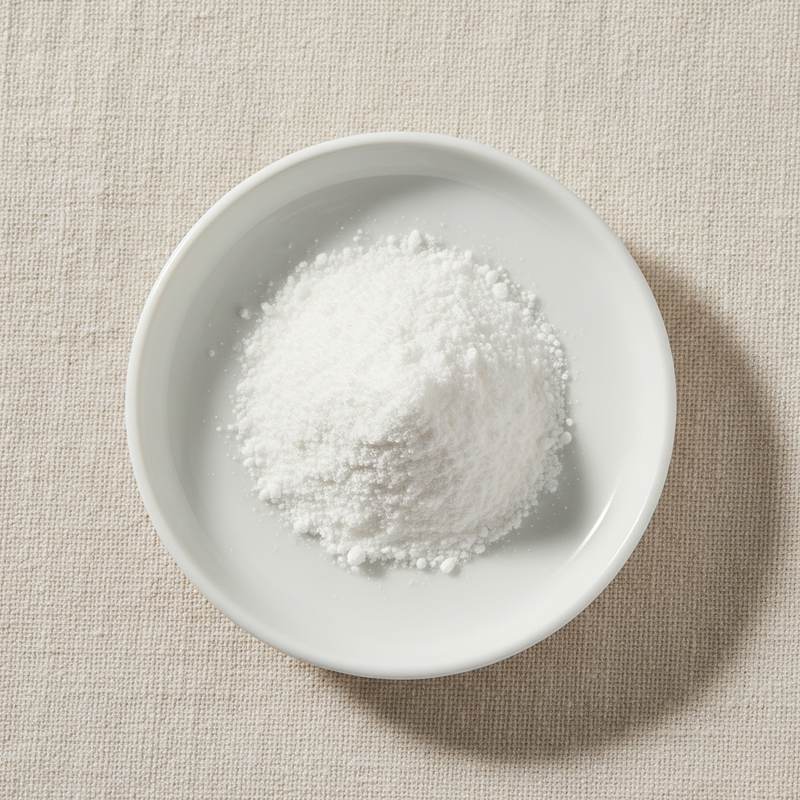
Description
A non-caloric fat replacer composed of sucrose esterified with six to eight long-chain fatty acids. The high degree of esterification renders the molecule too large for pancreatic lipase to hydrolyze, so it passes through the digestive system without absorption. Known commercially as Olestra in the United States.
Light yellow to amber viscous oil or soft solid. Physical and cooking properties closely match conventional vegetable oils, supporting frying, baking, and sauce applications.
We supply Sucrose Octaester from manufacturers in China holding ISO, Halal, Kosher and other certifications relevant to the product and production. This is a specialty ingredient with regulatory acceptance varying by jurisdiction.
Common market grades include high-octaester Type I for snack frying and Type II with controlled fatty acid distribution for specialty applications. Co-formulation with fat-soluble vitamins is required in some jurisdictions to compensate for vitamin malabsorption.
Bulk and reduced-MOQ shipments. Batch-level COA covering degree of esterification, fatty acid profile, free fatty acid, peroxide value, and microbiology.
Introduction
Sucrose polyester was developed by Procter and Gamble in the late 1960s as a candidate non-caloric fat replacer and was commercialized as Olestra in the United States following U.S. FDA approval in 1996 for use in salty snack foods.
Production is by transesterification of sucrose with methyl or vinyl esters of long-chain fatty acids under alkaline catalysis. The product distribution favors hexa-, hepta-, and octaesters, with the degree of substitution averaging approximately seven of the eight available sucrose hydroxyl positions.
Regulatory status varies significantly by jurisdiction. Approved in the United States by the U.S. FDA for use in savory snack foods with mandatory fat-soluble vitamin fortification. Not approved in the European Union or several other markets. Approved in Canada for limited applications.
The commercial trajectory of sucrose polyester illustrates both the promise and the constraints of designer fat replacers: chemically the ingredient works as intended, but gastrointestinal effects at moderate doses and consumer perception challenges have limited the category to a narrower set of applications than originally projected.
Where it is used
- Reduced-calorie snack food frying including chips and crackers
- Low-fat and fat-free salty snack formulations
- Specialty bakery products positioned for weight management
- Frozen prepared foods marketed to calorie-conscious consumers
- Research and development applications in functional food science
- Clinical nutrition for specific lipid-restricted dietary requirements (where permitted)
- Cosmetic applications in lipid-restricted skin care formulations
Technical data
| Item | Specification |
|---|---|
| Appearance | Light yellow to amber viscous oil or soft solid |
| Degree of esterification | Average ≥ 7 of 8 hydroxyl positions |
| Fatty acid distribution | Per product specification |
| Free fatty acid (as oleic acid) | ≤ 0.10% |
| Peroxide value (meq/kg) | ≤ 5.0 |
| Moisture | ≤ 0.10% |
| Free sucrose | ≤ 1.0% |
| Heavy metals (as Pb) | ≤ 1 mg/kg |
| Iodine value | Per feedstock specification |
Related ingredients
Ready to discuss business?
Send us your spec and requirement. We will respond with availability and pricing within 24 hours.