Description
A non-ionic emulsifier produced by esterification of sucrose with edible fatty acids. HLB ranges from 1 to 16 depending on the degree of esterification, covering the full spectrum from lipophilic to highly hydrophilic.
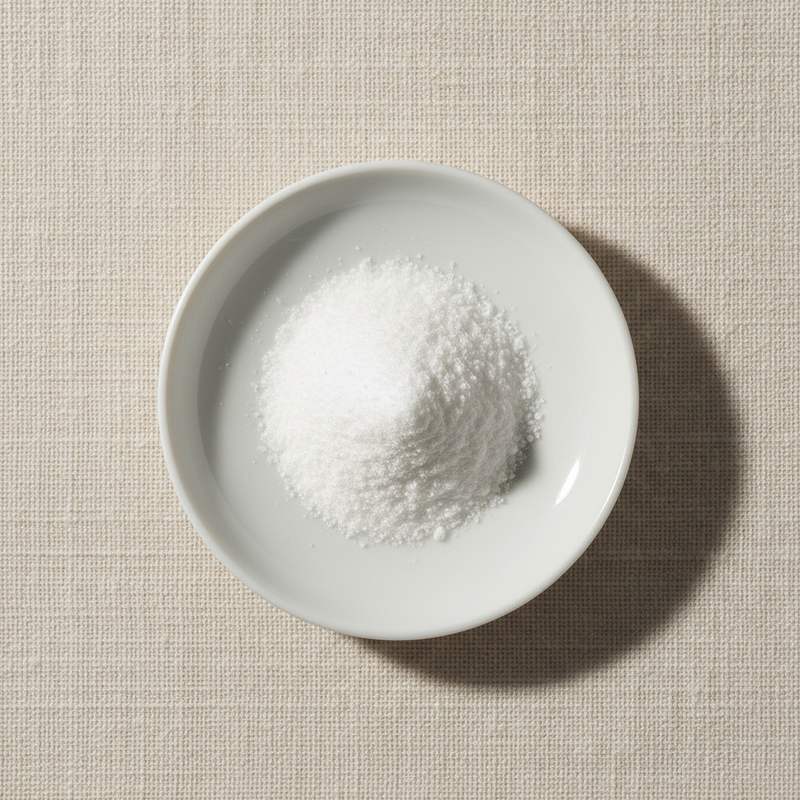
White to slightly yellowish powder, flake, or waxy solid. Tasteless, odorless, and biodegradable. Stable at high temperature and across a wide pH range.
We supply food-grade Sucrose Esters from manufacturers in China holding ISO, Halal, Kosher and other certifications relevant to the product and production.
Common market grades include S-170 (HLB 1, monostearate-rich for water-in-oil), S-570 (HLB 5), S-970 (HLB 9 for general bakery), S-1170 (HLB 11), S-1370 (HLB 13), and S-1670 (HLB 16, highly hydrophilic). The 70 in each code denotes the percentage of monoester content.
Bulk and reduced-MOQ shipments. Batch-level COA covering monoester content, free sucrose, free fatty acid, residual solvent, and microbiology.
Introduction
Sucrose esters were commercialized in Japan in the 1960s by Mitsubishi-Kasei Foods and have since become a major non-ionic emulsifier in Asian and global food manufacturing.
Production is by transesterification of sucrose with methyl or vinyl esters of fatty acids in dimethyl sulfoxide or propylene glycol, followed by solvent stripping and purification. The product distribution between mono-, di-, and triesters is controlled by stoichiometry and reaction conditions, which sets the final HLB.
Regulated as E473 in the EU, approved by the U.S. FDA in defined applications, and assigned an Acceptable Daily Intake of 40 mg per kg body weight by JECFA. Sucrose esters are biodegradable and break down in the human gut to free sucrose and fatty acids.
Among food emulsifiers, sucrose esters stand out for the breadth of HLB they cover from a single chemistry, the absence of taste contribution to finished products, and a clean-label profile that suits premium and specialty food positioning.
Where it is used
- Bakery cake emulsifiers and bread improvers; the high-HLB grades aerate batters and soften crumb
- Chocolate viscosity modifiers; substitute for PGPR in milk and dark chocolate
- Coffee creamers and beverage whiteners; emulsifies fat in spray-dried powders
- RTD coffee and tea beverages; stabilizes oil droplets in long-shelf-life packaging
- Aerated whipped toppings and dessert mixes
- Fruit and vegetable coatings; biodegradable surface treatment to extend freshness
- Instant noodle anti-bridging agents
- Ice cream and frozen dessert emulsifiers; the low-HLB grades support smooth meltdown
Technical data
| Item | Specification |
|---|---|
| Appearance | White to slightly yellowish powder, flake, or waxy solid |
| Total ester content | ≥ 80.0% |
| Monoester content | Per grade specification (typically 30% to 70%) |
| Free sucrose | ≤ 5.0% |
| Free fatty acid (as oleic acid) | ≤ 3.0% |
| Sulfated ash | ≤ 2.0% |
| Heavy metals (as Pb) | ≤ 5 mg/kg |
| Arsenic | ≤ 3 mg/kg |
| Residual DMSO | ≤ 2 mg/kg |
| HLB value | 1 to 16, per grade specification |
Related ingredients
Ready to discuss business?
Send us your spec and requirement. We will respond with availability and pricing within 24 hours.