Description
A soluble dietary fiber derived from brown seaweed (Laminaria and Saccharina species), composed primarily of low-molecular-weight alginate fragments together with fucoidan and laminarin. Designed to deliver soluble-fiber and seaweed-marker labeling without the strong viscosity contribution of standard alginate.
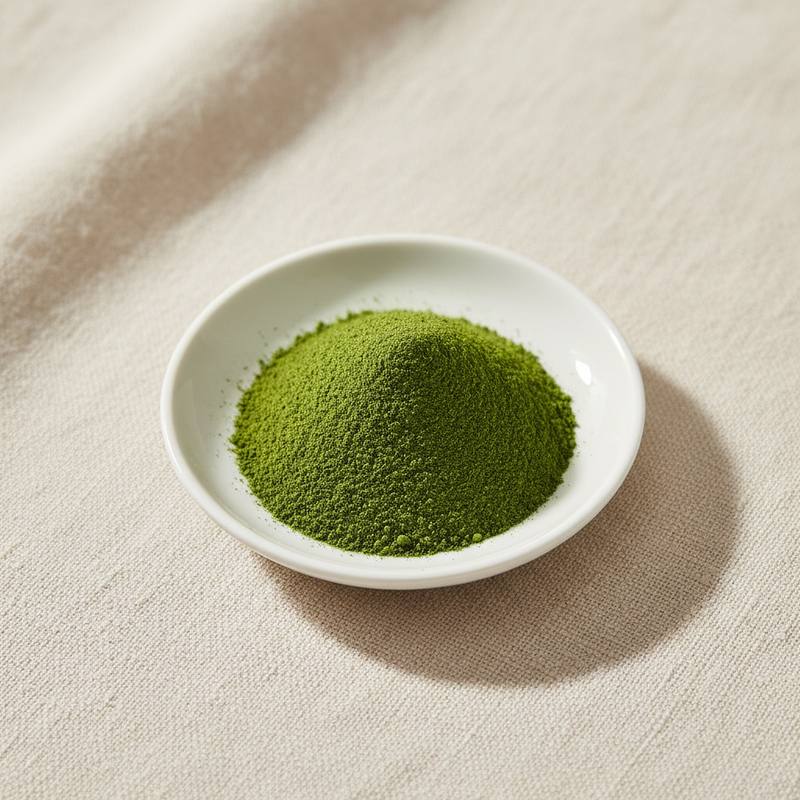
Off-white to light tan free-flowing powder. Highly water-soluble with low to moderate viscosity in solution, mild characteristic marine note.
We supply food-grade Seatrose Seaweed Dietary Fiber from manufacturers in China holding ISO, Halal, Kosher and other certifications relevant to the product and production.
Common market grades are differentiated by total fiber content (75 percent versus 90 percent minimum), residual ash, and fucoidan and laminarin content for products positioned around bioactive marine-polysaccharide claims.
Bulk and reduced-MOQ shipments. Batch-level COA covering total dietary fiber, ash, residual heavy metals (particularly arsenic, regulated for seaweed-derived ingredients), and microbiology.
Introduction
Seaweed-derived dietary fibers have been consumed in East Asia for centuries through traditional kombu, wakame, and nori-based foods, and are recognized for soluble-fiber and trace-mineral contribution to the diet.
Industrial production starts with food-grade brown seaweed harvested from cultivated and wild beds in coastal China, Korea, and Japan. The seaweed is washed, milled, and subjected to controlled hydrolysis to depolymerize the long-chain alginate into low-molecular-weight fragments that retain solubility without the gelling action of full-length alginate.
Recognized as a permitted food ingredient by major regulatory bodies. Specific seaweed-source heavy-metal limits, particularly for arsenic, are managed by feedstock screening and downstream purification.
The strategic role in formulation is fiber and marine-source positioning without the heavy texture impact of unmodified alginate. At typical dose of 1 to 5 percent in finished food, the ingredient delivers measurable soluble-fiber content alongside clean-label seaweed-marker labeling, which is the principal commercial driver in Asian and Western functional-food markets.
Where it is used
- Fiber-fortified beverages, smoothies, and bottled waters positioned around marine-source claims
- Functional dairy and plant-based yogurts; fiber and texture contribution with seaweed-marker labeling
- Snack bars, cookies, and breakfast cereals; soluble fiber claim with mild flavor impact
- Reduced-fat sauces and dressings; body and viscosity contribution at low dose
- Asian noodle and rice-product fortification; fits clean-label and traditional positioning
- Frozen desserts and ice cream; mouthfeel and ice-crystal control at low addition
- Sports and recovery formulas positioned around marine-bioactive content
- Functional confectionery in gummy and chew formats
Technical data
| Item | Specification |
|---|---|
| Appearance | Off-white to light tan free-flowing powder |
| Total dietary fiber | ≥ 75.0% (standard) or ≥ 90.0% (premium) |
| Moisture | ≤ 8.0% |
| Ash | ≤ 15.0% |
| pH (1% solution) | 5.5 to 7.5 |
| Heavy metals (as Pb) | ≤ 2 mg/kg |
| Total arsenic | ≤ 3 mg/kg |
| Inorganic arsenic | ≤ 1 mg/kg |
| Total plate count | ≤ 5000 cfu/g |
| Pathogens | Negative per 25 g |
Related ingredients
Ready to discuss business?
Send us your spec and requirement. We will respond with availability and pricing within 24 hours.