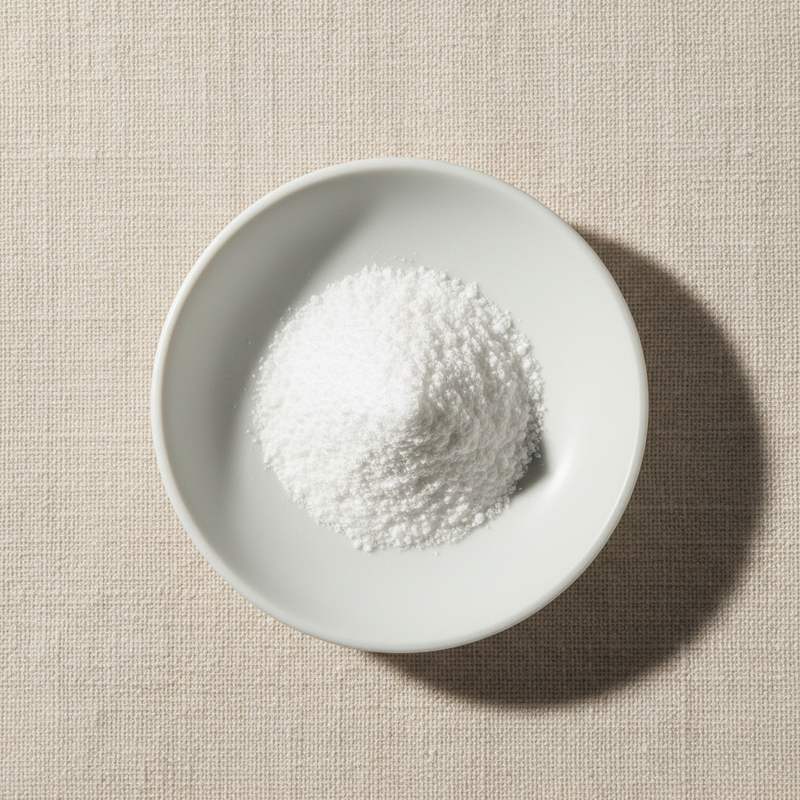
Description
The defining beta hydroxy acid (BHA) of modern cosmetic chemistry. Oil-soluble, allowing it to penetrate sebaceous follicles and dissolve intra-follicular debris, with documented effects on comedonal acne, blackheads, and oily-skin texture at concentrations of 0.5 to 2 percent.
White crystalline needles or powder with a faint phenolic odor. Sparingly water-soluble, fully soluble in ethanol, propylene glycol, and most cosmetic oils. Stable across a wide pH range with peak free-acid activity below pH 4.
We supply cosmetic-grade Salicylic Acid from manufacturers in China holding ISO 22716, ISO 9001, Halal, Kosher and pharmaceutical-GMP certifications relevant to the product and production.
Common market grades include Cosmetic Grade 99.5% min, Pharmacopoeial USP/EP/BP grade for crossover use, and micronized grades for clear lotion and ampoule formulations. The micronized grade reduces visible recrystallization in low-pH leave-on products.
Bulk and reduced-MOQ shipments. Batch-level COA covering HPLC purity, melting point, related substances, heavy metals, and microbiology.
Introduction
Salicylic acid is one of the oldest documented active ingredients in dermatology, with origins in willow bark extracts used for centuries before isolation by Raffaele Piria in 1838. Cosmetic use as a topical exfoliant accelerated in the 1990s following the success of Neutrogena's salicylic acid acne franchise and Paula's Choice BHA serums.
Industrial production is by the Kolbe-Schmitt reaction: carboxylation of sodium phenolate with carbon dioxide under pressure, followed by acidification and recrystallization. Cosmetic grade specifications align closely with pharmacopoeial requirements, with most supply chains using crossover pharmaceutical-grade material.
Regulatory status is that of a listed cosmetic ingredient with concentration limits: EU permits up to 2 percent in rinse-off hair products and 0.5 to 2 percent in face leave-on per SCCS opinion, U.S. OTC monograph covers acne use at 0.5 to 2 percent, and China IECIC lists the ingredient with concentration restrictions on children's products. Use in products for children under three is prohibited in the EU.
Clinical evidence is among the strongest in cosmetic dermatology: peer-reviewed studies consistently show reduction in comedonal and inflammatory acne lesion counts at 2 percent over 8 to 12 weeks, with mechanism rooted in keratolytic and anti-inflammatory activity. Tolerance at proper pH is generally favorable.
Strategically, salicylic acid is the global category-defining BHA active. The K-beauty BHA toner format and the rise of single-active brands have expanded the category through the past decade.
Where it is used
- Acne-targeted cleansers, toners, and serums at 0.5 to 2 percent
- Pore-refining and blackhead-clearing leave-on lotions
- BHA exfoliating pads and wipes
- Anti-dandruff scalp serums and shampoos
- Body washes and lotions for keratosis pilaris and back acne
- Combination AHA/BHA exfoliating systems
- Foot care products and callus softeners
- Spot treatments for inflammatory acne
- Dermocosmetic and physician-dispensed acne lines
Technical data
| Item | Specification |
|---|---|
| Appearance | White crystalline needles or powder |
| INCI Name | Salicylic Acid |
| Assay (HPLC, dry basis) | ≥ 99.5% |
| Melting point | 158 °C to 161 °C |
| Loss on drying | ≤ 0.5% |
| Related substances (each) | ≤ 0.1% |
| Residue on ignition | ≤ 0.1% |
| Heavy metals (as Pb) | ≤ 10 mg/kg |
| Arsenic | ≤ 2 mg/kg |
| Chloride | ≤ 0.01% |
| Sulfate | ≤ 0.02% |
| Total plate count | ≤ 100 CFU/g |
| E. coli, Salmonella, S. aureus, P. aeruginosa | Negative |
| Source | Synthetic, Kolbe-Schmitt carboxylation of phenol |
Related ingredients
Ready to discuss business?
Send us your spec and requirement. We will respond with availability and pricing within 24 hours.