Description
A soluble dietary fiber and bulking agent rather than a sweetener, used in sugar-free and reduced-sugar formulations to replace the bulk and texture lost when sucrose is removed.
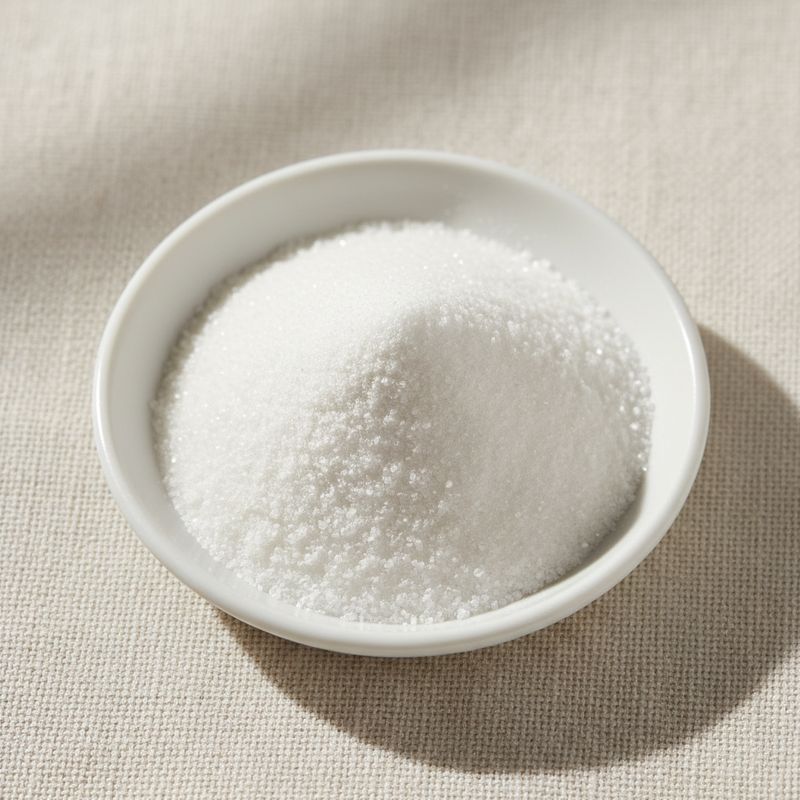
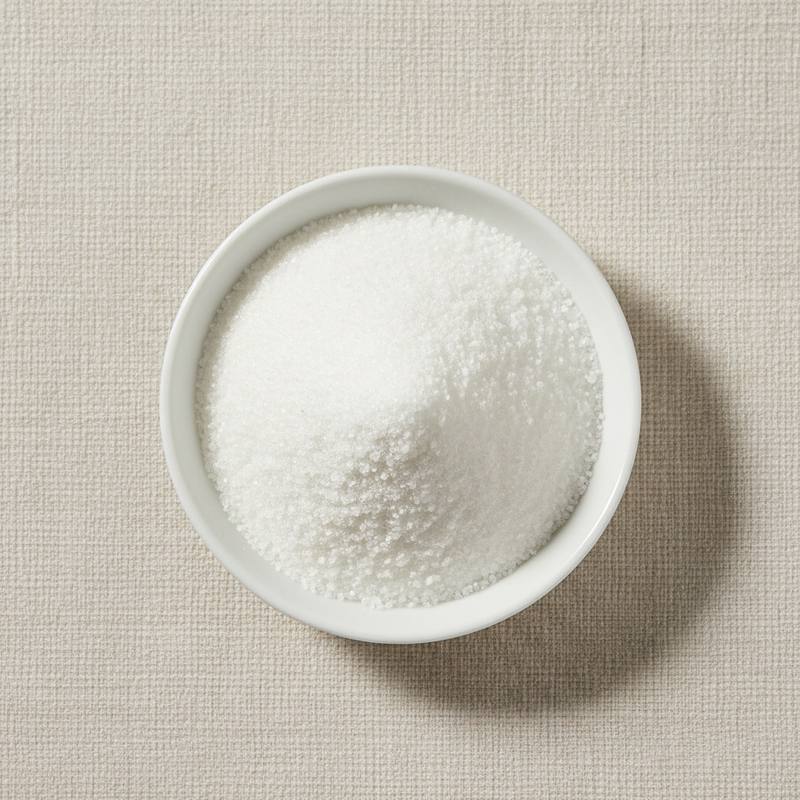
White to off-white free-flowing powder. Highly water-soluble. Provides 1 kcal per gram, the lowest caloric value of any commercial bulking agent, and contributes 90 percent or more dietary fiber on a dry-weight basis.
We supply food-grade Polydextrose from manufacturers in China holding ISO, Halal, Kosher and other certifications relevant to the product and production.
Common market grades include Type N (neutral pH 5.0 to 6.0) for general food use, Type A (acidic pH 2.5 to 3.5) for low-pH beverage and confectionery applications, and 70 percent liquid solution for processes requiring solution form.
Bulk and reduced-MOQ shipments. Batch-level COA covering polymer content, impurity profile, sulfated ash, and microbiology.
Introduction
Polydextrose was developed and patented by Pfizer in 1965 and brought to commercial scale in the 1980s. It is now produced under license worldwide.
The polymer is synthesized by random condensation of glucose with small amounts of sorbitol and citric acid under controlled vacuum and temperature. The resulting branched, indigestible polymer averages 12 glucose units in length and is classified as a soluble fiber by every major regulatory body.
Regulated as E1200 in the EU, listed by the U.S. FDA as a permitted food additive in 21 CFR 172.841, recognized as a dietary fiber by the U.S. FDA in 2018, and approved by JECFA without a numerical Acceptable Daily Intake limit.
Polydextrose is partially fermented in the colon, where it acts as a prebiotic substrate for beneficial bacteria. Net metabolizable energy is 1 kcal per gram, compared to 4 kcal per gram for sucrose and starch.
The compound's strategic role in formulation is bulk replacement: high-intensity sweeteners replace the sweetness of removed sucrose at a fraction of the mass, leaving a structural void that Polydextrose fills with minimal caloric load and a clean neutral taste.
Where it is used
- Sugar-free and reduced-sugar baked goods including cookies, cakes, breakfast cereals, and energy bars; provides bulk, texture, and moisture management
- High-fiber and fiber-fortified products; supports fiber claims at moderate inclusion levels
- Sugar-free chocolate and chocolate coatings; bulks formulations and reduces sucrose loading
- Sugar-free ice cream and frozen desserts; controls texture, ice-crystal formation, and freezing-point profile
- Sugar-free yogurt and dairy desserts; provides body and mouthfeel
- Sugar-free chewing gum and confectionery; bulks low-calorie sweetener systems
- Functional beverages and meal-replacement shakes; soluble-fiber claims with low viscosity contribution
- Diabetic-friendly products; very low glycemic and insulin response
- Tabletop sugar-replacement blends with high-intensity sweeteners
Technical data
| Item | Specification |
|---|---|
| Appearance | White to off-white free-flowing powder |
| Polymer content | ≥ 90.0% |
| 1,6-Anhydro-D-glucose | ≤ 4.0% |
| D-Glucose | ≤ 4.0% |
| Sorbitol | ≤ 2.0% |
| 5-Hydroxymethylfurfural and related compounds | ≤ 0.05% |
| Sulfated ash | ≤ 2.0% |
| pH (10% aqueous solution) | 5.0 to 6.0 |
| Solubility | Freely soluble in water |
| Heavy metals (as Pb) | ≤ 5 mg/kg |
| Particle size | Per customer specification |
Related ingredients
Ready to discuss business?
Send us your spec and requirement. We will respond with availability and pricing within 24 hours.