Description
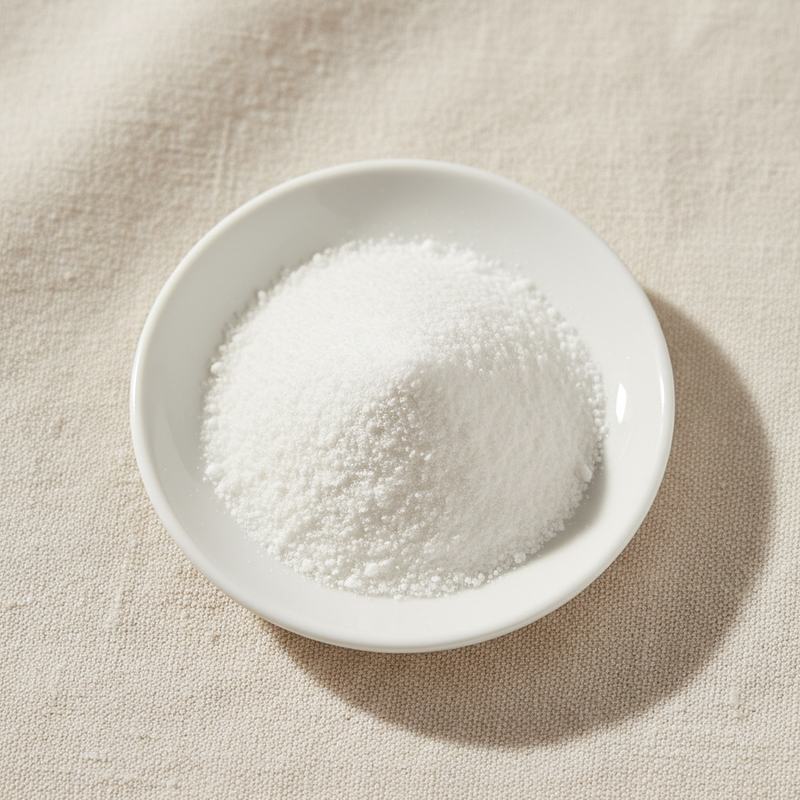
A spray-dried or granulated direct-compression grade of mannitol used in chewable and orally disintegrating tablets, lozenges, and moisture-sensitive solid dosage forms. Selected over sorbitol DC grades when non-hygroscopicity and a sharper sweet taste are required, and over spray-dried lactose when Maillard reactivity with primary-amine APIs must be avoided.
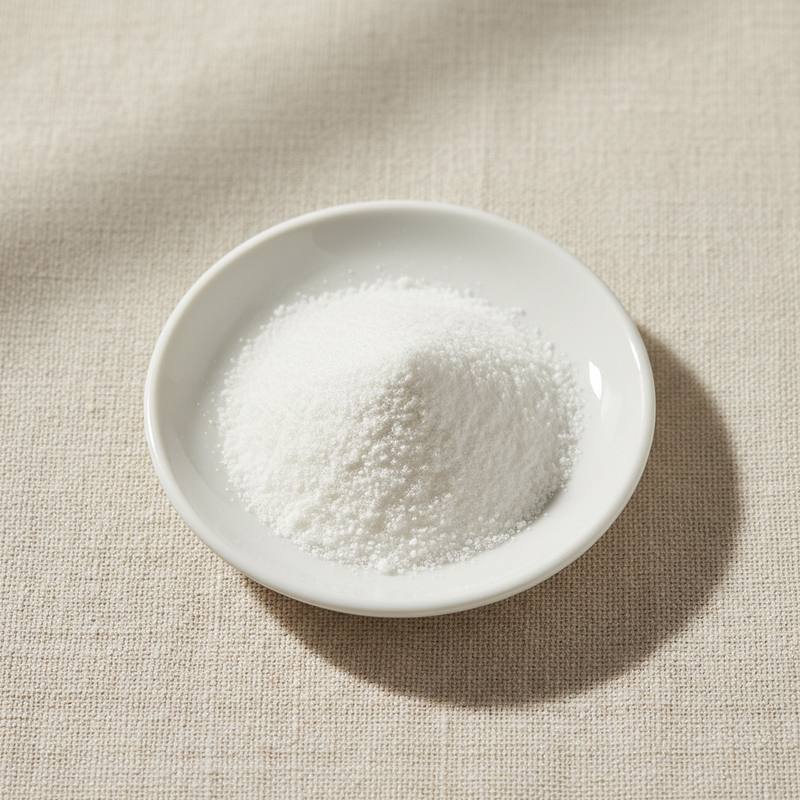
White to off-white free-flowing spherical agglomerates with characteristic high porosity and excellent flow on rotary tablet presses. Sweet taste, cooling sensation in the mouth (negative heat of solution), non-hygroscopic across the normal pharmaceutical humidity range, freely soluble in water.
We supply pharmaceutical-grade Mannitol DC from manufacturers in China holding ISO, GMP, USP/EP/JP DMF, Halal, Kosher, and other certifications relevant to the product and production.
Common market grades include spray-dried Mannitol DC (Pearlitol 200 SD type, the dominant ODT and chewable filler), granulated Mannitol DC (higher bulk density for capsule filling and small tablets), and fine-particle Mannitol (DPI carrier in lactose-intolerant inhalation formulations). Beta polymorph spray-dried grades dominate pharmaceutical DC tableting.
Bulk and reduced-MOQ shipments. Batch-level COA covering identification, assay, related polyols, polymorphic form, particle size, bulk and tapped density, water content, conductivity, heavy metals, and microbiology against USP, EP, JP, and BP monographs.
Introduction
Mannitol has been listed in pharmacopoeial monographs since the early twentieth century, but direct-compression spray-dried mannitol was introduced commercially in the 1990s and has since become the dominant filler in orally disintegrating tablets and the principal alternative to lactose DC where Maillard reactivity, lactose intolerance, or moisture sensitivity rule out the lactose chemistry.
Production proceeds by catalytic hydrogenation of D-fructose or invert sugar under pressure, yielding a mixture of mannitol and sorbitol that is separated by crystallization. The crystalline mannitol is then spray-dried from an aqueous slurry under conditions that select the beta polymorph and produce porous spherical agglomerates with the high specific surface area and excellent flow properties required for direct compression.
Listed in USP-NF, EP, JP, and BP monographs. Assigned E421 in food. FDA Inactive Ingredient Database listed for oral, topical, ophthalmic, and parenteral routes, with established acceptance as a lyophilization bulking agent in parenteral products.
The defining functional advantages over alternative DC fillers are non-hygroscopicity (mannitol equilibrium moisture content is below 1 percent across most pharmaceutical humidities), absence of reducing sugar reactivity (mannitol contains no free aldehyde and does not undergo Maillard browning with primary-amine APIs), sharp sweet taste, and cooling mouthfeel.
Strategic position: the default DC filler for orally disintegrating tablets in regulated markets and the standard parenteral lyophilization bulking agent. Polymorphic form, particle size distribution, and bulk density define grade quality.
Where it is used
- Direct-compression filler in orally disintegrating tablets (ODT)
- Direct-compression filler in chewable tablets
- Filler in lozenge and pastille direct-compression formulations
- Carrier in pharmaceutical chewable nutraceutical tablets
- Direct-compression filler for moisture-sensitive APIs
- Filler in capsule formulations requiring non-hygroscopic excipients
- Carrier in dry powder inhaler blends for lactose-intolerant formulations
- Bulking agent in lyophilized cake formulations for parenterals
- Sweetener-filler in pediatric chewable tablet formulations
Technical data
| Item | Specification |
|---|---|
| Appearance | White to off-white free-flowing spherical agglomerates |
| Compliance | USP/NF, EP, JP, BP current edition |
| Identification | Conforms to pharmacopoeial tests |
| Assay (D-mannitol, dried basis) | ≥ 98.0% |
| Related polyols (sorbitol, maltitol) | ≤ 2.0% |
| Reducing sugars (as glucose) | ≤ 0.1% |
| Polymorphic form (DC grade) | Beta polymorph predominant |
| Water content | ≤ 0.5% |
| pH (10% solution) | 5.0 to 7.0 |
| Conductivity | ≤ 20 µS/cm |
| Chloride | ≤ 70 mg/kg |
| Sulfate | ≤ 100 mg/kg |
| Specific rotation (borate complex) | +137° to +145° |
| Nickel | ≤ 1 mg/kg |
| Heavy metals (as Pb) | ≤ 5 mg/kg |
| Particle size (D50, DC grade) | 150 to 250 microns |
| Bulk density | 0.40 to 0.55 g/mL |
| Tapped density | 0.50 to 0.65 g/mL |
| Total aerobic count | ≤ 100 CFU/g |
| E. coli, Salmonella | Absent |
| Source | Hydrogenation of D-fructose or invert sugar; non-GMO available |
Related ingredients
Ready to discuss business?
Send us your spec and requirement. We will respond with availability and pricing within 24 hours.