Description
Lactococcus lactis is the workhorse mesophilic starter culture for cheese, buttermilk, sour cream, and crème fraîche production worldwide. Both subsp. lactis and subsp. cremoris are commercially produced, often as defined blends for specific cheese varieties.
Supplied as a freeze-dried powder or frozen pellet direct-vat-set culture with viability between 200 and 1000 billion CFU per gram at release. Some strains produce nisin and other bacteriocins valued for natural antimicrobial activity.
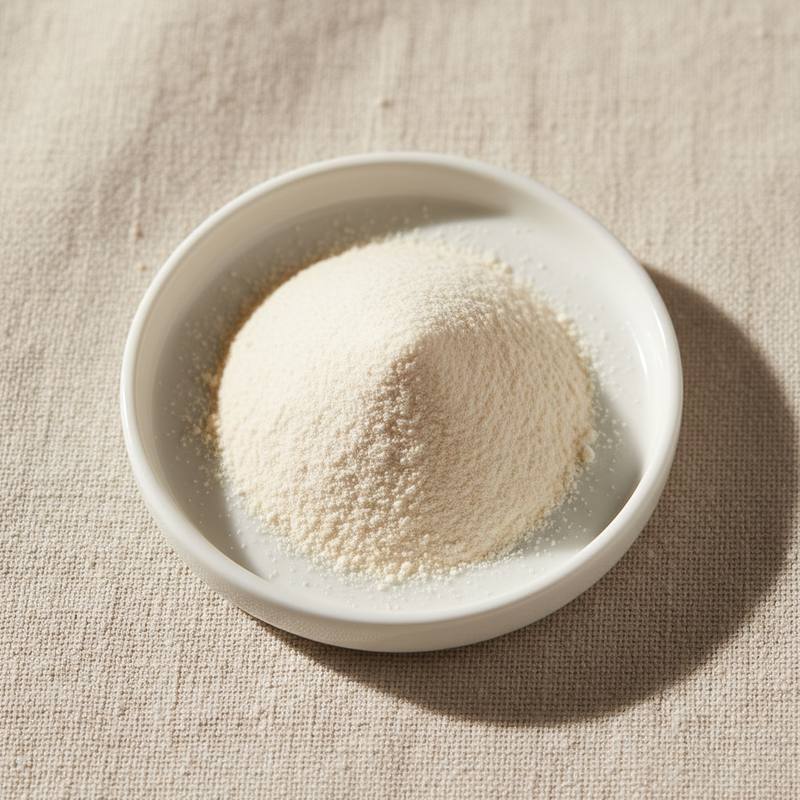
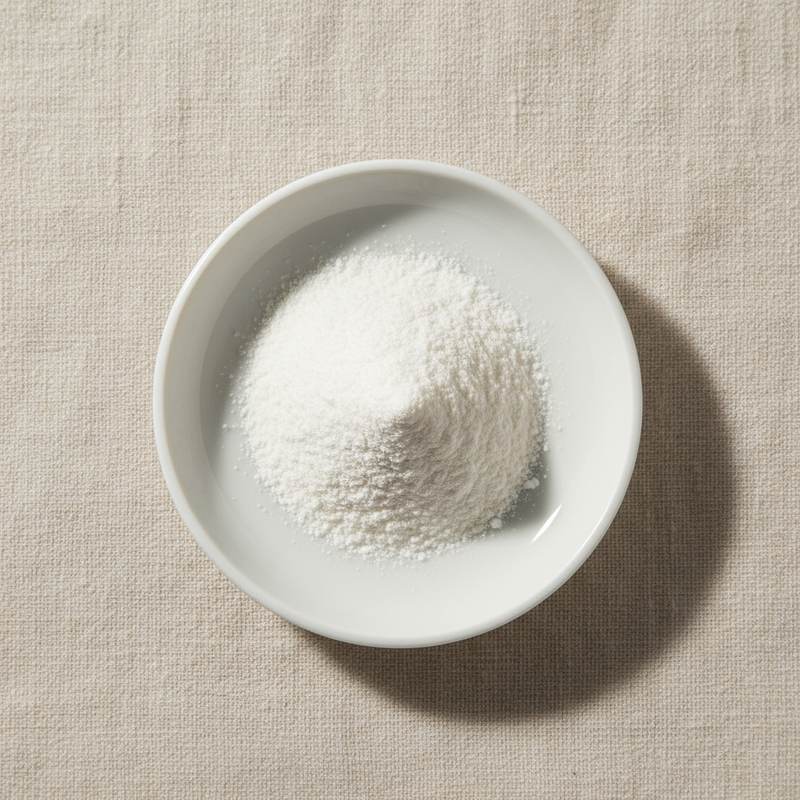
Off-white to pale cream free-flowing powder with a clean buttery dairy note. Particle size suitable for direct vat inoculation.
We supply food-grade Lactococcus lactis from manufacturers in China holding ISO 22000, FSSC 22000, Halal, Kosher, and other certifications relevant to dairy starter production.
Common market grades include single-strain and multi-strain (O, L, LD, DL) defined mesophilic blends for Cheddar, Gouda, Camembert, cottage cheese, and cultured butter; freeze-dried DVS at 200 to 1000 billion CFU per gram; frozen pellet concentrates; and nisin-producing strain variants. Bulk and reduced-MOQ shipments with batch-level COA covering viable count, strain identity, moisture, heavy metals, and pathogen panel.
Introduction
Lactococcus lactis has been used in cheese making for millennia. It was first scientifically characterized as Bacterium lactis by Joseph Lister in 1873, later renamed Streptococcus lactis, and finally placed in the genus Lactococcus following 1985 taxonomic revision. Reference strain ATCC 19435 supports a long history of research.
Industrial production uses milk-based or whey-permeate media under controlled mesophilic conditions (28 to 32 °C). Biomass is recovered, blended with cryoprotectant (sucrose, skim milk, or glycerol), and freeze-dried or pelletized in liquid nitrogen. Direct-vat-set frozen pellets are preferred by large cheese makers for activity preservation.
Regulatory status is well-established: GRAS status with FDA, Qualified Presumption of Safety listing in the European Union, and inclusion in Codex Alimentarius standards for cheese, butter, and cultured milk products. Nisin produced by L. lactis is approved as a food preservative under E234 in the EU and 21 CFR 184.1538 in the US.
The species is also a leading platform organism for food-grade recombinant protein expression and is the subject of active research in mucosal vaccine delivery and therapeutic protein production.
L. lactis remains the foundation of the cheese starter industry worldwide and underpins both volume cheese production and the rapidly growing fermented plant-based dairy alternative segment.
Where it is used
- Cheddar, Gouda, Edam, and Dutch-type cheese starter cultures
- Soft-ripened cheese (Camembert, Brie) starter blends with adjuncts
- Cottage cheese and fresh cheese starters
- Cultured butter and buttermilk starters
- Sour cream and crème fraîche fermentation
- Nisin production (food-grade bacteriocin)
- Fermented plant-based dairy alternatives
- Recombinant protein expression platform (specialty applications)
- Kefir-style and probiotic dairy beverages
Technical data
| Item | Specification |
|---|---|
| Appearance | Off-white to pale cream free-flowing powder or frozen pellets |
| Viable cell count | ≥ 500 billion CFU/g (200B, 500B, 1T grades) |
| Strain identity | Confirmed by 16S rRNA sequencing and subspecies PCR |
| Moisture (loss on drying, powder) | ≤ 5.0% |
| Particle size | ≥ 95% through 80 mesh (powder) |
| Heavy metals (as Pb) | ≤ 1 mg/kg |
| Arsenic | ≤ 0.5 mg/kg |
| Salmonella | Absent in 25 g |
| E. coli | Absent in 10 g |
| Staphylococcus aureus | Absent in 10 g |
| Yeast and mold | ≤ 50 CFU/g |
| Shelf life | 12 to 24 months from manufacture under recommended storage |
| Storage | −18 °C sealed (frozen pellets at −45 °C) |
Related ingredients
Ready to discuss business?
Send us your spec and requirement. We will respond with availability and pricing within 24 hours.