Description
A non-ionic lipophilic emulsifier consisting predominantly of the diester of glycerol with stearic acid. Used as a co-emulsifier, viscosity builder, and stabilizer in cosmetic and pharmaceutical emulsions, and as a controlled-release excipient in solid pharmaceutical dosage forms.
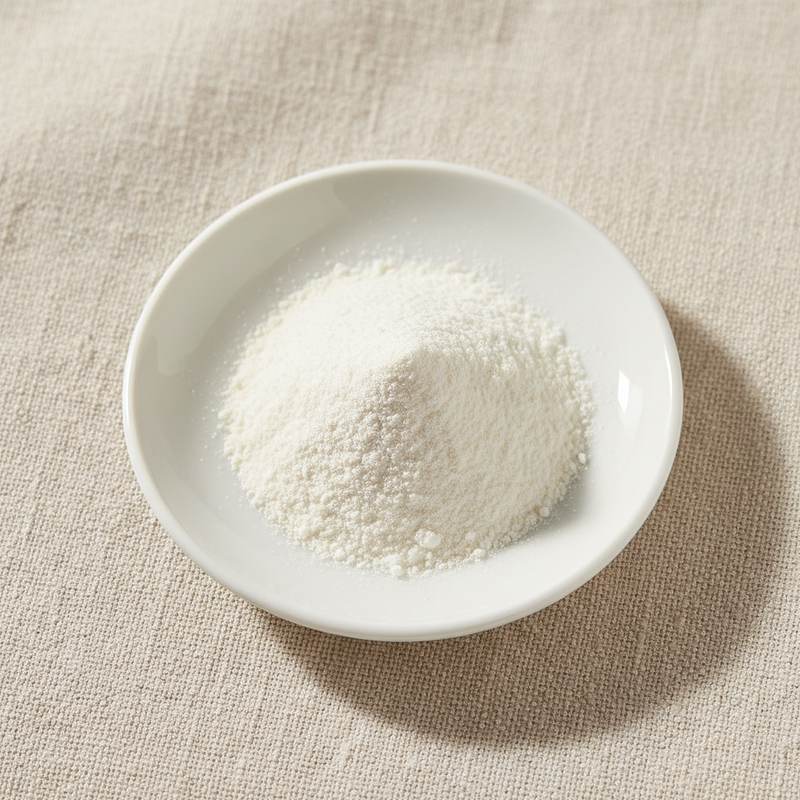
White to off-white waxy solid, flake, or pastille. Soluble in hot oils, insoluble in water. Crystalline melting profile supports use as a matrix-forming agent in solid lipid systems.
We supply food-grade and pharmaceutical-grade Glyceryl Distearate from manufacturers in China holding ISO, Halal, Kosher and other certifications relevant to the product and production.
Common market grades include food-grade for bakery and confectionery use, pharmaceutical USP/NF/EP grade for controlled-release tablet matrices and topical formulations, and cosmetic grade for thickening creams and lotions.
Bulk and reduced-MOQ shipments. Batch-level COA covering monoester content, diester content, free glycerol, acid value, saponification value, and microbiology.
Introduction
Glyceryl Distearate sits between the mono- and triglycerides as the partially esterified intermediate in which two of glycerol's three hydroxyls bear stearic acid chains. The remaining free hydroxyl provides limited polarity that distinguishes the distearate from a fully esterified triglyceride.
Production is by direct esterification of glycerol with stearic acid under acid catalysis, or by glycerolysis of hydrogenated vegetable oil. Reaction stoichiometry and conditions are tuned to maximize the diester fraction, with mono- and triester fractions as defined co-products.
Regulated as part of the E471 mono- and diglycerides family in the EU, classified as Generally Recognized as Safe by the U.S. FDA, listed in USP, NF, and EP pharmacopoeias, and approved by JECFA without a numerical Acceptable Daily Intake limit.
In pharmaceutical solid dosage forms Glyceryl Distearate is a workhorse matrix-forming lipid: drug molecules embedded in the distearate matrix release slowly as the lipid dissolves or erodes in the gastrointestinal tract, supporting controlled-release tablet design without polymeric coatings.
Where it is used
- Pharmaceutical controlled-release tablet matrices; lipid-based slow-release excipient
- Cosmetic emulsion thickeners; opacifier and viscosity builder for creams and conditioners
- Bakery shortening systems; supports lamination and crystalline texture
- Chocolate viscosity modifier in combination with lecithin
- Margarine and table spread crystallization aid
- Pharmaceutical topical creams and emulsion bases
- Hair conditioner and shampoo opacifiers
- Stabilizer in oil-in-water emulsion systems requiring a lipophilic co-emulsifier
Technical data
| Item | Specification |
|---|---|
| Appearance | White to off-white waxy solid, flake, or pastille |
| Diester content | ≥ 40.0% |
| Monoester content | 10.0% to 40.0% |
| Triester content | ≤ 50.0% |
| Free glycerol | ≤ 6.0% |
| Acid value (mg KOH/g) | ≤ 6.0 |
| Saponification value (mg KOH/g) | 175 to 195 |
| Iodine value | ≤ 3.0 |
| Heavy metals (as Pb) | ≤ 5 mg/kg |
| Melting range | 54 °C to 64 °C |
Related ingredients
Ready to discuss business?
Send us your spec and requirement. We will respond with availability and pricing within 24 hours.