Description
The least water-soluble of the major food acidulants, with sourness intensity higher than citric acid on a molar basis but lower water solubility (approximately 6 grams per liter at 25 °C). Used where slow dissolution or extended acidulant release matters.
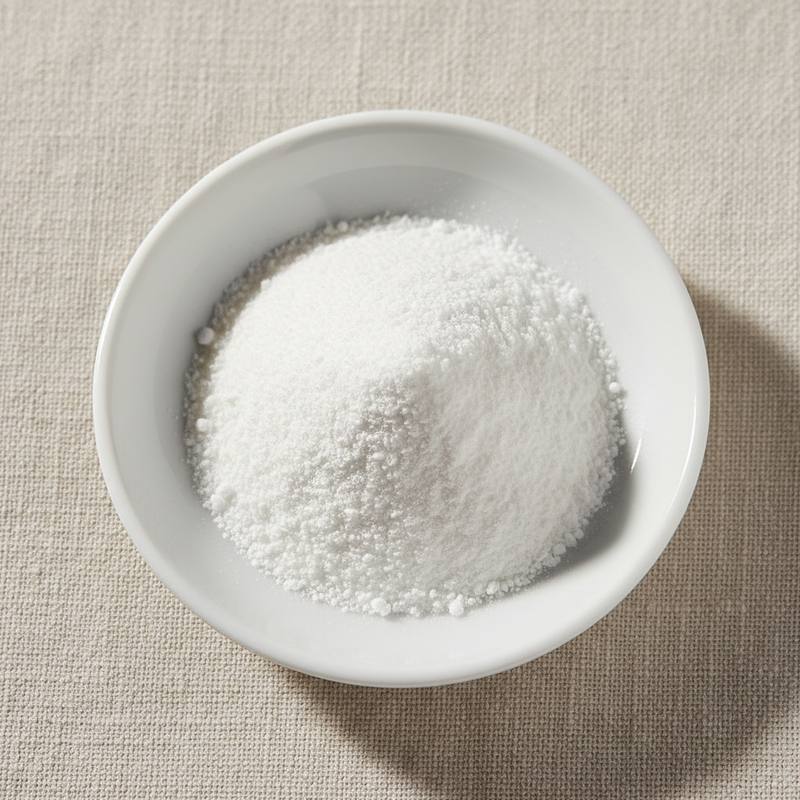
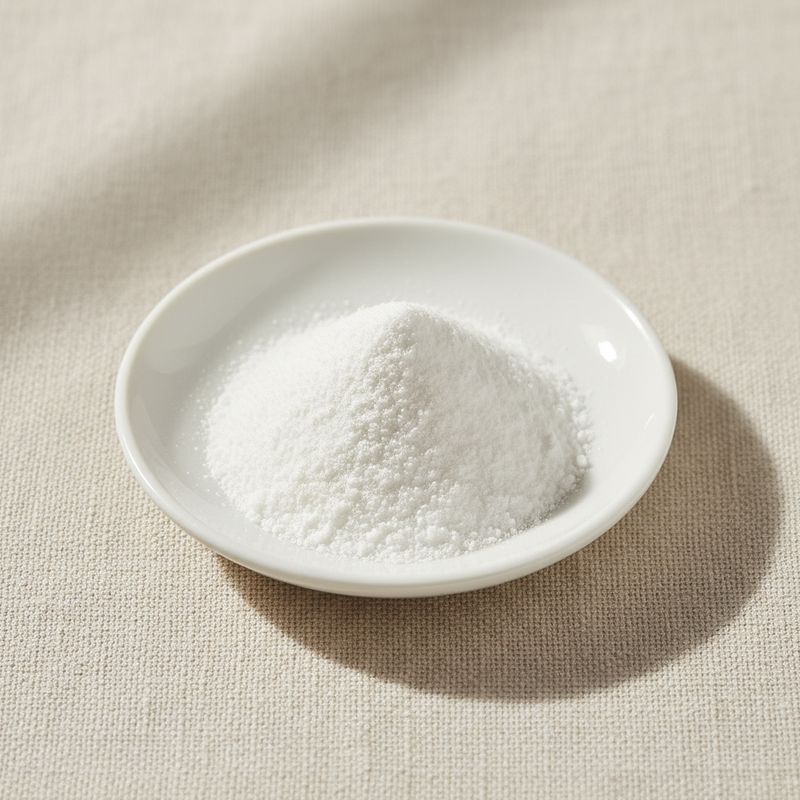
White, odorless granules or crystalline powder. Slightly soluble in water and ether, soluble in alcohol. The low solubility profile is the defining property and the source of most application choices.
We supply food-grade Fumaric Acid from manufacturers in China holding ISO, Halal, Kosher and other certifications relevant to the product and production.
Common market grades include Standard Food Grade (FCC compliant), Encapsulated Fumaric Acid for delayed-release applications, and Wettable Grade modified for improved water dispersion in beverage applications.
Bulk and reduced-MOQ shipments. Batch-level COA covering assay, residue on ignition, heavy metals, and microbiology.
Introduction
Fumaric Acid occurs naturally in fumitory (Fumaria officinalis), bolete mushrooms, lichens, and Iceland moss. It is also a central intermediate in the citric acid cycle of cellular metabolism.
Industrial production proceeds by isomerization of maleic acid using thermal or catalytic methods, with maleic acid in turn produced by oxidation of benzene, butane, or n-butenes. The trans-double-bond geometry of fumaric acid makes it the thermodynamically stable isomer.
Regulated as E297 in the EU, classified as Generally Recognized as Safe by the U.S. FDA, and approved by JECFA without a numerical Acceptable Daily Intake limit.
The molecule's defining property in food applications is its low water solubility at room temperature (approximately 6 grams per liter at 25 °C, rising sharply with temperature). This produces a slow-dissolving acidulant that releases acidity over time rather than instantaneously.
This property makes Fumaric Acid the preferred acidulant for bakery leavening systems, where the dissolution rate must match the reaction kinetics of the leavening base. It is also valuable in dry-blend applications where instant acidulant release would compromise product stability or sensory profile.
Where it is used
- Bakery leavening systems: baking powder and self-rising flour where slow dissolution controls reaction timing
- Tortilla and wheat-flour applications; pH control without rapid acidulant release
- Beverage powders and powdered drink mixes; minimum acidulant level when full sourness is undesirable
- Wine and fruit-juice acidification
- Animal feed acidulant and cattle feed additive
- Confectionery: sour candies and sour gum
- Gelatin desserts and powdered dessert mixes
- Pharmaceutical pH-adjusting agent in tablet and capsule formulations
- Industrial applications: paper sizing, chemical synthesis intermediate, and resin manufacturing
Technical data
| Item | Specification |
|---|---|
| Appearance | White, odorless granules or crystalline powder |
| Assay (dry basis) | 99.5% to 100.5% |
| Loss on drying | ≤ 0.5% |
| Residue on ignition | ≤ 0.1% |
| Heavy metals (as Pb) | ≤ 10 mg/kg |
| Arsenic | ≤ 3 mg/kg |
| Maleic acid | ≤ 0.1% |
| Particle size | Per customer specification |
Related ingredients
Ready to discuss business?
Send us your spec and requirement. We will respond with availability and pricing within 24 hours.