Description
Naturally porous siliceous skeletal remains of fossil diatoms, used industry-wide as the primary filter aid for beer, wine, juice, syrup, and edible-oil clarification.
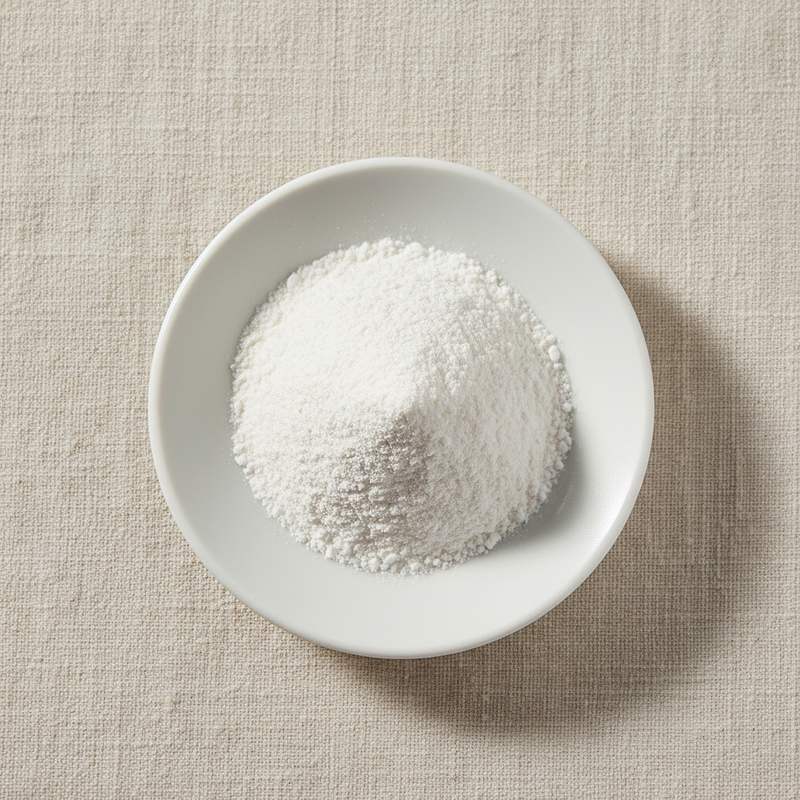
White to pale beige free-flowing powder with a chalky texture and bulk density between 0.2 and 0.4 g/cm3. The unique micro-porous skeletal structure delivers high permeability with fine particle retention, properties no synthetic filter aid has matched on cost.
We supply food-grade Diatomaceous Earth from manufacturers in China holding ISO, Halal, Kosher and other certifications relevant to the product and production.
Common market grades include flux-calcined fast-flow DE for rough beer clarification, calcined medium-flow DE for polishing filtration of wine and juice, natural (uncalcined) DE for the lowest particle retention and tightest filtration, and acid-washed low-iron grades for sensitive applications including white wine and edible oil.
Bulk and reduced-MOQ shipments. Batch-level COA covering permeability, particle size distribution, soluble iron, arsenic, and respirable crystalline silica content.
Introduction
Diatomaceous Earth, also known as kieselguhr or diatomite, is a sedimentary deposit composed of the silica skeletons of microscopic algae called diatoms that lived in freshwater lakes and shallow seas tens to hundreds of millions of years ago.
Each diatom skeleton is an elaborate porous silica structure 5 to 100 micrometers in size with internal cavities sized between 0.1 and 1 micrometer. When deposited as a filter cake, these particles form a layered matrix with high permeability and fine retention, properties that engineering tradeoff curves of synthetic filter media still cannot match at equivalent cost.
Industrial processing involves drying the raw deposit, calcining at 800 to 1,000 °C to bind impurities and sinter particles for higher permeability, optionally flux-calcining with sodium carbonate for the fastest grades, and finally milling and air-classifying to defined particle size distributions and target permeability values.
Regulatory status is as a permitted filter aid in every major food and beverage code, removed from the finished product by filtration and not declared on labels. The principal occupational concern is respirable crystalline silica generated during calcination, which is regulated under OSHA, EU OEL, and equivalent worker-protection rules; reputable beverage-grade DE carries below 1 percent respirable crystalline silica content.
Where it is used
- Beer filtration in plate-and-frame and candle filter systems for haze removal and microbiological polishing
- Wine clarification after fining and before bottling
- Fruit juice and concentrate polishing filtration
- Sugar and syrup decolorization filtration
- Edible oil refining for color and trace-metal removal
- Spirits, vodka, and rum polishing filtration before bottling
- Vinegar and kombucha clarification
- Pharmaceutical and biotech filtration for fermentation broth clarification
- Swimming pool and drinking water filtration (separate grade)
Technical data
| Item | Specification |
|---|---|
| Appearance | White to pale beige free-flowing powder |
| SiO2 content | ≥ 89% |
| Al2O3 | ≤ 6.0% |
| Fe2O3 | ≤ 2.0% |
| Permeability | 0.05 to 2.0 darcy (per grade) |
| Bulk density | 0.2 to 0.4 g/cm3 |
| Wet density | 0.27 to 0.42 g/cm3 |
| Moisture | ≤ 1.0% (calcined) |
| Soluble iron in beer wort | ≤ 100 mg/kg |
| Arsenic | ≤ 1 mg/kg |
| Lead | ≤ 5 mg/kg |
| Respirable crystalline silica | Per occupational safety standards |
Related ingredients
Ready to discuss business?
Send us your spec and requirement. We will respond with availability and pricing within 24 hours.