Description
A pharmaceutical-grade variant of beta-cyclodextrin manufactured to pharmacopoeial specifications. Distinct from food-grade beta-cyclodextrin in tighter purity tolerances, lower residual solvent limits, and full USP/EP/JP compliance documentation.
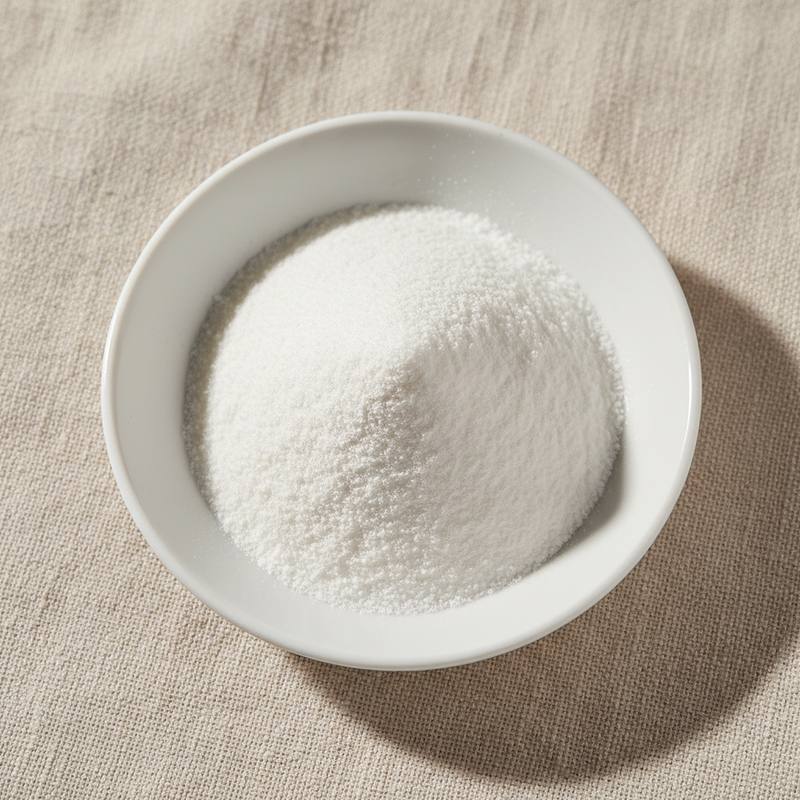
White crystalline powder. Water solubility of approximately 18.5 g/L at 25 °C, the lowest of the natural cyclodextrins. Cavity inner diameter approximately 0.60 to 0.65 nm, suited to complexation of medium-sized aromatic and aliphatic molecules.
We supply pharmaceutical-grade Beta-Cyclodextrin from manufacturers in China holding ISO, GMP, Halal, Kosher and other certifications relevant to the product and production. CEP, DMF, and TSE/BSE-free declarations are available on request.
Common market grades include USP/NF Pharmaceutical Grade, EP Pharmaceutical Grade, JP Pharmaceutical Grade, and high-purity injectable grade meeting endotoxin and microbial limits for parenteral use.
Bulk and reduced-MOQ shipments. Batch-level COA covering assay, water content, residual solvents, related cyclodextrins, heavy metals, and microbiology.
Introduction
Beta-cyclodextrin is the seven-glucose-unit cyclic oligosaccharide and the most extensively used natural cyclodextrin in pharmaceutical formulation. The cavity diameter accommodates a wide range of pharmaceutical active molecules, and the moderate water solubility supports clean crystallization of drug-cyclodextrin inclusion complexes.
Production parallels alpha-cyclodextrin: cyclodextrin glucanotransferase catalyzes intramolecular transglycosylation of starch, with selectivity for beta-cyclodextrin tuned by enzyme source and process conditions. Pharmaceutical-grade purification involves multiple recrystallization steps, decolorization, and residual-solvent stripping to meet pharmacopoeial specifications.
Listed in USP, NF, EP, JP, BP, and ChP pharmacopoeias. Approved as a pharmaceutical excipient by the U.S. FDA, EMA, and other major regulatory authorities. Holds GRAS status for food applications, though pharmaceutical-grade material exceeds food specifications in purity.
The pharmaceutical-grade designation matters because regulatory filings for finished drug products require pharmacopoeial-compliant excipients with full traceability and certified specifications. Food-grade material, while chemically similar, does not meet the documentation and purity requirements for pharmaceutical use.
Where it is used
- Pharmaceutical complexation of poorly soluble small-molecule actives; improves bioavailability and dissolution
- Tablet and capsule excipient for moisture protection and oxidation stability
- Oral liquid formulations; masks bitter and astringent active ingredients
- Topical pharmaceutical preparations; controlled release of fragrances and actives
- Reference standard and analytical chemistry applications
- Drug stability enhancement against light, heat, and oxidation
- Pharmaceutical research and clinical-trial supply
- Chiral separation and asymmetric synthesis substrate
Technical data
| Item | Specification |
|---|---|
| Appearance | White crystalline powder |
| Assay (dry basis) | ≥ 98.0% |
| Loss on drying | ≤ 14.0% |
| Sulfated ash | ≤ 0.1% |
| pH (1% solution) | 5.0 to 8.0 |
| Specific rotation | +160° to +164° |
| Reducing substances | ≤ 0.5% |
| Alpha- and gamma-cyclodextrin | ≤ 2.0% |
| Heavy metals (as Pb) | ≤ 5 mg/kg |
| Residual solvents | Per ICH Q3C limits |
Related ingredients
Ready to discuss business?
Send us your spec and requirement. We will respond with availability and pricing within 24 hours.