Description
A cyclic oligosaccharide of six alpha-1,4-linked glucose units. The smallest of the natural cyclodextrins, with a narrow hydrophobic cavity sized to complex small molecules such as short-chain fatty acids and small flavor compounds.
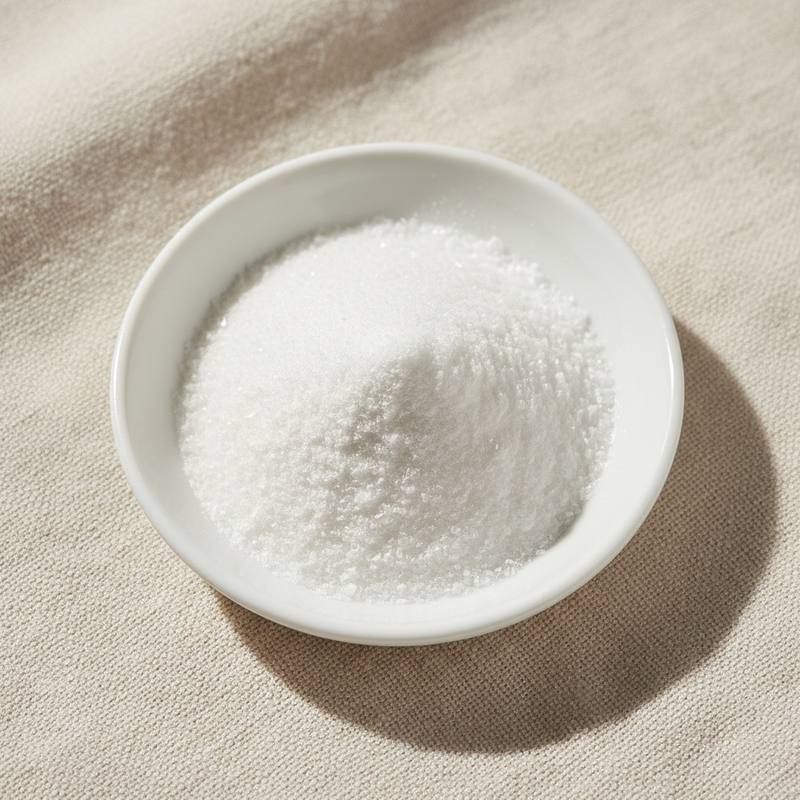
White crystalline powder. Water-soluble with characteristic solubility of approximately 145 g/L at 25 °C. Cavity inner diameter approximately 0.47 to 0.53 nm.
We supply food-grade Alpha-Cyclodextrin from manufacturers in China holding ISO, Halal, Kosher and other certifications relevant to the product and production.
Common market grades include food-grade for functional food and beverage use, pharmaceutical-grade conforming to USP, EP, and JP specifications, and high-purity laboratory grade for research and analytical applications.
Bulk and reduced-MOQ shipments. Batch-level COA covering assay, water content, sulfated ash, related cyclodextrins, and microbiology.
Introduction
Cyclodextrins were first isolated by Antoine Villiers in 1891 from a Bacillus fermentation digest of starch. The cyclic structure was determined by Friedrich Cramer in the 1950s, and industrial production developed through the 1970s and 1980s.
Alpha-cyclodextrin is produced by enzymatic conversion of starch using cyclodextrin glucanotransferase (CGTase), an enzyme that catalyzes intramolecular transglycosylation to form the cyclic structure. Selectivity for the alpha versus beta or gamma form is controlled by enzyme source, reaction conditions, and downstream precipitation with selective complexing agents.
Regulated as a Generally Recognized as Safe ingredient by the U.S. FDA, listed in EP, USP, and JP pharmacopoeias, and approved by EFSA for food use. Recognized as a soluble dietary fiber in the United States and the European Union following EFSA scientific opinions.
The narrow cavity of alpha-cyclodextrin makes it the cyclodextrin of choice for complexing small hydrophobic molecules that are too small to fit usefully into the larger beta or gamma cavities. The fiber-and-fat-binding profile underpins its growing role in functional food and weight-management products.
Where it is used
- Functional food and dietary fiber; recognized as a soluble dietary fiber with cholesterol-lowering claims in several jurisdictions
- Flavor encapsulation for small aroma molecules including diacetyl and short-chain aldehydes
- Removal of free fatty acids and bitter compounds from food matrices
- Pharmaceutical complexation of small-molecule actives to improve solubility and stability
- Cosmetic fragrance stabilization for short-chain aroma compounds
- Powdered beverage and instant-drink mixes; encapsulation of volatile aroma components
- Analytical and chromatographic applications including chiral separation
- Industrial process aids for selective extraction of small organic molecules
Technical data
| Item | Specification |
|---|---|
| Appearance | White crystalline powder |
| Assay (dry basis) | ≥ 98.0% |
| Loss on drying | ≤ 11.0% |
| Sulfated ash | ≤ 0.1% |
| pH (1% solution) | 5.0 to 8.0 |
| Specific rotation | +147° to +152° |
| Reducing substances | ≤ 1.5% |
| Beta- and gamma-cyclodextrin | ≤ 2.0% |
| Heavy metals (as Pb) | ≤ 5 mg/kg |
Related ingredients
Ready to discuss business?
Send us your spec and requirement. We will respond with availability and pricing within 24 hours.