Description
A nine-carbon saturated dicarboxylic acid that occurs naturally in wheat, rye, and barley, used topically against acne, rosacea, and post-inflammatory hyperpigmentation. Acts through antimicrobial, anti-inflammatory, and tyrosinase-inhibition mechanisms in a single molecule.
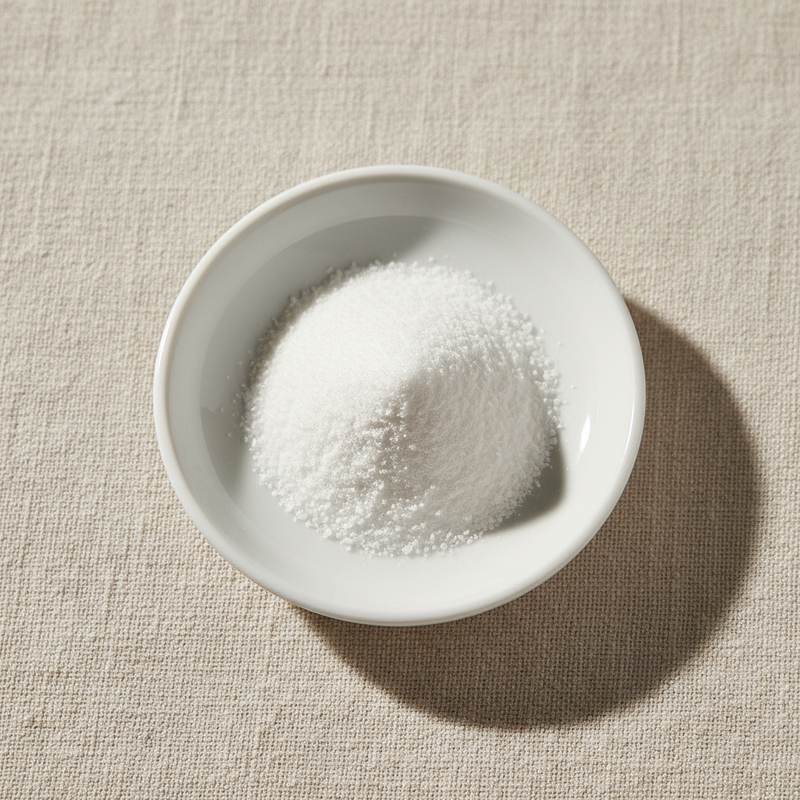
White to off-white crystalline powder or flakes. Limited water solubility, formulated as a fine micronized powder for suspension creams and gels, or in solubilizing systems such as propanediol or pentylene glycol for clear serums.
We supply cosmetic-grade Azelaic Acid from manufacturers in China holding ISO 22716, ISO 9001, Halal, Kosher and pharmaceutical-GMP certifications relevant to the product and production.
Common market grades include Cosmetic Grade 99% min (HPLC), Micronized Grade with controlled particle size for suspension formulations, and Pharmaceutical Grade USP/EP for prescription dermatology and crossover use.
Bulk and reduced-MOQ shipments. Batch-level COA covering HPLC purity, melting range, particle size, heavy metals, and microbiology.
Introduction
Azelaic Acid is found naturally in cereal grains and is also produced on skin by Malassezia furfur, a normal commensal yeast. Pharmaceutical use began in Italy in the 1980s with the launch of Skinoren cream for acne, followed by Finacea gel and foam for rosacea.
Industrial production is by ozonolysis of oleic acid recovered from vegetable oils, which cleaves the cis-9 double bond to yield azelaic acid and pelargonic acid in a single transformation. The process is non-petrochemical and well suited to natural-positioned brands.
Regulatory status is split: at the 15 to 20 percent range, azelaic acid is a prescription drug for acne and rosacea in many jurisdictions (Finacea, Skinoren). Below those thresholds and with appropriate claim language, azelaic acid is a cosmetic ingredient listed in CosIng, the PCPC INCI dictionary, and China IECIC. The Ordinary's 10 percent azelaic acid suspension established the cosmetic-grade positioning in mass and prestige channels.
Clinical evidence is extensive across acne, rosacea, and hyperpigmentation endpoints. Cosmetic-channel doses (5 to 10 percent) show measurable but milder effects than pharmaceutical doses, with substantially better tolerance and access. Mechanism includes inhibition of Cutibacterium acnes growth, reduction of inflammatory cytokines, and inhibition of tyrosinase in melanocytes.
Strategically, azelaic acid sits at the intersection of acne, rosacea, and pigmentation categories and is one of the few actives that addresses all three in a single ingredient. Cosmetic-channel demand has grown rapidly with consumer interest in barrier-friendly alternatives to retinoids and benzoyl peroxide.
Where it is used
- Anti-acne treatment products at 5 to 10 percent for inflammatory and comedonal acne
- Anti-rosacea creams and serums at 10 to 15 percent
- Brightening and anti-melasma products for post-inflammatory hyperpigmentation
- Suspension gel and cream formats for sensitive skin
- Combination products with niacinamide and salicylic acid
- Spot treatments and overnight masks
- Body products for keratosis pilaris and back acne
- Multi-action dermocosmetic SKUs targeting acne-prone, sensitive, and reactive skin
Technical data
| Item | Specification |
|---|---|
| Appearance | White to off-white crystalline powder or flakes |
| INCI Name | Azelaic Acid |
| Assay (HPLC) | ≥ 99.0% |
| Melting range | 106 °C to 110 °C |
| Loss on drying | ≤ 0.5% |
| Acid value | 590 to 600 mg KOH/g |
| Related dicarboxylic acids | ≤ 1.0% |
| Particle size (micronized grade) | D50 ≤ 10 µm |
| Heavy metals (as Pb) | ≤ 10 mg/kg |
| Arsenic | ≤ 2 mg/kg |
| Total plate count | ≤ 100 CFU/g |
| E. coli, Salmonella, S. aureus, P. aeruginosa | Negative |
| Source | Ozonolysis of vegetable oleic acid |
Related ingredients
Ready to discuss business?
Send us your spec and requirement. We will respond with availability and pricing within 24 hours.