Description
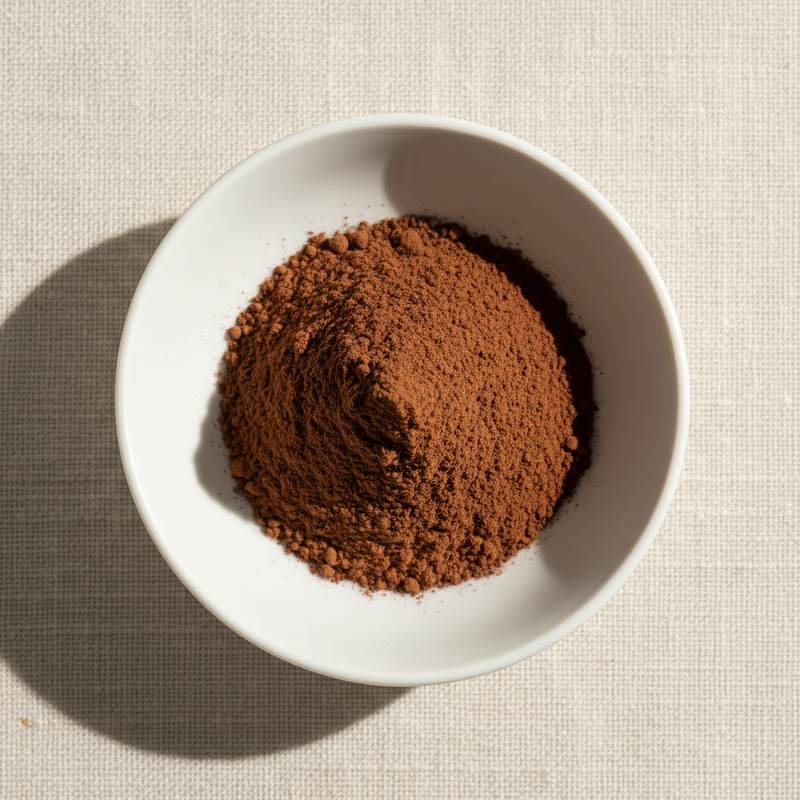
Dutch-process cocoa powder treated with food-grade potassium carbonate to raise pH, darken color, mellow flavor, and improve dispersibility in liquid beverage systems.
Dark brown to reddish-brown fine powder with pH between 6.8 and 8.1, depending on the degree of alkalization. Wets and disperses faster than natural cocoa, which is the primary reason alkalized grades dominate beverage applications.
We supply food-grade Alkalized Cocoa Powder from manufacturers in China holding ISO, Halal, Kosher and other certifications relevant to the product and production.
Common market grades include light Dutch (pH 6.8 to 7.2), medium Dutch (pH 7.2 to 7.6), and heavy or black Dutch (pH 7.6 to 8.1) for progressively deeper reddish-brown to near-black colors. Each is available at 10 to 12 percent and 20 to 22 percent fat content.
Bulk and reduced-MOQ shipments. Batch-level COA covering fat content, pH, fineness, total plate count, and Salmonella.
Introduction
Alkalization, commonly called Dutching, was developed by Coenraad van Houten in the Netherlands in 1828 as an extension of his original cocoa pressing patent. The process treats cocoa nibs or liquor with potassium carbonate before or during roasting, raising pH from the natural acidic range to a neutral or mildly alkaline range.
The chemical effect is twofold: anthocyanidin pigments shift from red-brown to deeper red and brown tones through pH-dependent color change, and the harsh, sharp acidity of natural cocoa is softened into a smoother, more rounded flavor often described as fudgy or chocolate-syrup like.
Functional performance in beverages is the second reason for the Dutch process: alkalization improves the wettability and dispersibility of cocoa particles in water and milk, reducing the formation of unwetted lumps and accelerating the time to a homogeneous beverage. This matters at industrial scale, where automated mixing cycles are short and lumps translate directly into consumer complaints.
Regulatory status follows that of natural cocoa: the European Union, U.S. FDA, and major Asian markets recognize Dutch-process cocoa as a permitted food ingredient with no per-product use limits, subject only to the carryover declaration of any residual alkalizing agent.
Where it is used
- Premium chocolate beverage mixes, hot cocoa, and dark chocolate drink powders
- Ready-to-drink chocolate milk where deeper color and rounder flavor command shelf premium
- Mocha and dark chocolate coffee drink bases
- Plant-based chocolate beverages including barista oat and almond chocolate
- Chocolate protein shakes and meal-replacement drinks targeting mass-market color expectations
- Cold-brew chocolate coffee and dark mocha foodservice bases
- Chocolate-flavored kefir, drinkable yogurt, and probiotic beverages
- Black-color chocolate beverages where heavy Dutch cocoa replaces caramel color
Technical data
| Item | Specification |
|---|---|
| Appearance | Dark brown to reddish-brown fine powder |
| Fat content | 10 to 12% or 20 to 22% |
| pH (10% suspension) | 6.8 to 8.1 |
| Moisture | ≤ 5.0% |
| Fineness (200 mesh) | ≥ 99.0% pass |
| Total ash | ≤ 14.0% |
| Shell content | ≤ 1.75% |
| Total plate count | ≤ 5,000 cfu/g |
| E. coli | Not detected |
| Salmonella | Not detected in 25 g |
| Heavy metals (as Pb) | ≤ 10 mg/kg |
Related ingredients

Ready to discuss business?
Send us your spec and requirement. We will respond with availability and pricing within 24 hours.