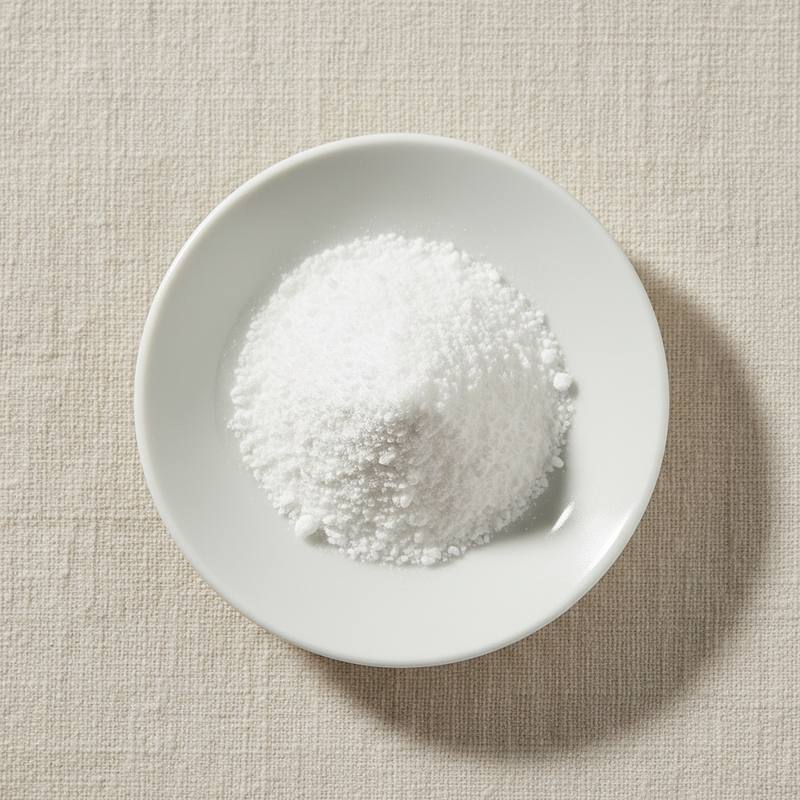
Description
A molecular complex of sodium acetate and acetic acid in roughly 1:1 stoichiometry. Delivers the antimicrobial activity of acetic acid in a free-flowing dry powder, the property that makes it the dominant rope-inhibitor in industrial bakery applications and the standard Listeria-control ingredient in ready-to-eat meat.
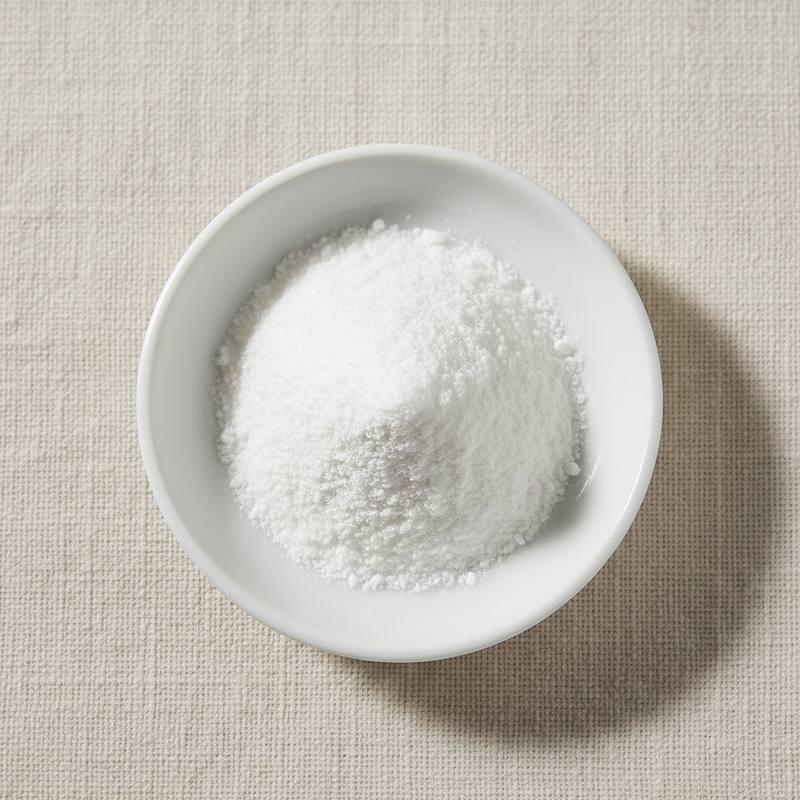
White crystalline powder with characteristic acetic acid odor. Highly water-soluble. Active against rope-forming Bacillus species, molds, and Listeria monocytogenes; selective enough to leave yeast fermentation undisturbed in bakery applications.
We supply food-grade Sodium Diacetate from manufacturers in China holding ISO, Halal, Kosher and other certifications relevant to the product and production.
Common market grades include Standard Food Grade (FCC compliant) for bakery and meat use, and Anti-Caking Grade with silica or starch carrier for dry-blend seasoning applications.
Bulk and reduced-MOQ shipments. Batch-level COA covering free acetic acid, sodium acetate, heavy metals, and microbiology.
Introduction
Sodium Diacetate is a co-crystalline complex of sodium acetate and acetic acid, providing the buffering capacity of the salt with the volatile-acid antimicrobial activity of the free acid in a single dry-handling ingredient. The complex liberates acetic acid in solution while maintaining the buffered pH required for selective antimicrobial action.
Industrial production proceeds by careful crystallization of sodium acetate from acetic acid solution at controlled stoichiometric ratios, yielding the 1:1 sodium acetate to acetic acid molecular complex with a half-molecule of water of crystallization.
Regulated as E262 in the EU, classified as Generally Recognized as Safe by the U.S. FDA, and approved by JECFA without a numerical Acceptable Daily Intake limit, indicating one of the most favorable safety classifications.
The molecule's antimicrobial mechanism is the weak-acid preservative pathway: undissociated acetic acid penetrates microbial cells, dissociates internally, and disrupts cytoplasmic pH and membrane function. The buffering action of the sodium acetate component holds the formulation pH in the active range without requiring separate buffer addition.
Two strategic applications drive global volume: the bakery industry uses Sodium Diacetate as the standard rope-inhibitor against Bacillus subtilis spores that survive baking, and the ready-to-eat meat industry combines Sodium Diacetate with Sodium Lactate as the dominant Listeria-control system in refrigerated processed meat.
Where it is used
- Bread and bakery products: dominant rope-inhibitor against Bacillus subtilis, dosed at 0.2 to 0.4 percent of flour weight
- Ready-to-eat meat and poultry: Listeria monocytogenes control in deli meat, hot dogs, and processed sausage
- Snack-food seasoning: salt and vinegar potato chips, savory crackers, and seasoned crackers
- Pickle and acidic-vegetable preservation
- Sauce, dressing, and condiment acidification combined with preservative function
- Pet food and animal feed preservation
- Pharmaceutical pH buffering in topical and oral preparations
- Industrial applications: textile printing, leather tanning, and process water systems
Technical data
| Item | Specification |
|---|---|
| Appearance | White crystalline powder |
| Free acetic acid | 39.0% to 41.0% |
| Sodium acetate | 58.0% to 60.0% |
| Loss on drying (105 °C) | ≤ 2.0% |
| pH (10% solution) | 4.5 to 5.0 |
| Heavy metals (as Pb) | ≤ 10 mg/kg |
| Arsenic | ≤ 3 mg/kg |
| Formic acid and oxidizable impurities | ≤ 0.2% |
| Particle size | Per customer specification |
Related ingredients
Ready to discuss business?
Send us your spec and requirement. We will respond with availability and pricing within 24 hours.