Description
A long-chain amino-diol that serves as the sphingoid backbone of native skin ceramides and as a free sphingoid base on the skin surface. Delivers antimicrobial, anti-inflammatory, and barrier-supporting effects at very low finished-product concentrations of 0.05 to 0.5 percent.
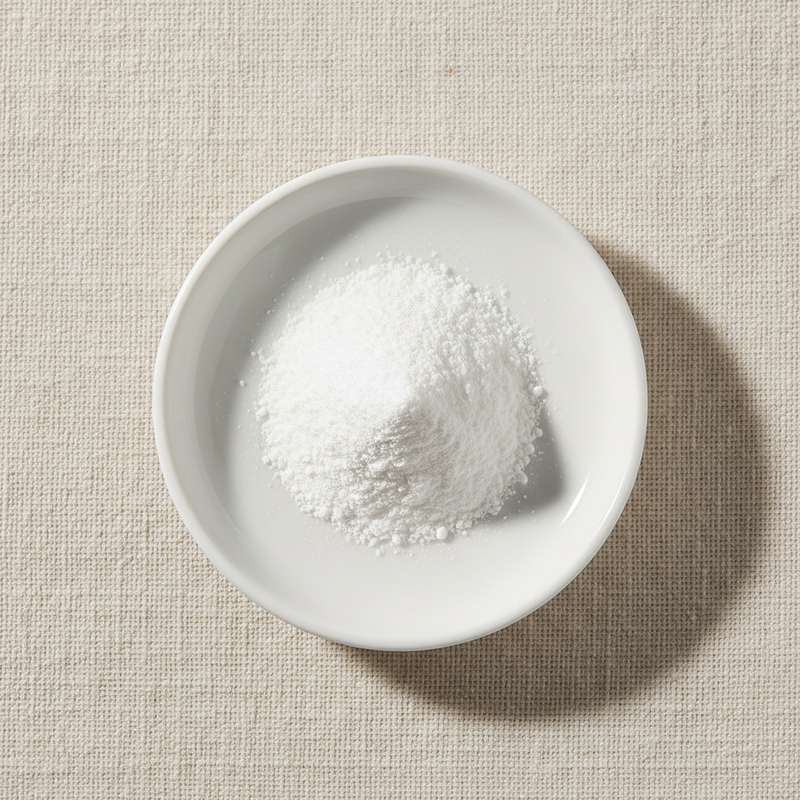
White to off-white waxy solid or fine powder. Insoluble in water and weakly basic; typically pre-dissolved or pre-acidified in carrier systems for formulation handling. Stable across the cosmetic pH range when properly emulsified.
We supply cosmetic-grade Phytosphingosine from manufacturers in China holding ISO 22716, ISO 9001, Halal, Kosher and pharmaceutical-GMP certifications relevant to the product and production. Yeast fermentation is the dominant industrial route.
Common market grades include Phytosphingosine 98% min (standard), 99% min (premium), and Phytosphingosine HCl salt for improved water dispersibility. All forms are commercial; the free base is dominant in lipid-phase formulations.
Bulk and reduced-MOQ shipments. Batch-level COA covering HPLC purity, melting point, related sphingoid content, heavy metals, and microbiology.
Introduction
Phytosphingosine was identified in the 1950s as the sphingoid base of fungal and yeast sphingolipids and later confirmed as one of the principal sphingoid bases in human stratum corneum ceramides. Cosmetic adoption emerged in the late 1990s, anchored by Doosan's industrial production process that enabled cost-effective supply.
Industrial production is by fermentation of yeast strains (commonly Wickerhamomyces ciferrii) engineered for high phytosphingosine yield. The product is isolated by extraction, recrystallization, and chromatographic purification to remove related sphingoid bases (sphingosine, sphinganine).
Regulatory status is that of a listed cosmetic ingredient in CosIng, the PCPC INCI dictionary, and China IECIC. No fixed concentration limit. EU SCCS has not flagged phytosphingosine for restriction.
Clinical evidence shows phytosphingosine at 0.1 to 0.2 percent finished-product concentration delivers measurable reduction in acne lesion counts (anti-Cutibacterium activity), improvement in barrier recovery, and reduction in surfactant-induced irritation. The molecule's natural antimicrobial activity adds value in acne and scalp formulations without selecting for resistance.
Strategically, phytosphingosine occupies a premium niche position adjacent to ceramides in the global barrier-repair category. Demand is driven by K-beauty acne and dermocosmetic brands, with steady growth in Western dermocosmetic positioning.
Where it is used
- Anti-acne products positioned around antimicrobial and anti-inflammatory action
- Barrier-repair creams and ceramide-supporting formulations
- Anti-aging serums positioned around the surface lipid microbiome
- Scalp serums and anti-dandruff products
- Sensitive-skin and rosacea-adjunct cosmetic products
- Combination ceramide complex formulations
- Post-procedure recovery creams
- Premium dermocosmetic moisturizers
Technical data
| Item | Specification |
|---|---|
| Appearance | White to off-white waxy solid or fine powder |
| INCI Name | Phytosphingosine |
| Assay (HPLC) | ≥ 98.0% |
| Melting point | 101 °C to 105 °C |
| Specific rotation (20 °C, in ethanol) | +8° to +12° |
| Related sphingoid bases (each) | ≤ 0.5% |
| Loss on drying | ≤ 1.0% |
| Total ash | ≤ 0.5% |
| Heavy metals (as Pb) | ≤ 10 mg/kg |
| Arsenic | ≤ 2 mg/kg |
| Total plate count | ≤ 100 CFU/g |
| E. coli, Salmonella, S. aureus, P. aeruginosa | Negative |
| Source | Yeast fermentation (Wickerhamomyces ciferrii) |
Related ingredients
Ready to discuss business?
Send us your spec and requirement. We will respond with availability and pricing within 24 hours.