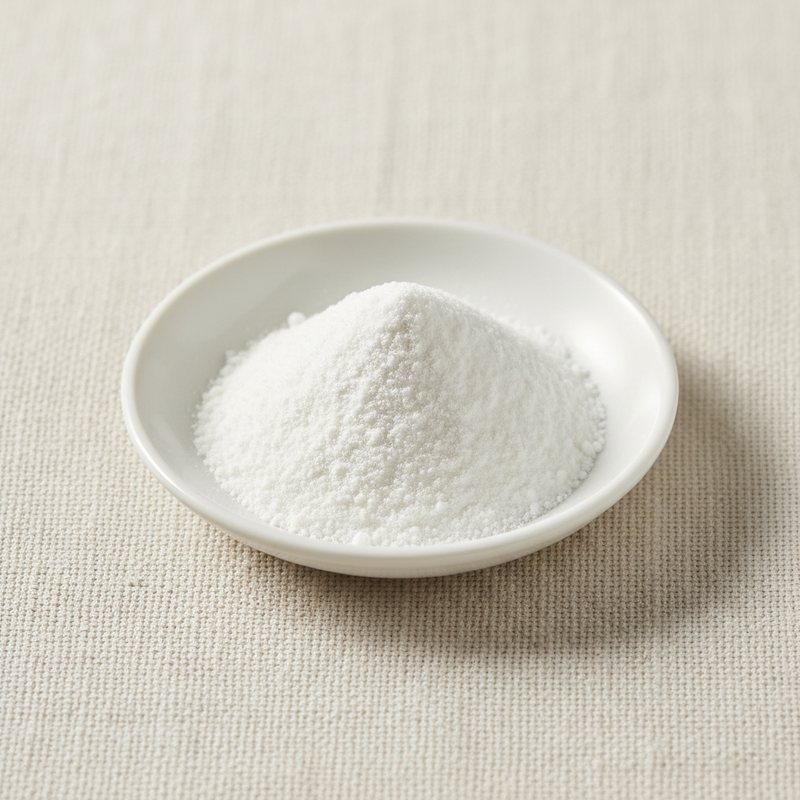
Description
The bitartrate salt of 2-dimethylaminoethanol, a tertiary amine and structural precursor to choline. The bitartrate salt form is the commercial standard for supplement and cosmetic use, delivering improved stability and handling over the free base, which is a hygroscopic and volatile liquid.
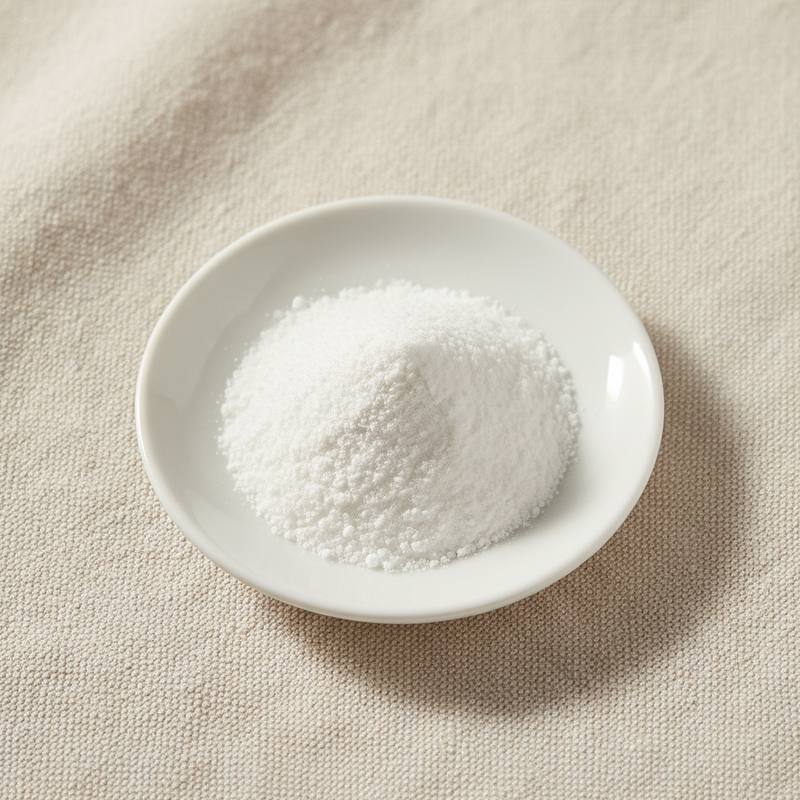
White to off-white crystalline powder. Highly water-soluble. The bitartrate counter-ion contributes a mildly tart taste and lowers the pH of aqueous formulations to approximately 4. Stable through standard supplement and cosmetic manufacturing temperatures when protected from prolonged moisture exposure.
We supply food-grade DMAE Bitartrate from manufacturers in China holding ISO, Halal, Kosher and other certifications relevant to the product and production. Cosmetic-grade and pharmaceutical-grade material is available for topical and pharmaceutical applications.
Common market grades include 98 percent and 99 percent purity DMAE Bitartrate (the supplement and cosmetic standard), with mesh-size options for capsule fill, tablet compression, and topical-formulation incorporation. DMAE Free Base liquid is supplied separately for specialised cosmetic and intermediate applications.
Bulk and reduced-MOQ shipments. Batch-level COA covering assay, related substances, residual solvents, heavy metals, and microbiology.
Introduction
Dimethylaminoethanol has been studied since the 1950s for its effects on attention, learning, and behaviour, including early prescription use in the United States as Deanol (an FDA-approved drug for hyperkinetic syndrome in children, withdrawn from the market in 1983 for reasons unrelated to safety). The molecule transitioned to supplement and cosmetic positioning following the prescription withdrawal.
Industrial production is by reaction of ethylene oxide with dimethylamine, yielding the free base, which is then converted to the bitartrate salt by reaction with L-tartaric acid. The bitartrate salt crystallises readily and delivers a stable handleable powder for downstream formulation.
Recognised as a permitted supplement ingredient by the U.S. FDA under DSHEA, regulated as a cosmetic ingredient in the EU (with specific concentration limits in finished cosmetics established by the SCCS), and approved as a supplement ingredient in most major markets. The regulatory profile in the EU is more restrictive than in the United States, with specific labelling and concentration controls on cosmetic finished products.
The proposed cognitive mechanism is conversion to choline in the brain and incorporation into the phosphatidylcholine pool, providing precursor support for membrane phospholipids and indirectly for acetylcholine biosynthesis. The cosmetic mechanism for topical applications is less well-established and is generally attributed to membrane stabilisation and free-radical scavenging effects on dermal fibroblasts.
The topical anti-aging application is the most commercially developed in modern markets, with DMAE Bitartrate incorporated into facial serums, creams, and lotions at concentrations from 0.5 to 3 percent. The supplement application remains commercially significant in the cognitive and nootropic stack channel, often paired with choline, L-theanine, and B-vitamins.
Where it is used
- Cognitive and nootropic supplements; the leading retail application following the traditional positioning of DMAE in attention and focus products
- Anti-aging skin-care formulations including topical serums and creams (the most commercially developed application for cosmetic-grade material)
- Memory-support and senior-cognitive supplements
- ADHD-positioning supplements in markets where such positioning is permissible
- Sports nutrition stimulant blends and pre-workout formulations
- Mood-support and mental-energy products
- Eye-health and lipofuscin-reduction supplements
- Pharmaceutical intermediate for synthesis of other tertiary-amine actives
Technical data
| Item | Specification |
|---|---|
| Appearance | White to off-white crystalline powder |
| Assay (HPLC, dry basis) | ≥ 98.0% |
| Loss on drying | ≤ 1.0% |
| Residue on ignition | ≤ 0.2% |
| pH (5% aqueous solution) | 3.5 to 4.5 |
| Heavy metals (as Pb) | ≤ 10 mg/kg |
| Arsenic | ≤ 2 mg/kg |
| Residual solvents | Meets ICH Q3C limits |
| Microbiology | Total plate count ≤ 1,000 CFU/g; absence of Salmonella and E. coli |
| Particle size | 80 mesh standard, or per customer specification |
Related ingredients
Ready to discuss business?
Send us your spec and requirement. We will respond with availability and pricing within 24 hours.